Cost of Living: Las Vegas vs. San Francisco


If you've ever opened a Bay Area rent listing, choked on the number, and quietly Googled "cost of living Las Vegas vs San Francisco," you already know the punchline. What you probably don't know is just how lopsided the math gets once you add in income tax, property tax, gas, utilities, and groceries. The gap isn't a few hundred bucks a month. It's life-changing.
I've helped more than a few San Francisco families land in Las Vegas, and the conversation almost always starts the same way: they price out a 1,500 square foot starter home in the Sunset, then they price out a 3,000 square foot home with a pool in Summerlin, and the spreadsheet does the rest. This guide walks through the real numbers for both cities in 2026, where the savings come from, and where Vegas can quietly take some of that back if you're not paying attention.
How Big Is the Gap, Really?
Different sources slice the comparison different ways, but the direction is unanimous. Cost-of-living index data places Las Vegas roughly 28% cheaper than San Francisco on a like-for-like basis, while broader comparisons that weight housing more heavily push that number toward 41.6%. The reason that range is so wide is simple: housing is the whole story. The further the comparison drifts from rent and mortgage payments, the smaller the gap gets. But housing is the biggest line item in almost every household budget, which is why the headline savings hit so hard.
Here's what the big buckets actually look like side by side.
| Category | Las Vegas | San Francisco | Why It Matters |
|---|---|---|---|
| Median home sale price | $449,000 (city, Mar 2026) | $1.7M (metro, Mar 2026) | Biggest single driver of the cost gap |
| Average apartment rent | ~$1,716/month | ~$3,377/month | Renters feel the savings on day one |
| State income tax | 0% | Up to 12.3%-13.3% | Annual five-figure swing for high earners |
| Effective property tax | ~0.50% (3% annual cap on primary) | 1.18268325% secured rate | Lower rate AND lower price equals huge gap |
| Monthly utilities (avg) | $225-$350 | $410+ | Vegas wins overall, but summer A/C bites |
| Regular gas (state avg) | $5.24/gal | $6.14/gal | Compounded over a car-first lifestyle |
| Sales tax | 8.38% (Clark County) | 8.625% | Roughly a wash on day-to-day spending |

Housing Is Where the Move Pays for Itself
San Francisco's 2026 market is, frankly, having a moment. Redfin reported that the SF metro median sale price posted the largest year-over-year jump of any of the 50 most populous U.S. metros in March 2026, up 14.4%, with AI-fueled wealth and intense competition for desirable homes driving the run. Meanwhile, Las Vegas city median was essentially flat year over year at $449,000. So the gap isn't just stable, it's widening.
On a raw multiplier, the San Francisco metro median sale price is about 3.8 times the Las Vegas city median. Said differently, the typical SF home buyer is writing a check that would cover the median Las Vegas home and a vacation property at Lake Las Vegas. With change left over.
The Las Vegas market itself has different tiers depending on where you want to land:
Entry Point
$350k-$500k
Condos, townhomes, and starter single-family homes in North Las Vegas, Spring Valley, and parts of Henderson.
Move-Up Market
$500k-$850k
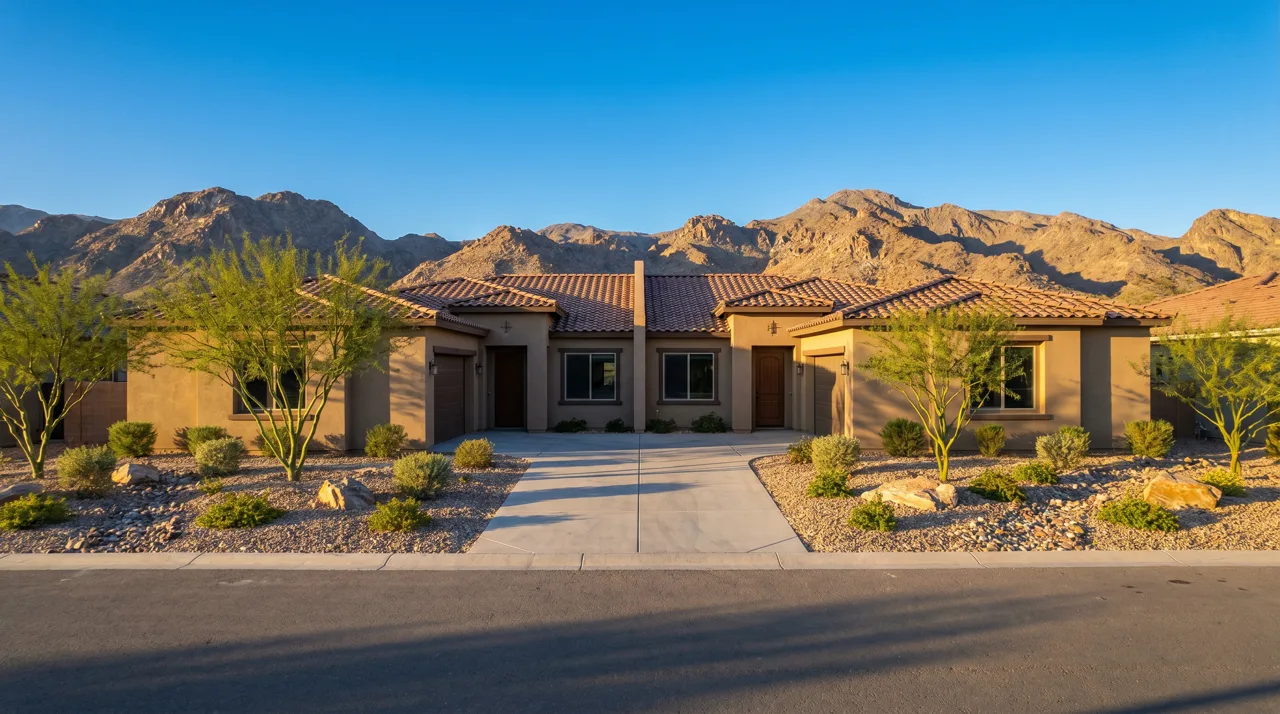
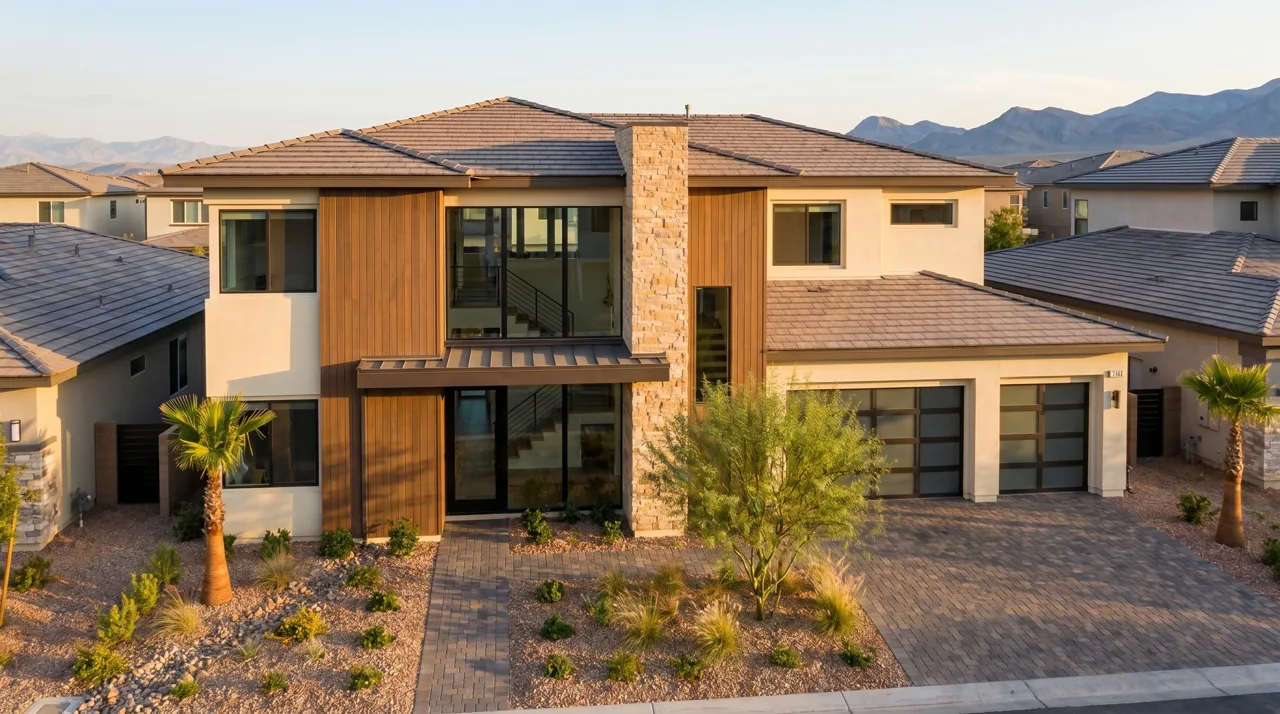
Three- and four-bedroom homes with pools and three-car garages in Summerlin, Southern Highlands, and Inspirada.
Luxury
$850k-$3M+
Guard-gated estates, custom builds, and golf-course lots in The Ridges, MacDonald Highlands, and Lake Las Vegas.
For a San Francisco buyer used to seeing one-bedroom condos clear seven figures, this price ladder takes a minute to absorb. The reaction I get most often is some version of "wait, that's the whole house?" Yes. That's the whole house. With a backyard. And a garage. Take a look through current Las Vegas listings and the picture sharpens fast.
What Rent Actually Looks Like
The rental market tells the same story in real time. Average apartment rent in Las Vegas hovers around $1,716 a month, well below the national average. In San Francisco, the average apartment rent runs $3,377, and a one-bedroom in a downtown SF neighborhood can clear $3,100 without batting an eye. Run the same one-bedroom search downtown in Las Vegas and you're looking at roughly $1,400. Different universe.
HUD's Fair Market Rent benchmarks for fiscal year 2025 give an even more conservative read on the Las Vegas-Henderson-North Las Vegas metro: $945 for a one-bedroom, $989 for a two-bedroom, $1,298 for a three-bedroom. Those are program-grade numbers, not luxury units, but they show how far the floor is from a comparable SF apartment.
Why Nevada's No-Income-Tax Status Changes the Math
This is the part San Francisco transplants tend to underestimate until their first Nevada paycheck hits. California's personal income tax brackets run from 1% to 12.3%, with an additional 1% mental health surcharge on income over $1 million that pushes the effective top rate to 13.3%. Nevada has no state personal income tax. None.
For someone earning $200,000 in San Francisco, the move to Las Vegas frees up roughly $16,800 a year that California was previously taking out of the paycheck. At $300,000, the swing climbs to about $28,500. For dual-income tech households clearing $500,000 combined, the savings can land closer to $50,000 annually, which is genuinely enough money to fund a kid's college account or pay down a mortgage faster.


The take-home math is the reason a lot of remote-friendly tech workers keep their San Francisco employer and physically relocate to Las Vegas. Same gross income, different state of residence, dramatically different net.
Property Taxes: Lower Rate AND Stronger Caps
San Francisco's secured property tax rate for fiscal year 2025-26 is 1.18268325% per the San Francisco Treasurer & Tax Collector. That sounds modest until you apply it to a $1.7 million home, which is about $20,100 a year. The Las Vegas equivalent, an effective rate around 0.50% on a $449,000 home, lands closer to $2,250. Same household budget category, almost an order of magnitude difference.
Nevada also has a property tax cap (AB 489) that prevents annual tax bill increases from exceeding 3% on an owner-occupied primary residence and 8% on most other properties. That's a quiet but powerful stability feature. It means even if your home value rises sharply, your tax bill can't sprint to catch up.
There's a paperwork catch that catches a lot of buyers off guard, though.
Utilities, Gas, and the Daily Drip
San Francisco's mild climate means lower air conditioning bills, but municipal water and sewer rates have been climbing aggressively. SFPUC's 2026 Proposition 218 notice proposed combined bill increases of about 12.6% in FY 2027 and 12.5% in FY 2028 for the average residential household. PG&E electric rates have also seen multiple updates over the past year.
Las Vegas runs hotter, and that summer A/C load is the asterisk on every utility comparison. NV Energy bills can run $250 to $470 in June through September for a typical home, then drop back to $100 to $180 in winter. Annual average lands around $154 to $171 a month for electricity. Add water, natural gas, and internet, and total monthly utilities typically run $225 to $350. San Francisco residents average $410+ when you stack everything together.
Other daily costs:
- Groceries in Las Vegas run roughly 12.5% lower than San Francisco, helped by proximity to California agricultural supply chains
- Healthcare in Las Vegas comes in around 36.6% lower than San Francisco on common cost-of-living comparisons
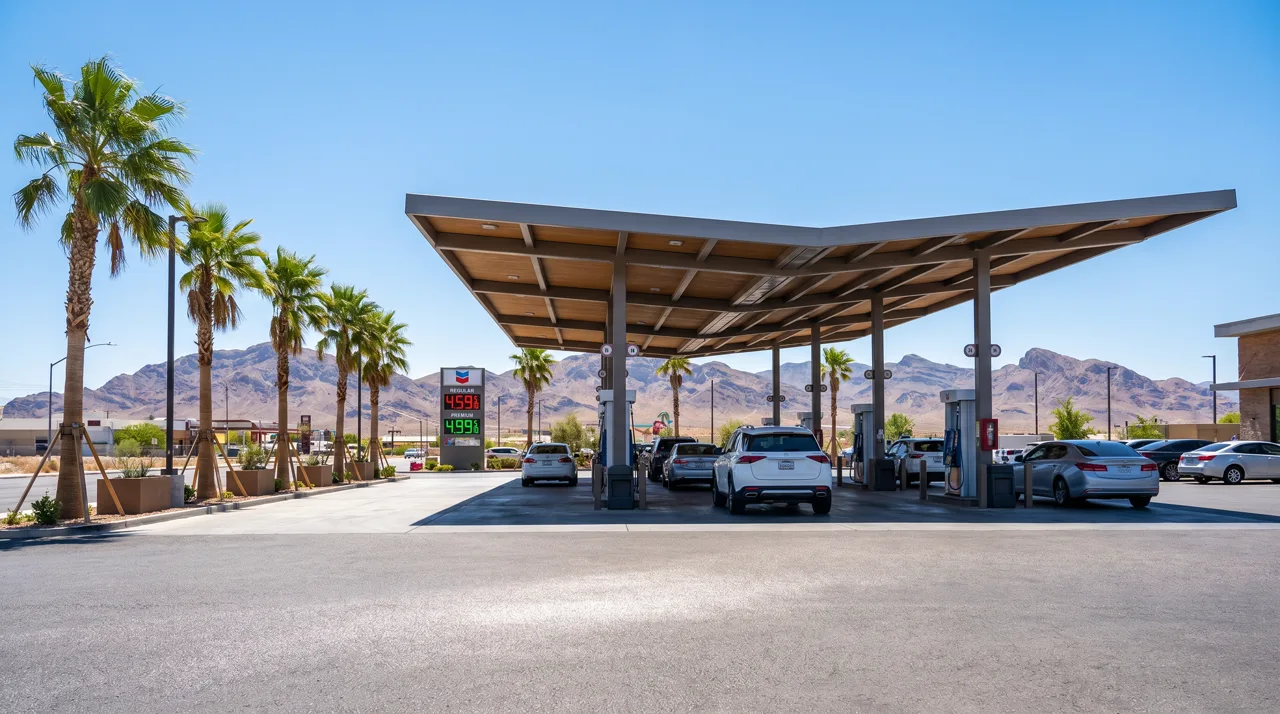
- Regular gas averaged $5.24 a gallon in Nevada vs $6.14 in California on May 17, 2026, per AAA
- Nevada has the most expensive auto insurance in the country in 2026, with full coverage averaging $235-$297 a month
- Sales tax is roughly a wash: Clark County 8.38% vs San Francisco 8.625%
That last one is the asterisk on the savings. Nevada balances its budget largely through consumption and gaming taxes, which means you'll pay sales tax on most retail purchases. But because that rate is essentially the same as San Francisco's, it's not really a net swing either way.

Getting Around: Two Very Different Transportation Equations
San Francisco is one of the few American cities where you can genuinely live without a car. Muni's adult monthly pass is $86, and the Muni + BART-within-SF combination is $104. That's not cheap by national standards, but it can replace the entire car-ownership stack of payment, insurance, gas, and parking. Many SF households save thousands a year that way.
Las Vegas, on the other hand, is a car-first city. RTC's 30-day residential transit pass is $65, which is cheaper than SFMTA, but most residents drive everywhere. You'll need a car, full coverage insurance, gas in the tank, and probably a garage. The savings on housing and taxes more than absorb that, but it's worth modeling honestly.
How Much Do You Actually Need to Earn?
This is the question I get asked the most by Bay Area families. The honest answer depends on your housing tier, but here's a reasonable framework using local market data:
Single Renter, Comfortable Lifestyle
A solo professional renting a decent one-bedroom apartment, driving a paid-off car, and saving meaningfully can do it on $60,000-$75,000 in Las Vegas. The same lifestyle in San Francisco realistically requires $120,000+, and even then the savings rate suffers.
Couple Renting or Buying Entry-Level
Two working adults renting a two-bedroom or carrying a mortgage on a $450K-$550K Las Vegas home need roughly $130,000-$160,000 combined to live comfortably without stretching. In San Francisco, the equivalent housing comfort zone starts closer to $300,000 combined.
Family of Four, Mid-Range Home
Two kids in school, a $650K Summerlin home, two cars, and reasonable lifestyle in Las Vegas works on $175,000-$220,000 in household income. To replicate that in San Francisco, you're looking at something close to $400,000-$500,000 once you factor in housing, California income tax, and childcare.
MIT's Living Wage Calculator is a useful sanity check on these numbers. It includes housing, food, healthcare, transportation, childcare, civic engagement, internet, and taxes for both the Las Vegas-Henderson-North Las Vegas metro and the San Francisco-Oakland-Fremont metro.
The "Wow, I Didn't Know That" List
A few things that come up in almost every relocation consultation, that don't show up in the obvious comparison tables:
- A one-way U-Haul from San Francisco to Las Vegas is significantly more expensive than the same truck the opposite direction, because demand for moving trucks out of California is so high
- BART doesn't sell weekly or monthly passes at all, because fares are mileage-based, so San Francisco renters often pay more than the headline pass price suggests
- Las Vegas summer cooling bills can spike to $470+ in July and August, so the true utility savings are seasonal rather than uniform
- Nevada is the most expensive state in the country for auto insurance in 2026, which partially offsets the gas savings
- Mid-range restaurant meals for two are roughly 14% more expensive in San Francisco, but the Strip carries a 30-40% premium over off-Strip Las Vegas dining
- San Francisco property tax bills look manageable as a rate (1.18%) but compound brutally on $1.7M home values
Where the Trade-Offs Actually Land
To be fair to both cities, Las Vegas isn't strictly cheaper across every category. The summer is the obvious example. Cooling a 2,500 square foot home through July and August costs real money, and that's a line item San Francisco never has to deal with. Auto insurance is meaningfully higher in Nevada, and dog daycare and certain pet services can run pricier than they do in some California markets, partly because the desert heat pushes more pets indoors.
San Francisco also has things you genuinely can't replicate in Las Vegas: walkable density, world-class public transit, ocean breeze in July, and a tech labor market with the deepest senior salaries in the country. If you're a senior tech leader whose total comp depends on physical proximity to your team, Vegas may not pencil even with the tax savings.
For most other people though, especially anyone whose work is remote or whose family budget is being slowly eroded by Bay Area housing, the math points one direction and points hard.
If You're Seriously Considering the Move
The Bay Area to Las Vegas relocation has been one of the biggest interstate migrations of the past five years. About a third of new Las Vegas residents arrive from out of state, with California consistently the top source. Most of the people I work with go through a similar checklist before they commit:


- Run your actual paycheck through a Nevada residency tax calculation, not just the headline 0% number
- Verify with your employer whether your role can be permanently Nevada-based, and confirm any payroll tax adjustments
- Get pre-approved with a Las Vegas-based lender who knows the local builder incentive landscape
- Visit in July and again in January to feel both extremes of the climate before you commit
- File the Primary Residence postcard with the Clark County Assessor as soon as you close to lock in the 3% tax cap
- Budget for the second car if you're coming from a transit-dependent SF household
- Use a mortgage calculator that includes HOA dues, since most Vegas master-planned communities carry $80-$300 monthly fees
The Bottom Line
San Francisco's strengths are real. The food, the geography, the career density, the urban texture. Nothing about a cost comparison changes any of that. But on every measurable financial metric, Las Vegas wins by a wide margin in 2026, and the gap is getting wider, not narrower. Median home prices are roughly 3.8x lower. There's no state income tax. Property tax bills are a fraction of what San Francisco homeowners pay. Utilities, groceries, healthcare, and gas all favor Vegas. The only categories where SF holds an edge are the ones tied to its climate and its transit-dependent lifestyle, and even those come with their own offsetting costs.
For most San Francisco families I work with, the move ends up being one of the largest financial decisions of their lives, and almost universally one they wish they'd made sooner. If you're at the point of seriously comparing the two, the next useful step is running your own numbers against your own household, not against an averaged index.
I've walked dozens of Bay Area families through this transition, from the first "is this really doable?" call to the final close on a Summerlin or Henderson home. If you want a straight read on whether the math actually works for your situation, the neighborhoods overview is a good place to start picturing where in the valley you'd actually want to live.
Categories
Recent Posts