Las Vegas HOA Fees by Community: What You'll Pay and What You Get


If you're shopping for a home in Las Vegas, the HOA line on the listing is almost never the whole story. Some buyers walk in expecting one fee and discover they're actually paying a master association, a village sub-association, and in some cases a guard-gate surcharge on top. That's not a scam. It's how Southern Nevada builds neighborhoods. And once you understand the structure, the numbers start to make sense.
I've helped clients buy in Summerlin villages with three layers of dues, high-rise condos where the HOA runs closer to a hotel concierge than a neighborhood pool fund, and modest suburbs where the fee is basically landscaping for the front gate and a newsletter. The range is wild. So is what you get for the money. This guide walks through Las Vegas HOA fees by community, what those dollars actually cover, and the traps that catch out-of-state buyers most often.
How Las Vegas HOA Fees Actually Work
First, the structural thing nobody warns you about. Most master-planned communities in the valley use a two-tier (sometimes three-tier) fee structure:
- Master association: covers the big-picture stuff. Main thoroughfare landscaping, trail systems, regional parks, community-wide events, architectural standards.
- Sub-association / village / neighborhood HOA: covers the specific enclave you live in. Private pool, gates, interior street maintenance, smaller parks, shared walls.
- Club or amenity fee: occasionally a third layer in golf or guard-gated communities. Covers guardhouse staffing, private clubhouse, or optional country club dues.
Summerlin is the classic example. Summerlin's own HOA map identifies seven distinct governing associations inside the master plan, including Summerlin North, South, West, Centre, Sun City Summerlin, Red Rock Country Club, and Siena. A home in The Ridges has historically paid its share to the Summerlin Community Association, a Ridges master fee, and a sub-association fee for its specific street cluster, stacking toward four figures monthly once you add in the private club.
What Summerlin Homeowners Pay in 2026
Summerlin is the largest master plan in Nevada and sets the tone for the valley. It also just raised dues. Effective January 1, 2026, according to the Las Vegas Review-Journal, master association assessments went up across all three regions.

| Summerlin Region | 2026 Master Fee | Prior Fee | Change |
|---|---|---|---|
| Summerlin North | $74/mo | $65/mo | +$9 |
| Summerlin South | $76/mo | ~$67/mo | +$9 (approx.) |
| Summerlin West | $69/mo | $60/mo | +$9 |
The Summerlin Council portion alone is $37 per month and funds parks, pools, community events, and programming across the master plan. That's a lot of community infrastructure baked into what looks like a modest master fee. For context, Summerlin says the community now includes more than 250 parks, 150-plus miles of interconnected trails, 10 golf courses, and 26 public, private, and charter schools. You're funding a small city's worth of amenities.
But the master fee is just the opening number. Each Summerlin village has its own sub-association dues that range roughly $50 to $350 per month depending on how upscale the enclave is and how many homes share the cost. The Arbors, The Vistas, Redpoint, Stonebridge, Kestrel, each runs its own math.
A Fee Map of the Valley's Biggest Master-Planned Communities
Here's how the major Las Vegas master plans stack up. These are combined master plus sub-association ranges where applicable, pulled from research into each community's governing documents and current listings.

| Community | Typical HOA Range | What's Included |
|---|---|---|
| Summerlin (standard villages) | $120-$425/mo | Trails, parks, events, village pools, landscaping, architectural review |
| Cadence (Henderson) | $75-$180/mo | 50-acre Central Park, free Wi-Fi in parks, bike share, splash pads, pickleball |
| Inspirada (Henderson) | $95-$135/mo | 4 major parks, 5 heated pools, sports fields, dog parks |
| Mountain's Edge (SW) | $85-$155/mo | Exploration Peak Park, splash pads, trails, events |
| Skye Canyon (NW) | $90/mo | Skye Center, Jr. Olympic pool, fitness, mountain trail access |
| Providence (NW) | $50-$120/mo | Knickerbocker Park (ice rink), Huckleberry Park, dog parks |
| Aliante (North LV) | $45-$120/mo | Discovery Park, golf access, library, trail system |
| Southern Highlands | $80-$350/mo | 7 parks, tennis, spa, dog parks, roving security |
| Centennial Hills | $40-$120/mo | Regional park, YMCA, retail, mostly open-access neighborhoods |
A couple of patterns to notice here. Newer master plans like Cadence market hard on "no LID/SID" status, meaning there's no special improvement district bond stacked on top of the HOA. That can save $100 to $150 a month compared to other new-build areas in Henderson, and it changes how much home a buyer qualifies for. Meanwhile, older low-density communities like Aliante and Centennial Hills often carry surprisingly light HOAs because the amenity footprint per home is smaller.
Luxury Guard-Gated Communities: Where the Numbers Get Serious
Guard-gated communities are a different beast. You're paying for 24-hour manned security, private roads, enhanced landscaping, sometimes a private clubhouse or golf course. The fees reflect that.
The Ridges (Summerlin) Guard-Gated
Total monthly HOA obligations in The Ridges commonly run between about $350 and $600 per month for the combined master and sub-association dues, though listings frequently show higher figures once Club Ridges and sub-gate costs are added, and public reporting has cited combined totals exceeding $1,200 monthly in some enclaves. What you get: double-gated entry, Bear's Best Golf proximity, Club Ridges private fitness and pool facility, and some of the highest elevations in Summerlin with Strip and Red Rock views.
MacDonald Highlands (Henderson) Guard-Gated
MacDonald Highlands HOA typically runs $200 to $350 per month, separate from DragonRidge Country Club membership if you want the golf and dining. Fees cover the guard gate, private roads, panoramic Strip view lots, and the community's private security that supplements Henderson PD.
Anthem Country Club (Henderson) Guard-Gated
Per 2024 figures, Anthem Country Club HOA assessments have ranged from roughly $287 to $1,527 per month depending on home type and assessment layer. Residents get 24/7 guard-gated security, a fitness center, resort pool, tennis, restaurants, and a three-mile walking loop at a cooler elevation than the valley floor.
Seven Hills (Henderson) Guard-Gated
Seven Hills HOA runs $150 to $400 per month. Italian-themed guard-gated enclaves, Rio Secco Golf access, panoramic Strip views, four large parks, and immediate St. Rose corridor medical services. One of the better value-per-dollar guard-gated options.
Lake Las Vegas (Henderson) Waterfront
Lake Las Vegas uses a $153 master assessment plus sub-association fees that vary dramatically by neighborhood. SouthShore, which has its own 24/7 guard gate, carries an additional sub-master fee. Some Lake Las Vegas properties are subject to three or even four separate HOA assessments because of how the lake, master, and village associations layer. Dues cover the 320-acre private lake, 10 miles of shoreline, infrastructure, and waterfront amenity access.
Spanish Trail (West LV) Guard-Gated
Spanish Trail carries a fairly uniform $379 monthly HOA. For that you get 27 holes of golf, 12 tennis courts, two pool pavilions, a fitness center, and the lush mature landscaping this community has been known for since 1984. It was the first major guard-gated golf community in the valley.
Queensridge & One Queensridge Place Luxury
The single-family Queensridge neighborhood runs a wide $150 to $2,600+ depending on sub-community and home type. The high-rise One Queensridge Place is in its own category entirely. Monthly HOA dues there have been reported between roughly $1,957 and $2,072, with some units cited above $3,800. That covers concierge, elevator service, gated grounds, private dining, wine cellar access, fitness, a continental breakfast, and guest casitas. Think hotel membership, not suburban HOA.
Las Vegas High-Rise Condo HOAs: What You're Really Paying For
Condos and high-rises operate on an entirely different economic logic than suburban HOAs. Your dues cover building insurance, elevators, common HVAC, concierge, security, pool and spa operations, lobby maintenance, reserves for major capital replacement, and in some towers, valet or partial utility bundles.


Per reporting from the Las Vegas Review-Journal, here's how some of the valley's better-known towers compare:
| Tower | Monthly HOA Range | What It Covers |
|---|---|---|
| The Ogden | $361-$879 | Pool, outdoor kitchen, concierge, lounge, dog park, EV charging |
| One Las Vegas | $361-$879 | Pool, hot tub, cabanas, gym, saunas, tennis, dog park, EV charging |
| Newport Lofts | $490-$952 | Roof deck pool, hot tub, running track, clubhouse, gym |
| Turnberry Towers | $542-$934 | Pool, hot tub, tennis, putting green, gym, valet, conference room |
| Soho Lofts | $585-$940 | Roof deck pool, hot tub, gym, sauna, lounge |
| Palms Place | $554-$1,098 | Pool, hot tub, sauna, spa, yoga, valet, concierge, room service |
| Veer Towers | $498-$2,400 | Rooftop infinity pool, gym, media room, valet, concierge |
| Panorama Towers | $450-$3,132 | Pool, gym, concierge, car service, racquetball, yoga, theater, valet |
| One Queensridge Place | $1,957-$2,072 | Saltwater pool, Pilates, private dining, wine cellar, concierge, guest casitas |
Two things jump out. First, the spread within a single tower can be enormous. Panorama runs from about $450 at the low end to over $3,000 at the high end because penthouse-level square footage and assessment formulas compound. Second, high-rise HOAs have real pricing power. Despite condo sales volume softening, average high-rise sale prices hit an all-time high near $700,000 in 2024 according to the Review-Journal, up 19 percent year over year. The amenities justify the carrying cost for the right buyer.
Why Small Gated Neighborhoods Sometimes Cost More Than Big Ones
This one catches almost every out-of-state buyer off guard. You'd think a luxurious amenity-rich community would cost more than a small gated subdivision. Often the opposite is true.
The Desert Shores example is instructive. Per the Review-Journal, two neighborhoods inside the same master community, Ritz Cove and La Jolla Classic, have roughly the same access to the lakes and beach amenities. Ritz Cove HOA has run about $140 per month. La Jolla Classic? About $29 per month. The difference is door count. Eddie Petro, assistant community manager at Mesa Management, explained it plainly in the article:
"La Jolla has more than double the homes, so it's easier to spread the cost out among multiple homeowners."
That principle applies across the valley. A 40-home gated enclave has to fund the gate, the guard if there is one, private street repairs, walls, landscaping, and reserves out of 40 monthly checks. A 400-home community spreads the same baseline costs across 10 times as many checks. Small and exclusive is expensive. Big and well-run is often the sweet spot.
Why Las Vegas HOA Fees Keep Climbing
Across almost every community I mentioned above, fees have trended up for the last three years. A few specific pressures are driving this in Southern Nevada:
Water and the Grass Conversion Deadline
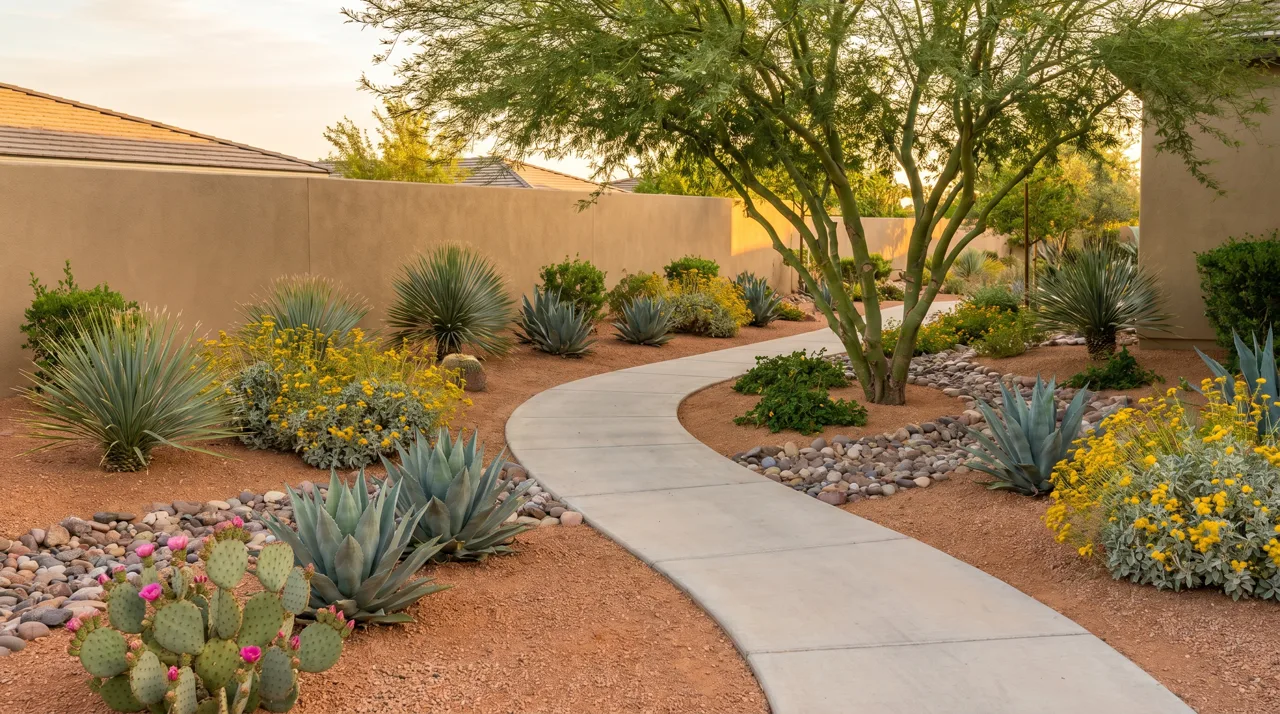
This is the big one. Under Nevada law, HOAs, commercial properties, and multifamily residential communities have until the end of 2026 to replace decorative nonfunctional grass, per reporting from the Review-Journal. The Las Vegas Valley Water District structures rates so that larger common-area irrigation meters get expensive fast. A 6-inch meter runs $220 per month in service charges alone, before a single gallon is used. Lush-looking communities are essentially paying commercial-scale water bills, and the cost flows into your monthly dues.
The good news: HOAs remain eligible for $2 per square foot in rebates through the Southern Nevada Water Authority for grass conversion projects. Some associations are front-loading this work, which can temporarily bump dues or trigger a special assessment, but it should reduce long-run water spend.
Insurance
Common-area liability and property insurance premiums have climbed fast nationally, and Las Vegas HOAs aren't immune. Every master association budget I've reviewed in the last 18 months has listed insurance as a top-three budget line increase.
Reserve Funding
Nevada associations are required to conduct reserve studies, and the Nevada Real Estate Division's Office of the Ombudsman tracks those filings. Many communities that historically underfunded their reserves are now catching up, which shows up as higher monthly dues or special assessments for things like pool resurfacing, roof replacement on common buildings, and street resealing.
Utilities and Labor
NV Energy's quarterly tariff adjustments and Southwest Gas rate filings push operating costs up on clubhouses, pool heating, gate motors, guardhouses, and common lighting. Labor costs for landscaping crews, community managers, and security have also risen sharply.

The Hidden Costs Buyers Forget to Budget For
Monthly dues are just the ongoing piece. When you buy into a Las Vegas HOA community, expect additional one-time charges at or near closing.
- Resale package / public offering statement: commonly $500 to $1,000 in Nevada, paid by the seller in most resale contracts but negotiable
- HOA transfer fee: often $200 to $500 at closing, usually assigned to the buyer
- Capital contribution or initiation fee: in some newer master plans, a one-time buyer-paid contribution (often equal to one to three months of dues) at closing
- Move-in fee or gate key fee in guard-gated communities
- Special assessments: one-time levies for major projects (roof, street reseal, grass conversion), usually voted by the board
None of these show up on Zillow. All of them show up on your settlement statement. As a CRS and Top 1% Las Vegas agent, I always pull the resale package early in escrow so my buyers can read the governing documents, the budget, and the reserve study before contingencies expire. If anything looks off, we renegotiate or walk.
What Your HOA Fees Actually Buy in Las Vegas
Put simply, the thing you're paying for changes based on community type. Here's the honest breakdown.
Master-Planned Lifestyle Infrastructure
Summerlin, Cadence, Inspirada. Parks, trail networks, pools, community events, branding standards. You're paying for what feels like a small city.
Privacy and Security
Guard-gated enclaves like The Ridges, MacDonald Highlands, Anthem Country Club. 24-hour guards, private roads, roving patrols, architectural review.
Hotel-Style Service
High-rise towers and One Queensridge Place. Concierge, valet, fitness, pools, building systems, reserves for capital replacement.
If you're buying for any of those three reasons, the fees start to feel reasonable. If you're buying just to have a front gate and some shared landscaping, you may find better value in an open subdivision with a lighter HOA or no HOA at all. Older parts of Spring Valley, Centennial Hills, and Enterprise are full of examples.
Questions to Ask Before You Sign a Contract
When I walk buyers through a potential HOA community, these are the questions that catch the issues before they become closing-week surprises.
- Is this a master HOA only, a sub-HOA only, or both stacked together?
- What's the all-in monthly number, and does it include any quarterly or annual special assessments rolled in?
- When was the last reserve study completed, and is the association funded at the recommended percentage?
- Are any special assessments currently planned or being discussed by the board?
- Is the community completing a grass conversion by the end-of-2026 deadline, and is that being funded through dues or a one-time assessment?
- What do the dues actually include: water, trash, internet, gate access, pool, security, reserves?
- Any transfer, move-in, or capital contribution fees due at closing?
- Are there pending legal actions, fines, or liens against the association?
- What are the rental restrictions? Short-term rental rules vary wildly and matter a lot if you're buying as an investment.
Bottom Line: Fees Correlate to Community Design, Not Just ZIP Code
The real lesson from all of this? Las Vegas HOA fees by community vary less because of location and more because of what the community was built to be. Two homes four miles apart can have a $400 monthly difference in dues because one was designed around lush park corridors and private gates, and the other was built as a simple suburban grid. Neither is objectively better. They're solving different problems.
Before you make an offer, look past the advertised HOA number on the listing. Read the resale package. Run your full debt-to-income with the true monthly obligation. Walk the common areas in person and ask whether they look like a $100 operation or a $400 operation. Five minutes of looking at the landscaping, pool tile, and guardhouse will tell you whether the reserves are being spent. If you'd like a second set of eyes on a specific community's financials before you buy, that's exactly the kind of thing a local agent can pull apart with you, and it's one of the most valuable things I do for clients during escrow.
Las Vegas has the full range, from a $29-a-month suburb to a $3,800-a-month Strip-view tower. Once you understand what each dollar buys, picking the right community gets a whole lot easier.
Categories
Recent Posts