Las Vegas Car Insurance Costs and How to Save


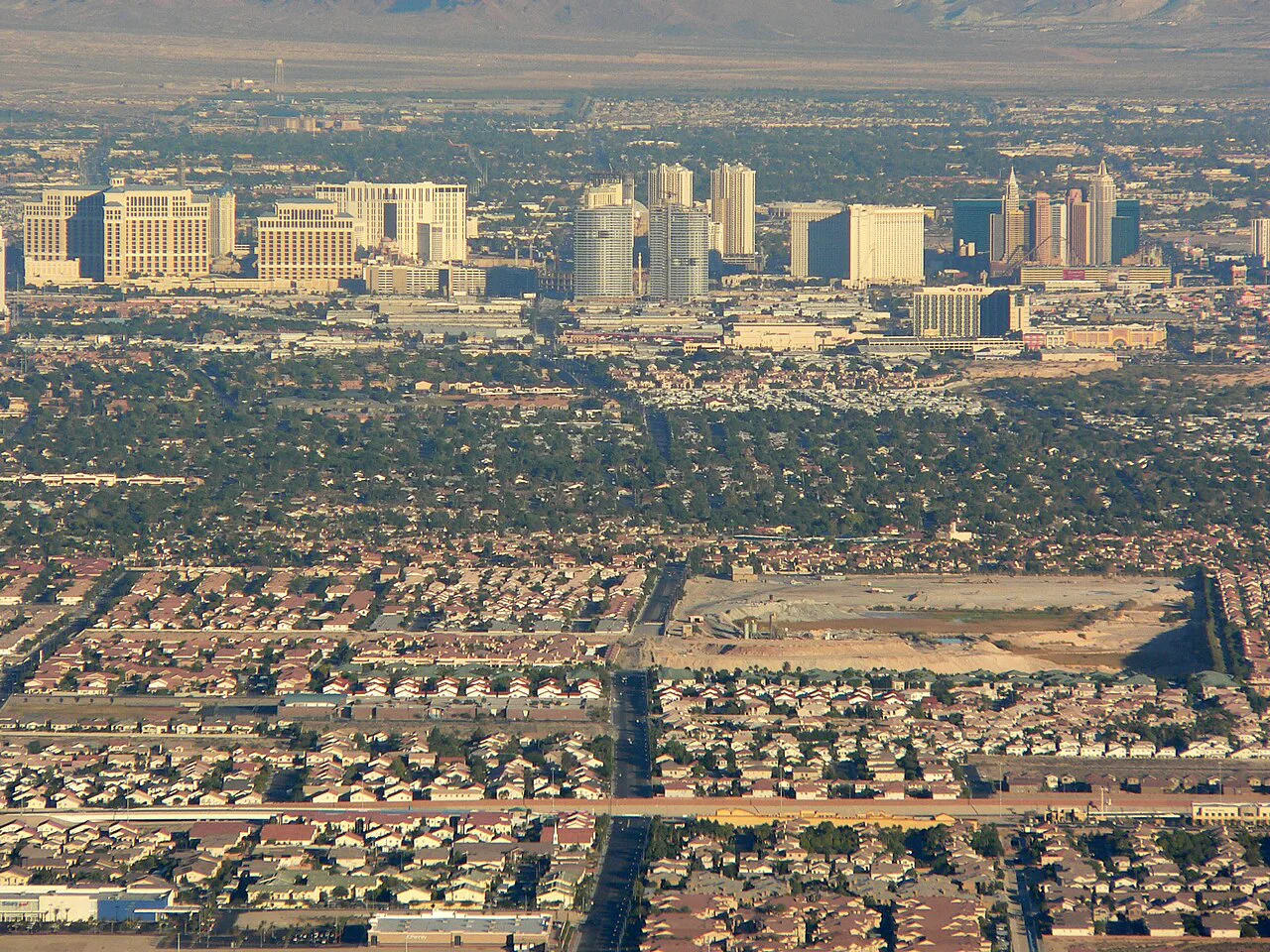
Photo by Dietmar Rabich · CC BY-SA 4.0 · Wikimedia Commons
Most people moving to Las Vegas budget for the obvious stuff: the higher summer power bill, the HOA, maybe pool service. The number that quietly blindsides them is car insurance. Nevada is one of the most expensive states in the country for auto coverage, and Las Vegas drivers usually pay even more than the state average. The good news is that the gap between what most people pay and what they could pay is huge, and almost all of it comes down to a few decisions you make at the renewal screen.
Here's the honest version. According to MoneyGeek, the average full-coverage policy in Las Vegas runs about $236 a month, while the national average sits closer to $124. That's roughly double. North Las Vegas averages $218 and Henderson averages $202, so where you live inside the valley matters too. Insurify and Bankrate put Nevada full coverage anywhere from $2,824 to $3,568 a year, depending on driver profile and methodology. Whichever number you trust, the message is the same: Vegas is a pricey market, and shopping the right way can shave hundreds, sometimes thousands, off your annual cost.
What Las Vegas Drivers Actually Pay in 2026
Let's get specific. The cost of insurance in the valley swings hard based on three things: your ZIP code, your coverage level, and your driver profile. Here's a side-by-side that pulls from the most-cited 2026 data.
| Coverage & Area | Monthly Average | Annual Average | Source |
|---|---|---|---|
| Las Vegas full coverage | $236 | ~$2,832 | MoneyGeek 2026 |
| North Las Vegas full coverage | $218 | ~$2,616 | Insurify 2026 |
| Henderson full coverage | $202 | ~$2,424 | Insurify 2026 |
| Nevada minimum liability | $80-$90 | $961-$1,084 | Bankrate / Insurify 2026 |
| National full coverage avg | $124 | ~$1,488 | National benchmark |
One thing worth flagging: the published "average" figure changes a lot between sources because each one uses a different sample driver. NerdWallet's Las Vegas page, for example, highlights Progressive at around $2,112 a year for a clean-record 35-year-old, which sounds dramatically cheaper than the MoneyGeek city average. Both can be true at once. The cheapest carrier for a specific clean-record profile is usually well below the citywide market average, which is a blended number that includes drivers with tickets, accidents, younger ages, and weaker credit.

Why Insurance Costs So Much Here
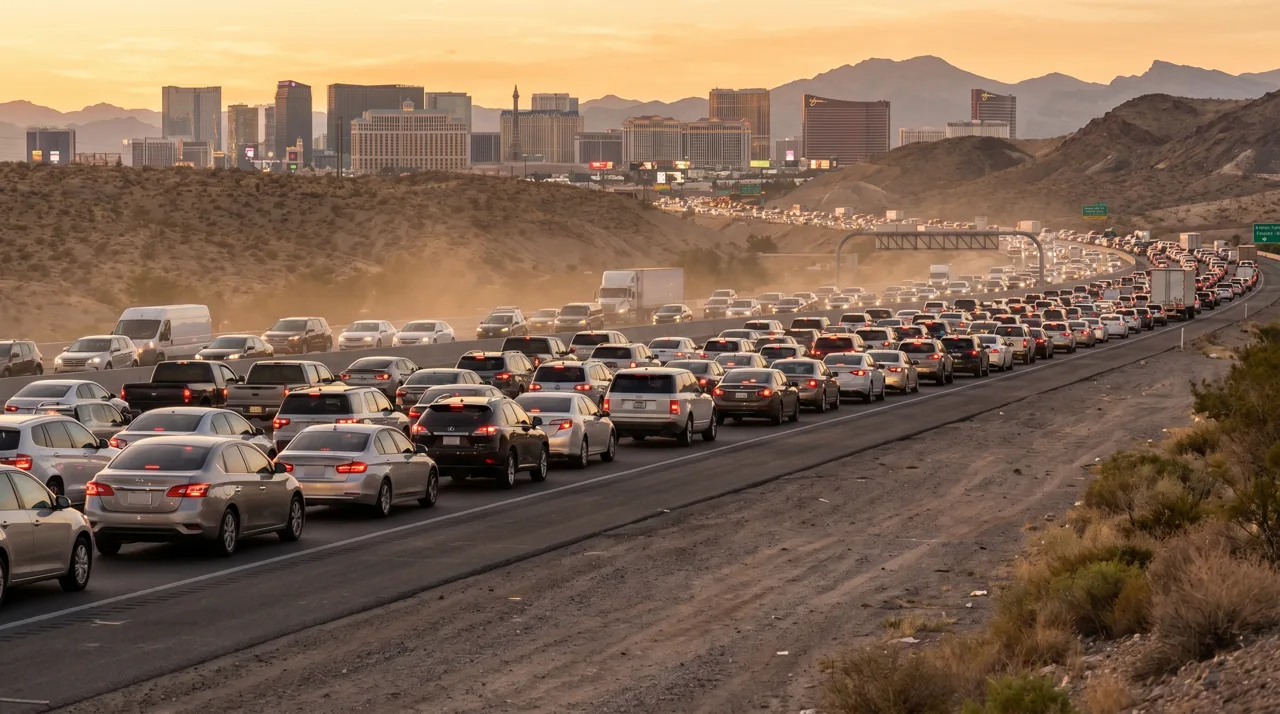
This part matters because the reason Vegas is expensive also tells you where the savings actually live. Insurers price by risk, and the valley has a specific stack of risks that show up in everyone's premium even if you personally drive 20 miles a week to a quiet office in Summerlin.
Tourism Plus a 24/7 Economy
Clark County reports more than 20,000 crashes a year. The intersection of Sahara and Decatur is regularly cited as the most dangerous in the valley, and corridors like Flamingo and Rainbow, plus Tropicana and Rainbow, see chronic high-volume collision counts. None of that is unique to your driving record, but all of it is baked into the rates available to you. According to the Nevada Department of Transportation, Clark County accounts for the largest share of fatal crashes in the state by a wide margin. Insurers see those numbers and price the metro accordingly.
Vehicle Theft
Nevada consistently ranks among the worst states in the country for auto theft, and the Las Vegas metro is a big part of why. Comprehensive premiums (the part of full coverage that pays for theft, vandalism, hail, and similar non-collision losses) reflect that exposure.
Uninsured Drivers
An estimated 11% of Nevada drivers carry no insurance. When an uninsured motorist hits an insured driver, claims run up the cost of uninsured/underinsured motorist coverage for everyone else. Nevada doesn't legally require UM/UIM, but it does require insurers to offer it, which most newcomers don't realize.
Recent Rate Surges
Rates didn't just creep up. According to ValuePenguin, Nevada was projected to lead the nation in 2024 with a 28% expected increase. Nevada Current and KTNV reporting in 2025 and 2026 followed up with a 13% statewide hike and another 6.42% bump in 2026. The Las Vegas Review-Journal reported that Progressive Direct alone raised rates on more than 200,000 Nevadans in a single 2025 filing. That's why so many people who haven't had an accident in years are watching their renewal jump $40 to $80 a month for no obvious reason.
Nevada's Legal Minimum and Why It's Not Enough
Nevada law requires every registered vehicle to carry liability coverage of at least 25/50/20:
- $25,000 bodily injury per person
- $50,000 bodily injury per accident
- $20,000 property damage per accident
Those limits have been in place since July 1, 2018, when the state raised them from the prior 15/30/10. Per the Nevada Division of Insurance, the minimum is liability only. It does not pay for damage to your own car. Collision and comprehensive are separate optional coverages that you add on top.
Here's the practical issue. A new full-size SUV or truck on the road in Las Vegas can easily cost $60,000 to $80,000. If you only carry the 20K property damage minimum and you cause a wreck, you are personally on the hook for whatever's left, and that's before medical bills. The minimum keeps you legal. It does not keep you protected. For most homeowners and anyone with assets to lose, full coverage with higher liability limits is the more honest answer.


The DMV Rule Almost Every Newcomer Misses
Nevada runs an electronic insurance verification system called Nevada Live, and it's strict. Carriers report your coverage status directly to the DMV. If the system can't verify that you have active liability insurance on a registered vehicle, your registration gets suspended automatically, and the fines stack quickly with each day of lapse.
| Lapse Length | 1st Offense | 2nd Offense | 3rd Offense |
|---|---|---|---|
| 1-30 days | $250 | $500 | $750 |
| 31-90 days | $500 | $1,000 | $1,250 |
| 91-180 days | $750 + SR-22 (3 yrs) | $1,000 + SR-22 | $1,500 + SR-22 |
| 181+ days | $1,250 + SR-22 | $1,500 + SR-22 | $1,750 + SR-22 |
The kicker: an SR-22 filing typically tags you as a high-risk driver for three years, which can roughly double your premium during that window. A 91-day lapse, even an accidental one caused by a missed autopay or a botched switch between carriers, can cost you more in premium increases over three years than a fender-bender would.
How Your ZIP Code Changes Your Premium
This is the lever almost nobody talks about. A clean-record driver with the same car and the same coverage can pay materially different rates between Henderson and central Las Vegas. The difference flows from accident frequency, theft data, and traffic density at the ZIP-code level.
Henderson
~$202/mo full
Lowest valley average. Lower density, fewer crashes per capita. Henderson neighborhoods often save buyers $30-$50/mo on auto insurance versus central Las Vegas.
Las Vegas
~$236/mo full
Citywide average pulled up by central and Strip-adjacent ZIPs (89101, 89102, 89109) with the highest crash counts.
North Las Vegas
~$218/mo full
Mixed picture. Newer master-planned areas like Club Aliante price more like Henderson, while older corridors price closer to central LV.
If you're still deciding where in the valley to land, get quotes for both ZIPs you're considering before you sign anything. The difference can be the equivalent of a couple of HOA payments a year, which is real money over a 30-year ownership horizon. As a CRS and Top 1% Las Vegas agent, I've watched buyers spreadsheet every line of the carrying cost except this one, and it's almost always the easiest to optimize.
How to Actually Save Money on Las Vegas Car Insurance
Most "save on car insurance" advice is generic. Here's what actually moves the needle in this specific market, in roughly the order of impact.
1. Shop Every Renewal, Not Just When You're Mad
The cheapest carrier in Las Vegas changes constantly because rate filings hit different insurers at different times. NerdWallet's 2026 analysis pegs Progressive around $2,112/year for a clean-record full-coverage profile. MoneyGeek's same-year analysis lists COUNTRY Financial at roughly $164/month for full coverage and Travelers at $92/month for minimum. A year from now those positions will likely shuffle. The drivers who pay the least aren't necessarily loyal to one company. They're the ones who run quotes every 12 months from at least four carriers and switch when the spread is meaningful.
2. Raise Your Deductible Strategically
Nevada DOI guidance is direct: a higher deductible lowers your premium. Going from a $500 to a $1,000 collision deductible can drop premium 10-15% at most carriers. The honest test is whether you could write a check for $1,000 tomorrow without panic. If yes, take the savings. If no, leave it alone.
3. Fix Your Insurance Score
Nevada permits credit-based insurance scoring, and bad credit can raise rates by up to 60% on the same policy. That's not a typo. Drivers don't always realize this, but a 50-point bump in credit score can save more on insurance than switching carriers. Pay down revolving balances before the renewal date, dispute errors on your reports, and request an updated quote.
4. Drop Comprehensive and Collision on Older Cars
If your vehicle is worth $4,000 and you're paying $900 a year for comp/collision with a $500 deductible, the math doesn't work. The most you'd ever collect is $3,500, and after about four years you've paid more in premium than the car is worth. For paid-off cars below roughly $5,000 in value, dropping to liability-only is usually the right call. Run the numbers honestly.
5. Bundle and Stack Discounts
Almost every carrier offers a multi-policy discount when you bundle home or renters insurance with auto. Typical savings run 5-15% on the auto side. While you're at it, ask about all of these:
- Multi-vehicle (two or more cars on one policy)
- Paperless billing and autopay
- Pay-in-full (six-month premium upfront)
- Defensive driving course completion (Nevada DMV approves several online options)
- Low-mileage discount if you work from home or drive under 7,500 miles a year
- Good-student discount for teen drivers with strong GPAs
- Anti-theft device discount, especially relevant given Las Vegas theft rates
- Military or first-responder discounts (USAA is worth a quote if you're eligible)
6. Try Telematics, but Read the Fine Print
Programs like Progressive Snapshot, State Farm Drive Safe & Save, and Allstate Drivewise track your driving via app or device and discount your premium based on what they see. Safe drivers can save 15-30%. Aggressive braking and late-night driving can hurt you, though, which matters in a city where late-night driving is normal. If you commute through the resort corridor at midnight, telematics might not be your friend.
7. Use a Local Independent Broker for the Hard Cases
Direct-quote sites are great if your profile is clean and standard. If you have a recent accident, a DUI, a SR-22 requirement, or a high-value vehicle, a local independent broker who writes with multiple carriers will usually find rates the comparison sites can't. They earn a small commission from the carrier, not a fee from you.


What Costs the Most on Your Premium
Two factors hurt Las Vegas drivers more than most. Knowing them helps you avoid the trap.
Bad Credit
Up to 60% premium increase versus a driver with strong credit and the same record. The single biggest non-driving factor most people don't track.
DUI
Average 60% jump after a DUI in Nevada, plus three years of SR-22 filings. The state's enforcement is strict, and Nevada has one of the highest DUI arrest rates in the country.
Coverage Lapse
Even a 31-day lapse triggers a $500 first-offense fine and a re-rate at non-standard pricing. A 91-day lapse adds a 3-year SR-22 requirement.
The "Hidden Move-In Cost" Most People Miss
If you're relocating to Las Vegas from a cheaper-insurance state like Ohio, Michigan, or Idaho, expect your auto premium to roughly double on day one, before you've even unpacked. Buyers comparing total cost of ownership on a Vegas home almost always factor in property taxes, HOAs, and the summer power bill. Far fewer factor in another $1,500 to $2,000 a year for the same coverage they had before. Bankrate's hidden-cost research consistently shows insurance as the largest underestimated piece of car ownership for relocating drivers.
People compare home prices, HOA dues, and utility bills when relocating, but car insurance can quietly add thousands per year to the true cost of living in Las Vegas. Get a quote in your future ZIP before you sign anything.
If you're working through full-cost-of-ownership math for a move, the mortgage calculator covers the housing side, and a few minutes on Progressive, GEICO, and Travelers' quote pages with your future address gets you the auto side. Stack the two together and you'll know your real monthly payment, not just the principal-and-interest line on the listing.
Quick FAQ for New Las Vegas Drivers
Do I have to switch insurance when I move to Nevada?
Yes. The DMV requires a Nevada-issued insurance card to register your vehicle, and you have 30 days from establishing residency to register. Most national carriers can switch your address with a phone call, but the new policy will be priced at Nevada rates. There is no workaround.
Is full coverage required by law?
No. Nevada only requires liability at 25/50/20. Collision and comprehensive are optional. If your car is financed or leased, however, the lender will require full coverage in their loan agreement, which is a contract issue, not a state law issue.
What's the cheapest insurance company in Las Vegas right now?
It depends on your profile. For clean-record drivers in 2026, Progressive, COUNTRY Financial, and Travelers consistently appear at or near the top of comparison studies. For eligible military households, USAA usually beats everyone but isn't open to the general public. For drivers with a recent accident or DUI, the cheap-quote leaders shift, which is why shopping with multiple carriers matters more than picking the "best" company in the abstract.
Does my Las Vegas ZIP code really matter that much?
Yes. The same driver and the same car can see a 15-25% difference in premium between an 89074 ZIP in central Henderson and an 89101 ZIP near downtown Las Vegas. ZIP-level theft rates and crash data drive a meaningful slice of your rate.
Will my rate go down if I drive less after retiring?
It can. Most carriers offer low-mileage discounts that kick in around 7,500 annual miles, and telematics programs reward off-peak driving. Tell your insurer when your annual mileage drops materially. They will not figure it out on their own.
The Bottom Line
Las Vegas car insurance is genuinely expensive, and the structural reasons aren't going away anytime soon. The flip side is that the market has more spread between the cheapest and most expensive policies for the same driver than almost any other large metro. Drivers who shop every year, manage their credit, pick the right ZIP when they buy, and avoid coverage lapses pay materially less than drivers who stay on autopilot. Build a 30-minute renewal habit once a year and you'll likely keep $500 to $1,500 in your pocket that would otherwise drift quietly out of your account every January.
And if you're still in the planning stage of a move to the valley, that ZIP-code question is worth one conversation before you sign anything. Browse Las Vegas neighborhoods with the auto-insurance line item in mind, run quotes against the addresses you're seriously considering, and you'll make a sharper decision on the home side too.
Categories
Recent Posts