Cost of Living: Las Vegas vs. Boise


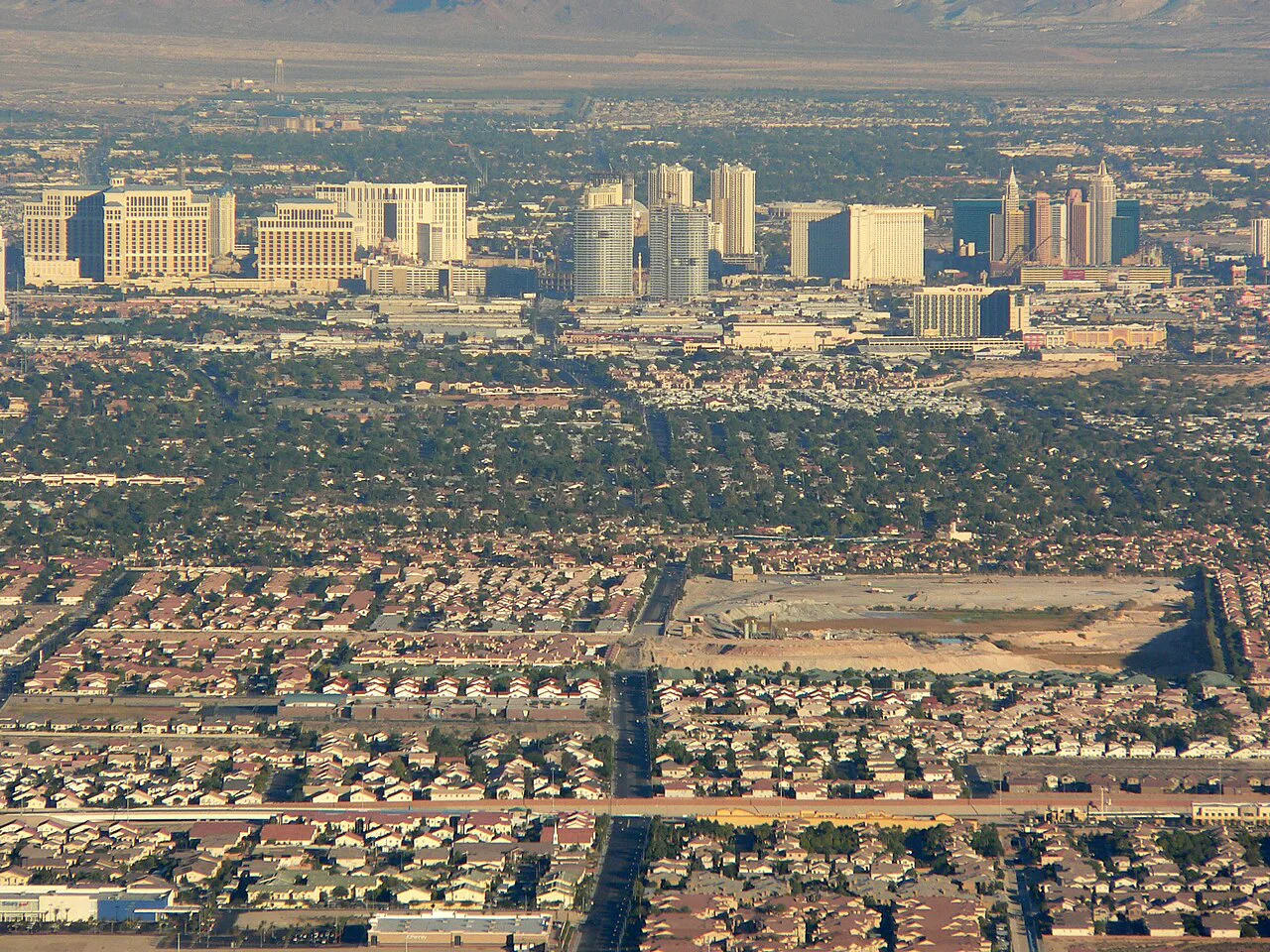
Photo by King of Hearts · CC BY-SA 4.0 · Wikimedia Commons
If you're weighing a move to Las Vegas vs. Boise on cost of living alone, the numbers don't line up the way most people assume. Boise has the small-mountain-town reputation, but once you stack housing, taxes, utilities, and the everyday stuff side by side, Las Vegas comes out ahead more often than not. This is the breakdown I wish more relocators had before they signed a lease in either city.
I get this question constantly, especially from California, Oregon, and Washington families who've shortlisted Vegas and Boise as their two finalists. The assumption is usually that Boise is the budget pick because it's smaller and quieter. The actual data tells a different story, and the gap shows up most clearly in two places: home prices and what the state takes out of your paycheck.
The Big Picture: Vegas Is Quietly the Cheaper City
Cost-of-living indexes get pretty unforgiving once you look at the same household earning the same salary in both cities. Redfin's calculator (built on C2ER survey data) puts Las Vegas roughly 5% below the national average and Boise about 1% below. That alone means Boise is modestly more expensive overall before anyone touches a tax return.
The Boise reputation as a cheap mountain alternative is mostly a relic of 2015 to 2018, before the Idaho boom. Today, Boise's housing market is hotter relative to local wages than Vegas is, and Idaho's state income tax claws back a chunk of every paycheck. Vegas has its own pain points (auto insurance and summer power bills lead the list) but the math works out in favor of Las Vegas for most relocators.
Housing: The Surprising Reversal
This is where readers do the biggest double-take. Las Vegas, the bigger and more famous city, is the cheaper place to buy a home in 2026. Recent Zillow and Redfin data both confirm Boise home values have run higher than Vegas for the last few years.
| Housing Metric | Las Vegas, NV | Boise, ID | Source |
|---|---|---|---|
| Median single-family home (March 2026) | $481,995 | ~$515,000 | LV Realtors, Zillow Boise |
| Median 2-bedroom rent | ~$1,627 | ~$1,690 | RentCafe, Zillow |
| Months of inventory | 3.35 to 4.6 | Tightening (per BoiseDev) | LV Realtors, BoiseDev |
| Effective property tax rate | 0.47% to 0.59% | ~0.67% | Clark County, ID Tax Commission |
For a household looking at a $400,000 home, that property tax difference alone is roughly $700 a year more in Boise. That's not a deal-breaker on its own, but it stacks with everything else.


The other thing newcomers underestimate about Vegas housing is how much variety the price gets you. The valley breaks down by sub-market in a way Boise can't match yet:
Entry Tier
$300K to $475K
North Las Vegas, parts of Spring Valley, older Henderson. Workforce housing close to industrial and hospitality jobs.
Mid Market
$475K to $750K
Centennial Hills, Mountains Edge, Inspirada, central Henderson. Pools, three-car garages, family-friendly schools.
Luxury
$750K to $20M+
Summerlin, MacDonald Highlands, Lake Las Vegas, The Ridges. Guard-gated, golf, and Strip-view communities.
If you're seriously comparing the two markets, our Las Vegas market overview walks through how each of these tiers behaves through the year. Inventory shifts a lot between Q1 and Q4.
The Tax Math That Changes Everything
This is the section most cost-of-living comparisons gloss over, and it's the single biggest reason Vegas wins for working households.
Nevada has no state individual income tax. Idaho has a flat individual income tax that applies to almost every dollar a resident earns above the threshold. The dollars-and-cents impact on take-home pay is large enough that it can easily outweigh small differences elsewhere.
| Household Income | Estimated Idaho State Income Tax | Nevada State Income Tax | Annual Take-Home Difference |
|---|---|---|---|
| $75,000 | ~$4,271 | $0 | ~$4,271 favoring NV |
| $100,000 | ~$5,695 | $0 | ~$5,695 favoring NV |
| $150,000 | ~$8,542 | $0 | ~$8,542 favoring NV |
| $200,000 | ~$11,390 | $0 | ~$11,390 favoring NV |
Estimates assume a single filer using effective rates near Idaho's flat income tax structure. Your actual liability depends on deductions and filing status, but the order of magnitude is right. For a remote worker pulling $150K, Vegas saves roughly $700 a month over Boise. That's a Tesla payment, a private school tuition installment, or three Strip dinners with the family every month.
Sales tax goes the other way. Clark County's combined rate is 8.38%, while Boise's is closer to 6%. On $30,000 a year of taxable spending, that's about $710 more in Vegas. It's a real number, but it's a fraction of what most households save on income taxes.
Property tax also leans toward Vegas. Clark County's effective rate runs roughly 0.47% to 0.59%, plus Nevada's 3% annual cap on tax-bill increases for primary residences (under AB 489), which insulates owners from the kind of tax shock Texas and Florida buyers hit during fast appreciation. Boise sits closer to 0.67% and doesn't have an equivalent cap.


Utilities: A Real Trade-Off (But Not the One You Think)
Boise's reputation for cheap power is real. Idaho Power leans on hydroelectric generation and bills that thanks to the Snake River. Idaho Power says its customers pay "among the nation's lowest prices for electricity." That's true. What's also true is that Las Vegas utilities, taken as a basket, run below the national average too, per Redfin's cost-of-living tool.
The honest summary is that Vegas trades a brutal three-month summer A/C bill for a cheaper rest-of-year, while Boise trades winter heating and a milder summer for a more even monthly average.
| Utility | Las Vegas Average | Boise Average | Notes |
|---|---|---|---|
| Electricity (annual avg.) | $154 to $171/mo | ~$105/mo | NV Energy peaks at $250 to $470 in summer |
| Natural gas (annual avg.) | ~$41/mo | Higher in winter | Vegas peaks ~$58 in Dec-Feb |
| Water (LVVWD standard home) | $32 to $60/mo | Comparable, lower for heavy outdoor users | LV uses tiered pricing to penalize over-watering |
| Total typical bill | $225 to $350/mo | $200 to $300/mo | Vegas owes the gap to summer A/C |
The thing nobody warns Boise transplants about is that summer rates aren't free there either. Idaho Power's higher summer rate window runs roughly June through September, and the company has filed for additional bill increases moving into 2026. Vegas residents see this same pattern but more aggressively, with NV Energy proposing residential increases that, in some recent filings, hit double digits before adjustments.
What I tell clients: a well-insulated Vegas home with a 14-SEER2 or better A/C system reduces summer bills by about 15% versus a 1990s baseline. The cost shows up most in older inventory, not in newer construction.
What Daily Life Actually Costs
Groceries
Vegas grocery prices are about 3% over the national average per Redfin's basket, while Boise tracks slightly under because Idaho is an agricultural state with lower transportation costs to the supermarket. The gap is small in real terms. A bag of bananas, a dozen eggs, a half-gallon of milk, a loaf of bread, and a pound of ground beef in Vegas adds up to about $0.50 more than the national average. Boise residents do see a small win on staples like milk and bread.
What changes the math is access to cheap options. Vegas has Chinatown along Spring Mountain Road, the 99 Ranch and Seafood City Asian markets, El Super, Cardenas, and Smart & Final, plus several Costco locations. Boise has solid grocery competition but a thinner ethnic-market scene. For a household that cooks a lot, Vegas usually wins on overall food spend even if individual items index slightly higher.
Dining Out
This one surprises people. Off-Strip Vegas dining is genuinely competitive with Boise on price, and the variety is on a totally different scale. A budget meal at Tacos El Gordo or In-N-Out runs $10 to $15. A mid-range dinner runs $20 to $44 at places like Spago, Hell's Kitchen, or Cheesecake Factory. Boise's mid-range comps land closer to $20 to $35, so Boise still has a small dining-out edge if you mostly eat at chain-style restaurants. The Strip is its own pricing universe (figure 30% to 40% higher than off-Strip), but locals rarely dine there.
Transportation and the Auto Insurance Reality Check
According to Bureau of Labor Statistics data, transportation costs in Las Vegas index about 13% above the national average, with gas typically running $4.40 to $4.80 per gallon. Boise gas tends to run a bit cheaper.
The bigger story is auto insurance. Nevada is one of the most expensive states in the country for car insurance, with full-coverage averages running $2,824 to $3,568 per year. Idaho is meaningfully cheaper, often less than half that. Why? Las Vegas has a high uninsured-driver rate, dense tourist traffic, and a 24/7 nightlife pattern that pushes up after-hours collision rates. It's the single biggest line item where Boise wins clean.
Childcare
Childcare costs in Nevada have moved up sharply, with infant center care running $1,055 to $1,650 a month. Boise sees similar numbers (Idaho averages a hair lower in most studies), so this category is roughly a wash. Both cities have meaningful waitlists for the better-rated centers.
Income and What That Buys You
Median household income in the Las Vegas-Henderson MSA is around $60,465 to $70,400. Boise sits in a similar range. The wage scales for skilled professional roles in Vegas now run close to West Coast benchmarks, especially in tech, healthcare, and legal:
- Registered Nurse: $88,000 to $98,000
- Software Engineer: $115,500 to $123,614
- Lawyer/Attorney: $88,140 to $132,500
- Teacher (Secondary): $62,000 to $73,429
- Construction Worker: $58,923 to $66,960
- Accountant: $73,306 to $75,000
Boise wages tend to track lower in tech and finance roles, with Micron's expansion being a notable exception. Boise's headline employer push is real but concentrated. Las Vegas has a more diversified base now: hospitality, healthcare, logistics, fintech, distribution, and a fast-growing tech sector tied to UnCommons and the southwest valley. The valley pulled in 33% of new residents from out of state, the highest in-migration share in the country.
Climate and What It Costs You
Vegas summers are no joke. Three months of 100°F-plus daytime highs mean your A/C runs hard. June through September electric bills routinely hit $250 to $400, and shaded north-facing homes save real money. Winters are mild and short, which means heating barely registers as a cost.
Boise's four-season climate is the inverse story: mild summers (warm afternoons, cool nights), snowy winters, and the cost of winter tires, snow shoveling, and higher heating gas. Boise sits at 2,700 feet of elevation and gets real winter, not "California winter." If you've never owned a snow shovel or a set of winter tires, that's a real budget item to add. A second tire set alone is $700 to $1,200 every few years.
For relocators from Phoenix, Sacramento, or coastal California, the Vegas climate adjustment is smaller. For folks coming from Seattle or Portland, Boise feels more familiar.


Lifestyle and Entertainment Spending
WalletHub has ranked Las Vegas the country's "Best City for Recreation" for several years running, and not just because of the Strip. The valley has 80+ city parks, Red Rock Canyon for hiking, Lake Mead for boating, Mt. Charleston for snow within an hour, and a year-round event calendar that benefits from tourism subsidies (cheaper concert tickets, free shows, comped happy hours).
Boise's outdoor scene is genuinely excellent. The Greenbelt path along the Boise River is a treasure, Bogus Basin gives you ski access in 30 minutes, and the foothills trails start where the city ends. If your idea of the good life is a daily trail run with your dog, Boise has the edge.
For nightlife, dining, live entertainment, and "things to do without driving 90 minutes," Vegas is on a different scale. That's a personal call, not a financial one, but a Las Vegas household typically spends less per outing than a Boise household making weekend trips into the mountains for the same recreation budget.
HOA Fees, SIDs, and the Hidden Layer of Vegas Costs
Both cities use HOAs for newer communities. Vegas HOA fees run from $30 a month in older North Las Vegas neighborhoods up to $600+ in luxury guard-gated communities like MacDonald Highlands or The Ridges. Boise HOA fees in newer subdivisions tend to fall in the $30 to $100 range, generally lower than the Vegas equivalent.
The hidden Vegas cost is the SID bond (Special Improvement District). Many newer master-planned communities charge SID fees for infrastructure (roads, sewers, parks), often $1,500 to $4,000 a year on top of the HOA. Builders don't always volunteer this. As a CRS and Top 1% Las Vegas agent, I make a point of pulling the SID disclosure on every new-build offer my clients submit, because I've seen this catch buyers off guard more than once.
Crime, Safety, and Insurance Implications
Per LVMPD and Nevada Crime Stats, the Las Vegas Valley has lower crime rates in master-planned communities like Summerlin, Henderson, and Lake Las Vegas than in older central districts. Boise's overall crime rate is lower than Vegas at the metro level per FBI Uniform Crime Reporting data, which is one factor in Idaho's cheaper auto and home insurance.
For comparison shoppers, that means Boise is genuinely cheaper to insure across the board, but the gap is meaningful only on the auto side. Homeowner's insurance in Vegas runs reasonable thanks to low natural-disaster exposure outside of the wind season.
So Who Should Choose Which?
Cost of living matters, but the right answer depends on what kind of household you are.
Las Vegas wins for...
Higher earners ($100K+) where Nevada's no-income-tax advantage is biggest. Remote workers who can stack a coastal salary against Vegas costs. Families who want a bigger house for the money. Anyone who wants Strip-level dining, concerts, and direct flights without paying coastal prices for them. Retirees prioritizing no estate or inheritance tax.
Boise wins for...
Households whose lifestyle is built around four seasons, mountain access, and small-city pace. Drivers who prioritize cheap auto insurance. Lower-income households where the no-income-tax advantage is smaller and the slightly cheaper utilities and groceries do more of the work.
Either city works if...
You're a dual-income family in the $80K to $130K range. The total cost-of-living difference flattens here, and the choice becomes lifestyle, climate, and proximity to family. The financial penalty for picking the "wrong" one is small.
What I Wish More Relocators Knew Before Picking
I work with relocating clients from all over the West, and the pattern I see is that people pick their city for the wrong reasons and then negotiate the cost of living afterward. A few things I push every relocating client to do:
- Run your real net pay in both states using a paycheck calculator. Don't trust headline tax rates. Do the actual line-by-line math on your salary.
- Get an auto insurance quote in both Vegas and Boise before you decide. The Nevada premium is real, and you should price it in.
- If you'll buy a Vegas home, ask whether the property is in an SID district and request the bond payoff schedule. You can use our mortgage calculator to model HOA, taxes, and insurance into one number.
- Test the climate in person. Visit Vegas in July and Boise in January before you sign anything. The sticker shock works both directions.
- For Vegas homes, look for 14-SEER2 or better A/C, dual-pane low-E glass, and shade orientation. These cut summer power bills meaningfully.
- If schools matter, pull the specific zoned-school ratings on any Vegas address you're considering, not the district average. Clark County is huge, and ratings vary block by block.
Future Growth: Both Cities Are Changing Fast
Boise approved 1,962 housing units in 2025, per BoiseDev, and Micron Technology's expansion is projected to create 17,000 direct and indirect jobs over the next several years. That's adding pressure to a market that's already tight on inventory. Boise's road impact fees climbed in March 2026, and new-construction prices are likely to drift up.
Vegas is in a different growth pattern. The valley is welcoming new employers in renewable energy, advanced manufacturing, and AI infrastructure, with the southwest UnCommons district and the Apex industrial corridor adding jobs. Resale inventory has loosened to 3.35 to 4.6 months, which gives buyers their strongest leverage in years. Builder incentives like permanent rate buydowns into the 5% range are widely available in Summerlin, Skye Canyon, and parts of Henderson.
If you're buying in either market, 2026 looks like a more buyer-favorable window than the last several years.


Bottom Line on Cost of Living: Las Vegas vs. Boise
If you're playing the cost-of-living game purely on numbers, Vegas wins more often than Boise for working households earning above the local median. The state income tax difference is the biggest single line item, and it scales hard with income. Boise wins on auto insurance, electricity, and groceries by small-but-real margins, but those wins don't typically add up to what Nevada's tax structure saves.
Don't pick a city on cost of living alone. Pick on the lifestyle you want and then make the numbers work. But if Vegas and Boise are tied on lifestyle for you, the math points to Las Vegas, and the gap gets bigger the higher up the income ladder you climb.
Quick FAQ for Relocators Comparing Las Vegas and Boise
Is Las Vegas really cheaper than Boise?
For most working households, yes, once you include the income tax difference. Boise has a slight edge on day-to-day items like groceries and electricity, but Las Vegas's lack of state income tax usually outweighs that for any household earning $75K and up.
What's the single biggest cost surprise in each city?
In Vegas, it's car insurance. Nevada is the most expensive state for full-coverage auto insurance in 2026. In Boise, it's the housing market itself. Home prices have run higher than Vegas for the last few years, which catches relocators who think of Boise as the "cheaper" choice.
Which city has the better property tax setup?
Las Vegas. Nevada's effective property tax rate is lower than Idaho's, and Nevada's 3% annual cap on tax-bill increases for primary residences (under AB 489) protects long-term owners from runaway tax shock during periods of fast appreciation.
How does climate factor into the cost?
Vegas summers add to your power bill (figure $250 to $470 in peak months), but the rest of the year is cheap. Boise winters add to heating bills, snow gear, and winter tires. Vegas's overall utility average actually runs slightly higher because three months of summer A/C is brutal even in efficient homes.
Is Boise's "cheaper electricity" true?
Yes, on a rate basis. Idaho Power's hydroelectric supply gives Boise some of the lowest residential rates in the country. But the absolute monthly bill gap shrinks once you factor in Vegas's lower winter heating costs and a generally smaller home footprint in newer Vegas master-plans.
What's the best Las Vegas neighborhood for relocators on a budget?
For families on a budget, Centennial Hills, Mountains Edge, and Inspirada deliver new-build value under $475K with strong school zoning. North Las Vegas is even more affordable for buyers prioritizing entry-level pricing and a short commute to industrial-corridor jobs.
Will Vegas keep getting more expensive?
The math suggests yes, but at a slower pace than 2020 to 2022. Inventory has loosened, which is keeping price growth in check. The longer-term trend is upward thanks to in-migration and new-employer expansion, but 2026 looks like a buyer-favorable window before the next surge.
Categories
Recent Posts