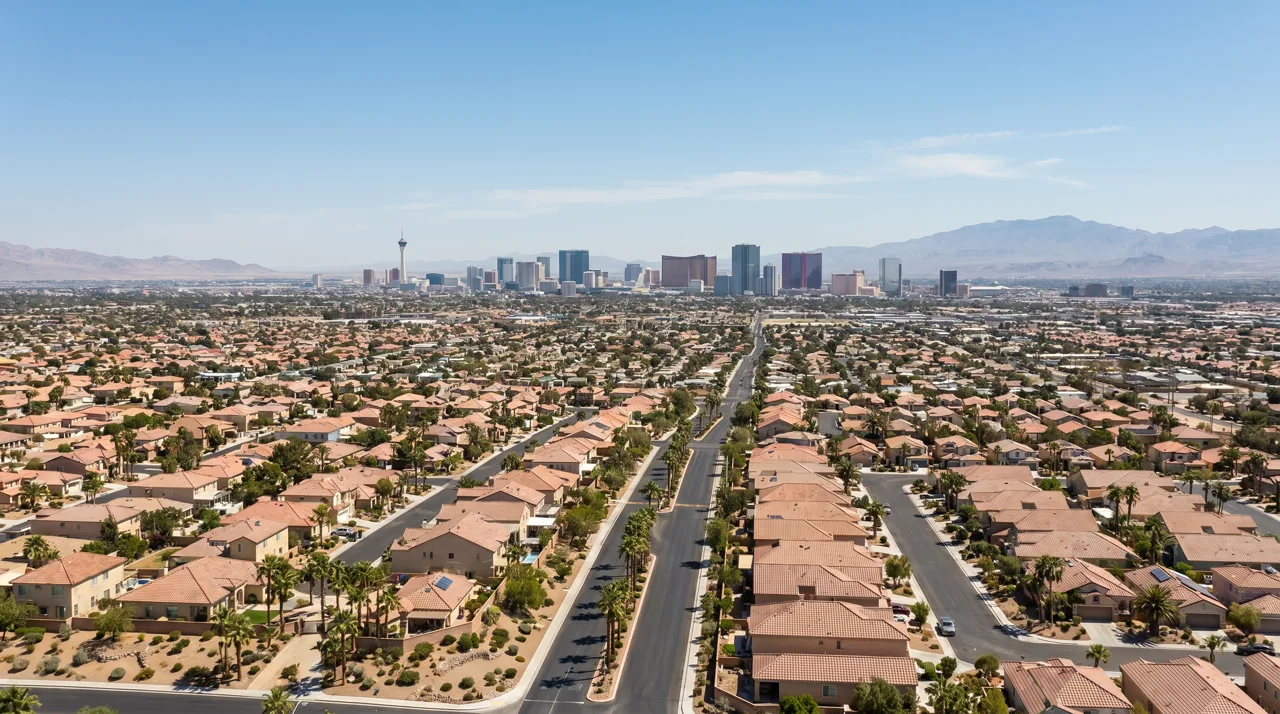
Cost of Living: Las Vegas vs. Dallas


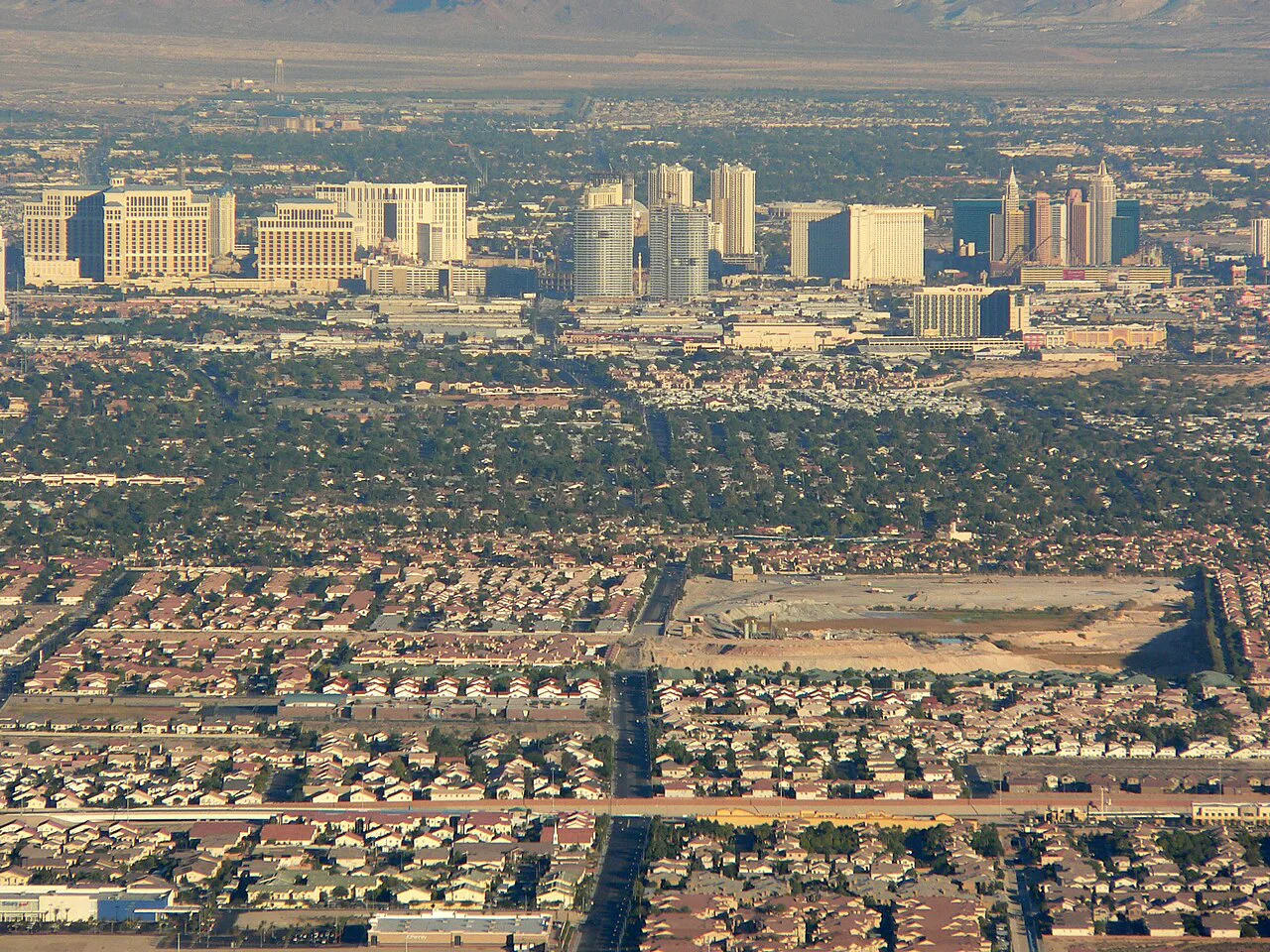
Photo by Gayinspandex1 · CC BY-SA 4.0 · Wikimedia Commons
If you're weighing a move between two big no-income-tax Sunbelt cities, the cost of living in Las Vegas vs. Dallas is one of those comparisons where the headline numbers and the actual monthly experience tell two different stories. Dallas is cheaper to buy into. Las Vegas is often cheaper to keep. And depending on whether you're renting, buying, or raising a family, "cheaper" can flip in either direction.
I get this question a lot from buyers relocating out of California or the Pacific Northwest who are seriously deciding between the two. They've already crossed off the income-tax states and they're trying to pick between Texas and Nevada based on the smaller, less obvious differences. So instead of a generic pros-and-cons list, this is what you actually need to know about how a household budget plays out in each place.
The Big Picture: Two Sunbelt Cities, One Important Tie
Before getting into the line items, the single biggest similarity is the one that drives the entire conversation: neither Nevada nor Texas has a state income tax. That's the gravity well pulling people from California, Oregon, Washington, and New York toward both metros. Tax Foundation lists both states with no individual income tax, and that alone changes the math for anyone earning a real salary.
From there, the cities diverge. Cost-of-living index data has Las Vegas running about 5% cheaper than Dallas overall, but that aggregate number hides a lot. Housing alone is the dominant variable, and inside housing the rent vs. buy split matters more than people realize.


Housing: Where Most of the Real Money Lives
Buying a Home
This is where Dallas wins on the sticker price. Zillow's city-level data through March 2026 puts the typical home value in Las Vegas at around $426,583, compared to $309,421 in Dallas. That's a roughly $117,000 gap on the typical home.
But "typical home value" and "median sale price" measure slightly different things. On median sale price, the gap closes a lot — Las Vegas comes in around $416,650 versus Dallas at $394,467. The reason for the difference is composition: the homes that actually trade hands in Dallas city skew toward different submarkets than the broader housing stock. So while a relocator scanning Zillow sees Dallas as much cheaper, the homes you'll realistically buy in either city are closer in price than the headline suggests.
Inside the Las Vegas valley, prices vary a lot by area. Per local market data, Summerlin sits at a $649,900 median, Henderson at $535,000, the Southwest at around $500,000, and North Las Vegas at $424,999. So a buyer who'd be priced out of Summerlin can still find Las Vegas options that line up with Dallas's typical range.
| Metric | Las Vegas | Dallas | Source |
|---|---|---|---|
| Typical home value (city) | $426,583 | $309,421 | Zillow, March 2026 |
| Median sale price | $416,650 | $394,467 | Zillow city pages |
| Median list price | $450,000 | $409,898 | Zillow city pages |
| 1-year home value change | -2.7% | -3.6% | Zillow, March 2026 |
| % sales under list price | 63.6% | 72.5% | Zillow city pages |
Both markets are in buyer-friendly territory right now. Las Vegas has roughly 8,252 active listings against Dallas's 4,689, and homes in both cities are selling under list price more often than not. The key takeaway: this isn't 2021 anymore. Negotiation and concessions are real in both places.
Renting
This is the part that surprises most people I talk to. Texas's reputation as the cheap option breaks down in the rental market. Zillow's all-property-types average rent is roughly $1,940 in Las Vegas vs. $1,895 in Dallas — almost identical. On a metro-to-metro basis, Zillow's March 2026 report shows Dallas metro typical rent at $1,645 and Las Vegas metro at $1,727. Close.
Where Dallas does pull ahead is on apartment-specific rent. The Zillow apartment-and-condo segment shows Dallas at about $1,452 in April 2026, while Las Vegas's apartment averages run $1,109 to $1,695 by bedroom count. Studios and one-bedrooms are roughly even; family-sized rentals tilt slightly cheaper in Dallas in some segments.
Property Taxes: The Quiet Game-Changer
This is where Las Vegas wins decisively. Texas has some of the highest property taxes in the country. Nevada has some of the lowest. Tax Foundation reports Nevada's effective property tax rate on owner-occupied housing at 0.49%. Texas runs significantly higher, and Dallas County in particular tends to land between 1.49% and over 2% depending on the assessment.
Run the math on a $400,000 home and the gap is brutal:
Las Vegas, NV
~$2,000/year
0.50% effective rate. Capped at 3% annual increases on primary residences under Nevada's AB 489.
Dallas, TX
~$5,960/year
1.49% effective rate. No comparable cap on annual increases — assessments can rise sharply in appreciation cycles.
The 30-Year Difference
~$120,000+
That's roughly the gap in property tax payments over a typical mortgage life on equivalent homes — before any tax-rate increases.
That's the number that flips the conversation. Dallas might save you $80,000 on the purchase price, but Nevada's lower property tax rate gives a chunk of that back over the years you actually own the home. Nevada's primary-residence tax cap is the part most people don't know exists. It limits the annual property tax increase to 3% — meaning even if values climb sharply, your tax bill can't jump with them. Texas has no equivalent cap.


The Hidden Win: Monthly Carrying Cost
Here's the line that should stop most relocation shoppers in their tracks. Census ACS data (2020-2024) shows median monthly owner costs with a mortgage at $1,933 in Las Vegas versus $2,316 in Dallas. Dallas homes are cheaper to buy. Las Vegas homes are nearly $400 a month cheaper to actually own.
The reason is the property tax math above. Once you bake taxes and insurance into a monthly payment, Nevada's lower rate flips the affordability story. That's why a buyer who plans to stay put for 5+ years often finds Las Vegas the better long-term value, even though Dallas looks cheaper on day one.
Sales Tax and Income Tax
The income tax tie is the headline draw, but sales tax breaks slightly different. Clark County's combined sales tax is 8.38%. Dallas's combined rate is 8.25%, confirmed in the city's official FY2025-26 budget materials. So Las Vegas is fractionally higher on consumption. On a $40,000 car purchase, that's about $52 in extra sales tax. Real but not life-altering.
The structural similarity matters more than the rate gap. Both states fund themselves through sales taxes and other consumption-based revenue rather than income. For a household making $150,000 to $200,000, the absence of state income tax in either place is worth roughly $8,000 to $17,000 a year compared to California or New York, depending on how the math shakes out.
Utilities, Climate, and the A/C Bill That Nobody Warns You About
Both cities run hot. Both cities have summers that punish your electric bill. The good news is that, on a per-kilowatt-hour basis, Nevada and Texas were nearly identical in 2024 — EIA data shows Nevada residential electricity at 15.00¢/kWh and Texas at 14.94¢/kWh. The U.S. average is 16.48¢. So neither state is meaningfully more expensive on power price alone.
What changes the bill is usage. Las Vegas summers are dry and brutally hot — typical NV Energy bills run $250 to $470+ per month from June through September, with average annual bills landing around $153 to $171. Dallas summers add humidity and longer overall A/C seasons, with weather variability that hits utilities and the grid harder. Both cities have households getting smacked with $400+ summer bills. Plan for it.
Where Las Vegas does have a unique cost is water. The Las Vegas Valley Water District uses tiered pricing that aggressively penalizes high outdoor usage — a household with conservative xeriscaping pays $32 to $60 a month, while a property with significant lawn or a pool can run $110+. Dallas's water billing uses a winter-average formula for sewer charges, which means your wintertime habits affect your summer bills. Both cities reward water-conscious households; neither rewards lush lawns.
| Utility Category | Las Vegas | Dallas | Notes |
|---|---|---|---|
| Residential electricity | 15.00¢/kWh (state avg, 2024) | 14.94¢/kWh (state avg, 2024) | Per EIA. Nearly identical on price. |
| Avg monthly electric bill | $153-$171 | Comparable; varies by provider | Both cities have $250-$470+ summer peaks. |
| Natural gas (winter) | ~$57.73/mo avg | Comparable | Both states see modest winter heating bills. |
| Water (standard household) | $32-$60/mo | Tied to winter-average usage | Las Vegas tiers penalize lawns/pools heavily. |
| Total utilities (avg) | $225-$350/mo | ~$300-$380/mo | Bills swing widely with summer A/C use. |
Groceries, Gas, and the Day-to-Day Stuff
Groceries are basically a wash. The two cities track close to each other, with Las Vegas's per-person grocery spend (~$293/month) running about 15% below the national urban average thanks to proximity to California's agricultural supply chains. Dallas is in a similar range. A gallon of milk in Las Vegas runs about $3.70 vs. $3.56 in Dallas; a loaf of bread is about $2.97 in Las Vegas and $4.03 in Dallas. None of these moves the budget needle.
Gas is where Las Vegas takes a real hit. Local prices run $4.40 to $4.80 per gallon — Texas is consistently cheaper at the pump because of its proximity to Gulf refining capacity. If you commute 25 miles each way, that adds up. BLS reported gasoline up 19.7% year-over-year in the Dallas area in early 2026, so that gap may narrow, but expect to pay a premium for fuel in Las Vegas.


What Salary Do You Actually Need?
The MIT Living Wage Calculator gives the cleanest practical comparison. Their February 2026 update shows the hourly living wage for a single adult with no kids at $24.20 in Clark County, NV (Las Vegas) versus $23.31 in Dallas County, TX. Roughly equivalent.
For a family of four with two working adults and two children, the gap widens — $29.30 per working adult per hour in Clark County vs. $25.78 in Dallas County. The driver is child care. Infant center care in Las Vegas runs $1,055 to $1,650 per month, and toddler care is in the same range. Add two kids and the math gets steep fast.
Single Adult, No Kids
Las Vegas: $24.20/hr
Dallas: $23.31/hr
Roughly even — Dallas slightly cheaper.
Family of 4 (2 working)
Las Vegas: $29.30/hr each
Dallas: $25.78/hr each
Dallas meaningfully cheaper for families.
Annual Income, 1 Adult
Las Vegas: $42,812
Dallas: $41,399
Required after-tax income for a basic standard of living.
Census data adds context here. Median household income in Las Vegas was $73,877 (city-level, ACS 2020-2024). Dallas County's median household income was $76,547. Dallas earners make slightly more on average, which partially offsets Dallas's higher family-cost profile.
Insurance, Healthcare, and the Costs Most Comparisons Skip
Healthcare runs a bit cheaper in Las Vegas. Reported numbers put Las Vegas healthcare costs at about 8% below the national average versus Dallas at about 1% above. A doctor's visit without insurance is roughly $93 in Las Vegas and $156 in Dallas, though those gaps shrink dramatically once insurance is involved.
Auto insurance, as noted, is the painful one. Nevada's full-coverage premiums are the highest in the country in 2026. Texas isn't cheap either — it's consistently in the top third nationally — but Las Vegas drivers pay a real premium over Dallas drivers on the same coverage. The difference can run $50 to $100 a month per vehicle.
Homeowners insurance leans the other way. Texas has higher average premiums than Nevada because of hail, wind, and storm exposure across the DFW metro. Las Vegas's desert climate means low storm risk, low flood risk, and lower base premiums. So the auto-insurance loss for Vegas movers is partly offset by the homeowners-insurance win.
Lifestyle and the "What Do You Get For It" Question
Cost of living isn't just numbers — it's what you can do with the money. This is where Las Vegas earns its premium.
Locals in Las Vegas live near a tier of entertainment, dining, and outdoor recreation that no other Sunbelt city can match. Red Rock Canyon is a 25-minute drive from most of the valley. Mount Charleston gets snow in winter — yes, snow, an hour from your house. Lake Mead and the Colorado River are right there. The Strip's restaurants are 10 to 20 minutes from most neighborhoods, and locals know the discount calendars well enough to dine well without overpaying.
Dallas has its own assets — a serious arts district, Dallas Museum of Art with free general admission, a deeper corporate job base, and a big-city restaurant scene that ranks among the country's best. The Texas advantage is breadth: more industries, more career paths, more big-company headquarters. It's a different lifestyle category than Las Vegas, not a worse one.
The valley's housing premium versus Dallas isn't really about housing — it's about what's around the house. Trail access from a $500,000 home in Summerlin is something a $500,000 Dallas home can't replicate, and that's part of why so many West Coast buyers end up here.
Who Should Pick Which
After running the numbers, here's how the choice actually plays out for the relocators I work with.
Las Vegas tends to win for:
- Buyers staying 5+ years who want lower property taxes and capped annual increases
- Households that value outdoor recreation, mountain proximity, and entertainment within 20 minutes of home
- Retirees and high-net-worth movers — Nevada has no estate or inheritance tax, plus the homestead exemption protects up to $605,000 of equity from civil judgments
- Anyone monthly-budget-focused — Census data shows Las Vegas owner costs run nearly $400/month lower than Dallas on a comparable mortgage
- People relocating from California, Oregon, or Washington who want desert climate and Pacific time zone
Dallas tends to win for:
- First-time homebuyers focused on the lowest possible purchase price
- Families with multiple young children, where MIT Living Wage data shows real Dallas savings on child-care-driven family budgets
- Career movers in finance, tech, healthcare, or corporate roles where DFW's job market depth pays a salary premium
- Buyers who want a more traditional, family-oriented suburban culture and proximity to a major arts district
- Renters chasing concessions — Dallas's high rate of move-in deals can drop effective rent meaningfully


How the Two Markets Are Moving Right Now
Both Las Vegas and Dallas saw small home-value declines through early 2026 — Las Vegas down 2.7% YoY, Dallas down 3.6% — and both have inventory that's grown enough to give buyers real leverage. About 63% of Las Vegas sales close under list price; in Dallas, that number is 72.5%. Negotiation works in both places.
Dallas BLS inflation data through March 2026 showed an interesting split: shelter costs were soft (down 0.6% YoY in the metro), but energy was up 11.7% and gasoline up 19.7%. So if you're buying or renting in Dallas, the housing trend is friendly, but commuting and utility-sensitive households are still feeling pressure. Las Vegas doesn't get its own dedicated metro CPI from BLS, but the West Region trend has shelter cooling alongside national patterns.
Builder incentives are aggressive in both metros. In Las Vegas, Summerlin builders have been buying down rates into the 5% range to keep traffic moving. In Dallas, similar concessions are common in the new-build segment. If you're financing, ask about builder buydowns before locking in a market rate — both cities have inventory that builders are motivated to move.
The Bottom Line
Dallas is cheaper to buy into. Las Vegas is cheaper to own. Renters land somewhere close to even. Families with multiple kids tilt slightly toward Dallas. Single adults and couples without kids tilt slightly toward Las Vegas, especially over a longer time horizon when property taxes start compounding into real money.
The thing the comparison spreadsheets miss is what you get for the price. A $500,000 home in Las Vegas generally puts you within 25 minutes of Red Rock Canyon, world-class dining, two professional sports franchises, and the Spring Mountains. A $500,000 home in Dallas gives you a different mix — deeper job market, traditional family suburbs, big-city culture. Both are real values; they're just different products.
As a CRS-designated Top 1% Las Vegas agent, I work with relocators from both Texas and the West Coast every month, and the most common mistake I see is comparing only purchase prices. Run the carrying cost math, factor in the property tax cap, and price out auto insurance before you make the call. The right answer depends on your budget structure, not on which city has a cheaper Zillow estimate.
If you're seriously considering Las Vegas, browse current Las Vegas listings to see what your budget actually buys, run a personalized monthly payment using our mortgage calculator with property tax and HOA estimates baked in, or take a look at the neighborhoods overview to figure out which part of the valley fits your life. For high-level Texas cost-of-living context, the Tax Foundation's Texas profile and Census Bureau QuickFacts for Dallas are the cleanest official baselines to cross-check anything you read in a real estate blog.
Categories
Recent Posts