Cost of Living: Las Vegas vs. Denver


If you're weighing a move between the Mile High City and the Mojave, the cost of living gap between Las Vegas and Denver is wider than most people realize, and almost every line on the household ledger tilts toward Las Vegas. Lower home prices, no state income tax, and a property tax system that legally caps how fast your bill can rise make Southern Nevada one of the most financially friendly places in the West to plant roots.
That said, this isn't a tourism brochure. Las Vegas wins on the big numbers, and it's not particularly close, but Denver has its own quiet advantages in a few specific categories. The point of this guide isn't to bash one city or oversell the other. It's to lay out, line by line, what the actual cost of Las Vegas vs Denver looks like in 2026 so you can plug your own situation into it and decide.
The Quick Answer: Is Las Vegas Cheaper Than Denver?
Yes, and by a meaningful margin for most households. The cleanest way to see it is to stack the official benchmarks side by side. These are the numbers underwriters, demographers, and HUD use to make actual policy decisions, not real-estate marketing copy.
| Category | Las Vegas | Denver | Source |
|---|---|---|---|
| State individual income tax | 0% | 4.4% flat | NV Dept. of Taxation; CO Dept. of Revenue |
| Median resale single-family price | $481,995 (Feb 2026) | $575,000-$605,000 (Q1/April 2026) | Las Vegas Realtors; Denver Gazette |
| Median gross rent (2019-2023) | $1,456 | $1,770 | U.S. Census |
| Median owner-occupied home value | Lower than Denver | $586,700 | U.S. Census QuickFacts |
| Median household income | $78,556 | $91,681 | U.S. Census |
| Sales tax (combined) | 8.375% Clark County | ~8.81% combined | NV Legislature; Denver Treasury |
| Property tax (effective on $400K) | ~0.50% / ~$2,000 | ~0.50% / ~$2,000 | Local assessor data |
| Unemployment, Feb 2026 | 5.8% metro | 4.3% metro | U.S. Bureau of Labor Statistics |
A few things jump out. Denver households earn more on paper, but that bigger paycheck gets clipped by state income tax, higher rent, and a meaningfully more expensive home market. Las Vegas runs about 13% cheaper overall depending on the index you trust, with the spread widening fast for buyers and high earners.
Housing: The Biggest Single Reason Vegas Wins
Housing is where the comparison stops being theoretical and starts mattering on day one. Whether you're buying or renting, Las Vegas costs noticeably less, and the gap has been widening as Denver's market has flattened at a higher price floor.


What It Costs to Buy
According to the Las Vegas Realtors February 2026 report, the median resale price for a single-family home in Southern Nevada was $481,995. Across the same window, Denver-metro median resale prices ran between $575,000 and $605,000 depending on the source and month. That's a $90,000 to $120,000 gap at the median, and it cascades into every other line of a mortgage: down payment, interest paid, insurance, even property tax (since you're starting from a smaller assessed value).
Both markets have softened in 2026. Las Vegas Realtors reports clear signs of a buyer's market in Southern Nevada, with active inventory up and a growing share of homes selling below list. Denver has seen similar inventory growth and even some metro rent easing, with Apartment List data showing Denver rents down nearly 5% year-over-year to roughly $1,600 in February 2026. The relative gap between the two cities, however, has stayed fairly stable.
What It Costs to Rent
Rent is the one place where the comparison gets genuinely interesting, because the answer depends on which dataset you use. At the city level, the U.S. Census American Community Survey puts Las Vegas median gross rent at $1,456 versus Denver's $1,770, a $314 monthly advantage for Vegas renters. But HUD's 2026 fair-market rent program flips that for a two-bedroom unit: Las Vegas-Henderson-North Las Vegas FMR is $1,735, while Denver-Aurora-Lakewood FMR sits at $1,421.
Why the disagreement? Census measures what existing renters actually pay across all unit ages and sizes. HUD's FMR is a programmatic affordability benchmark for housing-voucher use, set at a specific percentile and adjusted by metro definition. Both are real numbers; they just answer different questions. The practical takeaway for anyone shopping for an apartment is to compare current listings on the same site in both cities rather than rely on a single index.
The Hidden Housing Costs Most Articles Skip
The list-price difference is the easy part. The trickier part is what gets layered on top.
HOA Fees (LV)
Common in newer master-planned communities. Typical range runs $50 to $300 a month, with luxury or guard-gated communities pushing $400 to $900 in high-rises.
SID/LID Assessments (LV)
Many newer Vegas subdivisions carry Special Improvement District bonds that add a separate annual or monthly charge for infrastructure. Always ask the title company to disclose these before closing.
Property Tax Variance (DEN)
Colorado property taxes vary widely by taxing jurisdiction. The state launched a new statewide property tax map in 2025 to make this easier to look up before you buy.
Taxes: Where the Real Annual Savings Live
If housing is the biggest one-time differentiator, taxes are the recurring one. Nevada's tax structure is the single most powerful financial argument for moving south, especially for higher earners and retirees pulling income from investments.


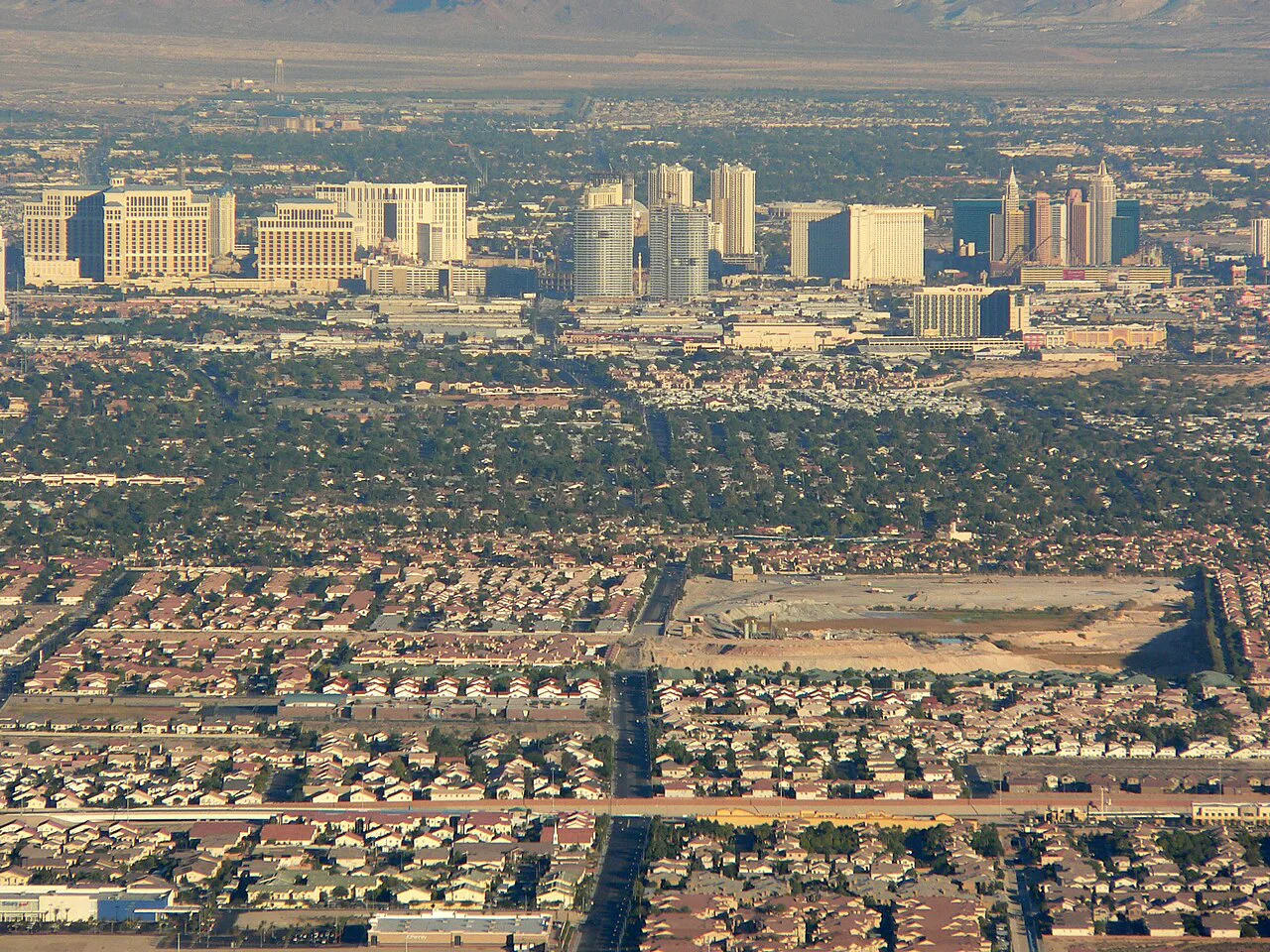
Photo by Famartin · CC BY-SA 4.0 · Wikimedia Commons
State Income Tax
Per the Nevada Department of Taxation, Nevada levies no individual income tax. Colorado, by contrast, applies a 4.4% flat individual income tax on most taxable income. The savings scale linearly with income, so the higher you earn, the more dramatic the move becomes.
| Taxable Income | CO State Income Tax (4.4%) | NV State Income Tax (0%) | Annual Vegas Advantage |
|---|---|---|---|
| $75,000 | $3,300 | $0 | $3,300 |
| $100,000 | $4,400 | $0 | $4,400 |
| $150,000 | $6,600 | $0 | $6,600 |
| $200,000 | $8,800 | $0 | $8,800 |
| $300,000 | $13,200 | $0 | $13,200 |
Nevada also has no estate tax, no inheritance tax, no corporate income tax, and no franchise tax. For retirees and small business owners moving from Colorado, that combination can be worth more than the housing savings over a decade.
Property Tax: The Quiet Nevada Advantage
On the surface, the effective property tax rate in Las Vegas and Denver looks almost identical, around 0.50% on a $400,000 home. The real difference is structural. Nevada's Assembly Bill 489 caps the annual increase on a primary residence's tax bill at 3% a year. The cap is on the tax bill itself, not the assessed value, which means even if your home appreciates 20% in a year, your property tax bill cannot legally rise by more than 3%.
For homeowners coming from a state where property tax bills can swing wildly with reassessment cycles, this predictability is one of the most underrated parts of Nevada ownership. The catch is that you have to file a Primary Residence postcard with the Clark County Assessor to lock in the 3% rate; rentals and second homes are capped at up to 8%.
Sales Tax
Clark County's combined sales tax is 8.375%, which is not low. Denver's combined rate sits around 8.81% depending on the layer of city, state, and special district taxes that apply to a given purchase. The takeaway: sales tax is roughly a wash, with Vegas a slight winner. The marketing line "Nevada has no taxes" isn't quite right. Nevada has shifted its revenue mix toward consumption taxes that fall heavily on tourists, which is why the state can survive without an income tax.
Utilities: Where Las Vegas Actually Loses
This is the section every honest comparison has to include. Las Vegas summers are not theoretical. From June through September, a standard single-family home can see electric bills run $250 to $470 or more in the peak months, according to NV Energy residential averages. Denver's milder summer climate means much lower cooling load, and Apartments.com's C2ER-based comparison actually shows Denver utilities about 5.1% cheaper than Las Vegas on a blended basis.


Utility Rate Changes to Know in 2026
- NV Energy: A new demand-charge rate structure is rolling out in late 2026, basing part of the bill on the highest 15-minute period of usage in a day. Households that can shift big loads (laundry, dishwasher, EV charging) to off-peak windows will absorb less of the impact.
- Xcel Energy (Colorado): A proposed electric rate review filed in 2025 could raise the average Denver-area residential bill by about 9.93% (~$9.94/month) starting in August 2026, plus a separate proposed 11.4% natural gas hike that fall.
- City of Las Vegas water/sewer: The City Council approved annual utility rate increases of the greater of 2% or CPI starting January 2025, so expect small but steady bumps.
- Denver Water: 2025 rate changes added roughly $2 to $3 a month to a typical single-family bill.
Water
This one's complicated. Las Vegas pulls from a shrinking Lake Mead and prices water aggressively to discourage waste. Indoor water is cheap. Heavy outdoor irrigation gets expensive fast because of tiered pricing: the first 5,000 gallons cost roughly $1.61 per thousand, but heavy users hit $6.33 per thousand at the top tier. Denver has more reliable supply and slightly higher average residential bills, but doesn't penalize outdoor use as steeply. If you want a green lawn, Denver makes it cheaper; if you'd rather xeriscape with rock, decomposed granite, and native plants, Vegas comes out ahead.
Transportation: Cheaper to Own a Car in Denver
Here's one area where the conventional wisdom is wrong. Apartments.com's C2ER index pegs Denver transportation costs about 14.5% lower than Las Vegas, and the biggest single reason is auto insurance.
Public Transit
If you're someone who actually rides transit, Denver wins this comparison cleanly. RTC Las Vegas residential bus passes are nominally cheaper at $65 for a 30-day pass, but the network is mostly bus-only and skewed toward Strip tourism. Denver's RTD includes light rail, commuter rail, and the A Line train to Denver International Airport for a $10 day pass. For Vegas residents, an airport trip almost always means a car, a rideshare, or a parking fee. For Denver residents, the train is a realistic option.
Gas and Vehicle Costs
Gas prices fluctuate, but a February 2026 AAA snapshot pegged Nevada averages near $3.70 per gallon, with Denver typically running closer to $3.00 to $3.60 depending on the week. Vehicle registration in Nevada is based on MSRP-derived depreciated value plus a flat $33 base fee. Colorado uses an "ownership tax" tied to vehicle age and weight that catches a lot of new-resident SUV and truck owners by surprise in the first year.
Groceries, Dining, and Everyday Spending



Groceries are roughly comparable in both cities, with both running slightly above the national average. Las Vegas grocery costs benefit from proximity to California agricultural hubs (most of our produce comes off the I-15 corridor), which keeps fresh prices reasonable. A USDA Moderate Plan budget runs about $328 to $388 a month for a single person in Las Vegas and $1,000 to $1,500 for a family of four.
Dining out is where the cities feel different. Vegas pricing bifurcates: Strip dining is a tourist tax, but locals routinely eat well in Chinatown, Summerlin, and Henderson at prices that beat what you'll pay in central Denver. RICE-bowl lunches in Spring Mountain Chinatown still come in under $15. A casual sit-down dinner for two in a Summerlin neighborhood spot lands around $40 to $60 before drinks. Denver dining has crept up sharply, with reports of $50 bar tabs for "a couple of drinks and wings" becoming routine.
Healthcare, Childcare, and Other Surprises
Two more line items quietly tilt the math in Vegas's favor for families.
- Healthcare: Denver healthcare costs run roughly 19% above the national average per published cost-of-living indexes. Las Vegas healthcare costs trend below the national average, though specialist access and wait times for certain services have been a pain point as the valley grows.
- Childcare: Denver full-time infant or toddler care often hits $1,500 to $2,000 per child, per month. In Las Vegas, infant center care typically runs $1,055 to $1,650 per month, with family-home care often in the $900 to $1,200 range.
- Entertainment: A movie ticket runs about $13 in Las Vegas versus around $15.80 in Denver. A drop-in yoga class is around $16.67 in Las Vegas and $21.40 in Denver. Small differences individually, but they add up across a household.
Wages, Jobs, and the "Affordable for Whom?" Question
Denver has a tighter labor market. The U.S. Bureau of Labor Statistics reported a 4.3% Denver metro unemployment rate in February 2026, compared to roughly 5.8% for the Las Vegas metro. Median household income skews higher in Denver too, at $91,681 versus $78,556 in Las Vegas per Census data.
That nuance matters depending on who you are:
Remote workers and out-of-state earners
The clearest winners. If your paycheck is already coming from California, Washington, or anywhere with state income tax, moving to Las Vegas gives you an immediate raise of roughly 4% to 13% depending on your former state, with cheaper housing layered on top.
Higher-income professionals
The Nevada tax savings get bigger the more you earn. A two-earner household at $250K of taxable income saves about $11,000 a year in state income tax alone by relocating from Colorado, plus another $5,000 to $10,000 a year in housing-related costs at the median.
Lower-income or hourly workers
Nevada's minimum wage rose to $12.00 effective July 2025 per the Nevada Office of the Labor Commissioner. Denver's labor market is tighter and pays more on average, but rent and food costs eat much of the difference. For workers in tourism, retail, or food service, Vegas's lower fixed costs usually still net out ahead.
Retirees
The biggest tax beneficiaries. No income tax on retirement distributions, no estate tax, no inheritance tax, and a 3% annual property tax cap on a primary residence. Pair that with mild winters and a 20-minute drive to a Top 100 medical center, and the math gets hard to argue with.
Where Do Vegas Movers Actually End Up?
Most Denver-to-Vegas relocators land in one of a handful of areas, sorted roughly by lifestyle and budget. If you're already familiar with Denver geography, the easy mental map is: Summerlin is Vegas's answer to Highlands Ranch or south Boulder, Henderson is closer in feel to Centennial or Lone Tree, and the southwest valley is something like the LoHi of Vegas if LoHi had pools and bigger garages.
| Area | Median Home Price | Best For | Closest Denver Analog |
|---|---|---|---|
| Summerlin | $649,900 | Families, mountain views, top schools | Highlands Ranch, south Boulder |
| Henderson | $535,000 | Master-planned variety, airport access | Centennial, Lone Tree |
| North Las Vegas | $424,999 | Newer construction, value, industrial-corridor jobs | Northglenn, Thornton |
| Southern Highlands | $687,375-$724,900 | Golf, guard-gated, California commuters | Castle Pines |
| Lake Las Vegas | $500K-$10M+ | Waterfront, resort lifestyle, second homes | Cherry Hills Village (in feel, not setting) |
Browse all neighborhoods on the Las Vegas neighborhoods overview if you want to compare communities side by side, or jump into current MLS listings by price and feature.
The Honest Trade-Offs: What Denver Does Better
A balanced article has to admit where the other side wins. Denver beats Las Vegas on a handful of real things:
- Summers. Denver runs noticeably cooler. July highs average in the upper 80s with low humidity. Vegas regularly cracks 110°F in June through August.
- Outdoor access at scale. Both cities have great outdoor recreation, but Denver's proximity to the Rockies for skiing, alpine hiking, and fly fishing is genuinely tough to match. Vegas counters with Red Rock, Mt. Charleston, Lake Mead, and Zion within easy driving distance, which is more than non-locals realize.
- Air quality and altitude. Some people love the mile-high air, and Vegas can hit "unhealthy" particulate days during fire season or windstorms.
- Airport transit. Denver's A Line train to DIA is the single best urban-to-airport rail connection in the Mountain West. Vegas relies on Harry Reid being unusually close to the Strip (about 10 minutes) and a healthy rideshare market.
- Wages. Denver pays more for the same job in most professional categories. If your career is location-dependent and a remote move isn't realistic, that matters.
Putting It All Together: A Two-Household Example
Here's how a real comparison shakes out if you plug numbers into both sides of the ledger.
| Annual Cost | Denver | Las Vegas | Difference |
|---|---|---|---|
| State income tax | ~$6,600 | $0 | +$6,600 to LV |
| Mortgage P&I (6.5%, 20% down) | ~$33,400 | ~$28,500 | +$4,900 to LV |
| Property tax (~0.50%) | ~$2,750 | ~$2,350 | +$400 to LV |
| Utilities (annual) | ~$3,200 | ~$3,800 | +$600 to Denver |
| Auto insurance (2 cars) | ~$3,200 | ~$5,200 | +$2,000 to Denver |
| Net annual advantage | — | ~$9,300 to LV | ~$775/month |
That's a rough but defensible number. Almost $10,000 a year of after-tax cash flow, which is the kind of difference that pays for two vacations, a maxed Roth IRA, or a meaningful chunk of college savings. For a higher-earning household, the gap widens fast.
Buyer Checklist for Denver-to-Vegas Movers
If the math is making you think seriously about a relocation, here's the short list of things to handle before you land.
- Pull a payoff quote and run a true after-tax comparison on your specific income. A tax pro who works in both states is worth the consult fee.
- Get pre-approved with a Nevada-licensed lender. National lenders sometimes underweight Nevada HOA and SID nuances; local mortgage brokers catch them.
- When touring homes, ask for the full monthly carrying cost in writing: PITI + HOA + sub-HOA + SID + estimated NV Energy summer peak. The list price doesn't tell the real story.
- Verify the home you're buying qualifies for the 3% primary-residence property tax cap and file the postcard with the Clark County Assessor after closing.
- Plan your Nevada DMV visit within 30 days of moving. Vehicle registration and a Nevada driver's license are the practical steps that lock in residency for tax purposes.
- Sell or transition the Colorado home with the calendar in mind. If you're closing late in the year, the move can have material implications for which state taxes that year's income.
Bottom Line
For most households, Las Vegas is meaningfully cheaper than Denver, and the gap is biggest for buyers, high earners, and retirees. Nevada has no state income tax, lower home prices, a property tax bill that legally cannot rise more than 3% a year on a primary residence, and a lower overall cost-of-living index. Denver wins on summers, mountain access, transit to the airport, and average wages for in-person jobs.
The cost of living Las Vegas vs Denver question doesn't have one answer. It has your answer, which depends on your income, your job situation, your tolerance for summer heat, and what you actually want from your weekends. The numbers in this guide should give you a starting point. If you want help running them against your specific household and your specific target price range, a free home valuation (if you're selling first) or a quick conversation about Vegas neighborhoods is a good next step.
Categories
Recent Posts