Cost of Living: Las Vegas vs. Austin


If you're weighing a move and the choice has come down to Las Vegas or Austin, the good news is you're already targeting two of the few major U.S. cities where neither state takes a cut of your paycheck. The better news, at least if Vegas is on your shortlist, is that the actual carrying cost of living here, especially as a homeowner, has quietly pulled ahead of Austin in a way most "best places to live" lists haven't caught up to yet.
Both cities sit in the Sun Belt, both pull big numbers of California and East Coast transplants, and both share that no-state-income-tax pitch. From there the math splits in ways that matter. Property taxes, home prices, utilities, insurance, even the toll-road question all push the day-to-day cost of living in different directions. Here's a real comparison, with the numbers, the trade-offs, and the parts most articles either skip or get wrong.
The Tax Picture: Both States Skip Income Tax, So Stop Comparing That
One of the biggest myths in the relocation space is that Nevada has a tax advantage over Texas because of "no state income tax." Texas doesn't have one either. Both states fund themselves through some combination of sales tax, property tax, and other levies. That means the income tax conversation cancels out and you have to look at where the real differences live.
Sales tax is close to a wash. Clark County (Las Vegas) sits at 8.38%. Austin lands around 8.25%. You'll never feel the difference at the register.
The real divergence is property tax, and it's massive. Nevada's effective property tax rate in Clark County runs roughly 0.47% to 0.59% of market value. Austin's effective rate sits closer to 1.5% to 1.8%. On a $400,000 home, that gap works out to roughly $4,000 a year in additional property tax in Austin, every year, for as long as you own the house. Stretch that over a 10-year hold and the tax delta alone is north of $40,000 before you even talk about appreciation, mortgage interest, or insurance.
| City | Effective Property Tax Rate | Annual Tax on $400K Home |
|---|---|---|
| Las Vegas, NV | ~0.50% | $2,000 |
| Austin, TX | ~1.53% | $6,120 |
| Phoenix, AZ | ~0.48% | $1,920 |
| Los Angeles, CA | ~0.69% | $2,760 |
There's another piece of Nevada's tax structure that out-of-state buyers almost always miss. Under Nevada AB 489, a home registered as your primary residence has its property tax bill capped at a 3% annual increase. Non-owner-occupied properties cap at 8%. That means even when home values jump 15% in a hot year, the tax bill itself can only climb a few percent. Texas has its own appraisal cap rules, but Austin homeowners during the 2021-2022 boom watched assessments and bills move much faster than Vegas owners did under the same conditions.

What Homes Actually Cost: The Real Buying Gap
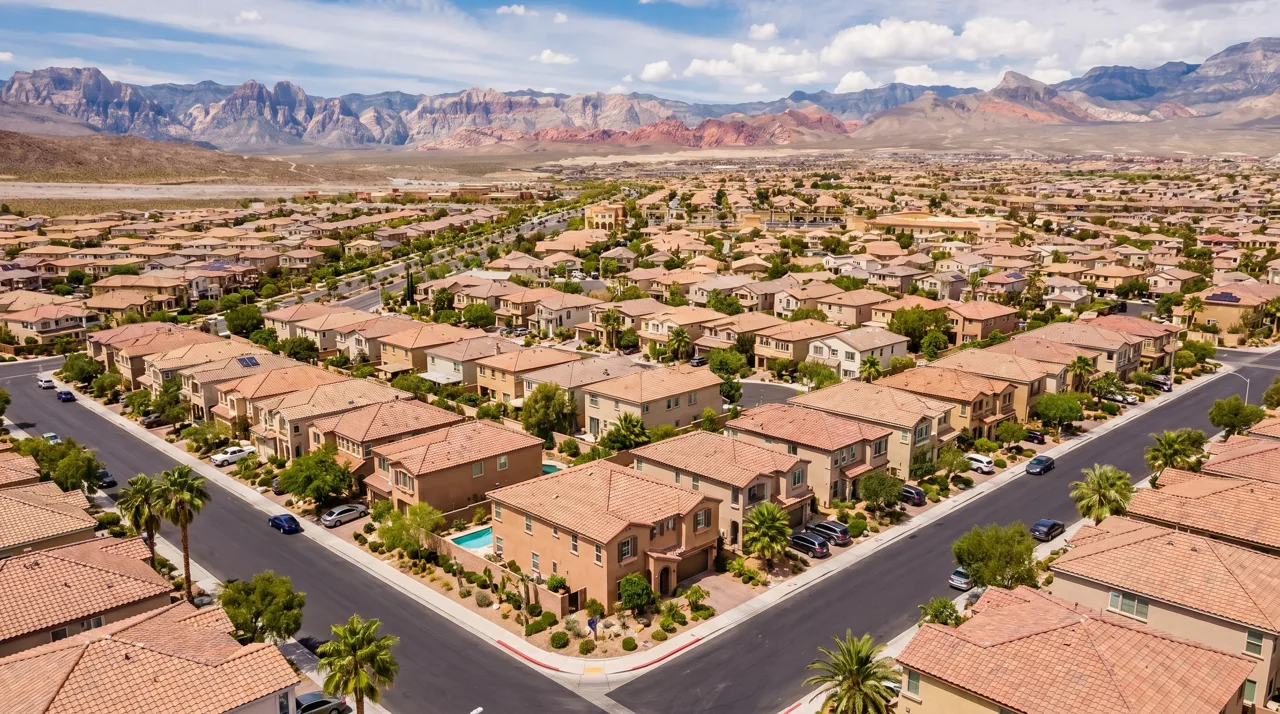
Headline home prices are where the Vegas story gets interesting. Recent Zillow data put the average Las Vegas home value at roughly $426,583 as of spring 2026, with the median single-family home in the valley around $481,995. The City of Austin's own planning materials show a median home price of $550,000 for August 2025. Same family, same income, same job offer, and the Vegas version of "owning" can start about $70,000 to $120,000 cheaper depending on which slice of data you trust.
The bigger story is which city you're really comparing. Austin's affordability picture changes dramatically when you include the suburbs, where most of the actual transactions happen. Kyle, Buda, Hutto, and Pflugerville sit at median prices in the $297K to $405K range, but they come with 27 to 35 minute commutes to downtown Austin, plus toll-road costs along the way. In Las Vegas, the equivalent suburb-to-job-center commute is shorter and toll-free. You're not paying gas plus tolls plus time to get the lower price.
Entry Level Vegas
$300K-$450K
Townhomes and starter single-family in North Las Vegas, parts of Henderson, and the southwest. Median in North Las Vegas is right around $425K.
Move-Up Vegas
$450K-$750K
Detached homes with pools, three-car garages, and good school zones in Henderson, Mountain's Edge, and central Summerlin.
Luxury Vegas
$750K-$3M+
Custom homes, golf course lots, and guard-gated estates in Summerlin, The Ridges, and MacDonald Highlands.
One angle on Austin worth flagging: the market has been visibly softer than Vegas's. According to Axios reporting on Redfin data, more than 80% of Austin homes sold below their original list price in February 2025, and a separate Redfin analysis later that year flagged Austin as having the highest share of recent buyers at risk of selling at a loss among major metros. That's not necessarily a bad thing if you're buying. It is a thing if you're selling something you bought in 2021 and need to move. Vegas has cooled too, with values down a couple percent year over year, but the discount-to-list dynamic has been less brutal here.
What About Renting?
This is the one place Austin can actually look cheaper on paper. Spring 2026 Zillow data showed average rent at roughly $1,699 in Las Vegas versus about $1,542 in Austin. A wave of new apartment construction in central Texas has cooled rents in some Austin submarkets, while Vegas multifamily has stayed tighter, especially in higher-demand areas like Summerlin where 2-bedroom rents push toward $2,200 and parts of Summerlin West average closer to $2,900.
The rent gap is real but narrow, and it depends heavily on what you're renting and where. If you compare a brand-new high-rise studio in Austin to a brand-new one in Lake Las Vegas, the Vegas number is often lower. If you compare downtown Austin to the Strip-adjacent corridor in Vegas, the answer flips. Run the numbers on the actual neighborhoods you'd consider, not metro averages.
Utilities: Vegas Electric Bills Get Real in July
This is where Vegas can sneak up on newcomers. Both cities run hot, but Las Vegas runs hot in a way that punishes inefficient AC systems harder than Austin. The Mojave Desert routinely sees stretches of 110-degree days, and even with relatively low Nevada electricity rates, the volume you burn through is the issue.
Average residential electric bills in Las Vegas land around $153 to $171 per month on an annualized basis, but that average hides a brutal summer curve. June through September bills regularly run $250 to $470+ for a 2,000+ square foot home, especially if the system is older. Winter bills drop back to $100 to $180. Austin Energy recently raised base electric rates by 5%, and a typical Austin Energy residential customer uses around 860 kWh a month. Austin's summers are humid rather than dry, so AC demand is heavy too, just with a different load profile.
Las Vegas Electric Reality
NV Energy rates run about 12.83 to 14 cents per kWh with a $16.55 monthly basic service charge. Homes with 14 SEER2 or better AC systems can cut summer cooling costs by roughly 15% versus older 10 SEER units. If you're buying an older Vegas home, the AC system age is one of the first things to investigate. A 12-year-old unit pulling double the kWh of a new one will eat your "no income tax" savings every July and August.
Las Vegas Water
The Las Vegas Valley Water District uses a four-tier rate structure that gets steep fast. Standard service charge for a 5/8" meter is $13.88 a month, with usage ranging from $1.61 per 1,000 gallons at the lowest tier to $6.33 per 1,000 gallons in the top tier. The system is intentionally designed to discourage heavy outdoor irrigation. Average residential water bills run $32 to $60 a month for typical homes, but big lots with grass landscaping can hit $110+. Xeriscaping isn't just an aesthetic choice here, it's a financial one.
Austin Utility Stack
Austin's bills can stack up across electric, water, and city utility line items in ways that surprise newcomers. Austin Water moved through 2026 rate adjustments, and Austin Energy increased base rates the same year. The summer cooling load is real but typically lower in absolute kWh than Vegas, while irrigation costs in Austin can run higher in green-lawn neighborhoods because rates aren't tier-penalized as aggressively as the LVVWD structure.
Total monthly utility spend in Las Vegas typically lands in the $225 to $350 range. Austin sits roughly comparable on a yearly average, though the seasonal distribution differs. The Vegas July electric bill is the one to budget for. If you're moving from a moderate climate, the first summer is going to feel expensive whether you're in either city.

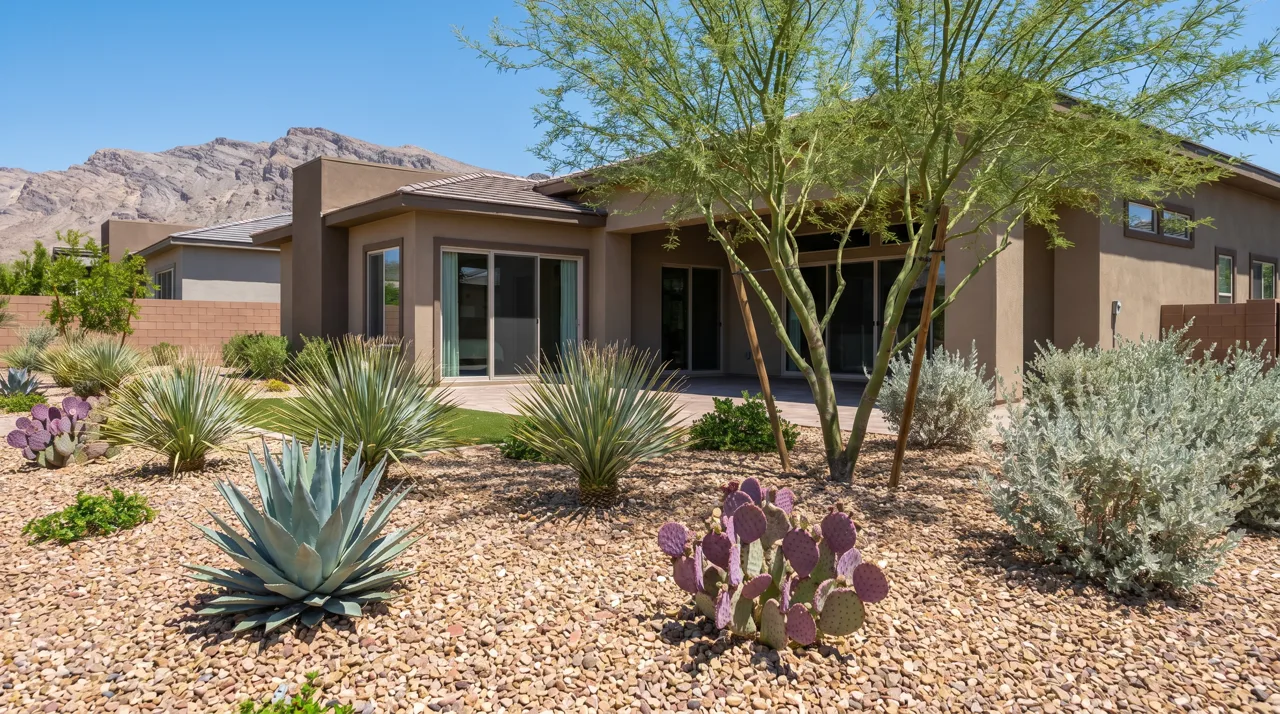


Photo by Dietmar Rabich · CC BY-SA 4.0 · Wikimedia Commons
Getting Around: The Quiet Cost Advantage Vegas Has
Transportation is one of those categories that doesn't show up in headline cost-of-living indexes but absolutely shows up in your bank account. Austin has a substantial toll road network on routes like 130, 45, 1, and the Manor Expressway. Daily commuters from suburbs like Kyle, Hutto, or Round Rock often pay tolls just to get to work and back. That can add up to $100 or more a month in drivers who use the toll system regularly.
Las Vegas has effectively no toll roads on public infrastructure. The 215 Beltway, I-15, and the rest of the freeway system are free to use. That's not a small detail when you're computing actual transportation costs over a year.
Other transportation factors worth knowing:
- Gasoline in Las Vegas runs about $4.40 to $4.80 a gallon, generally a touch higher than Austin because Nevada relies on California refineries.
- Auto insurance is genuinely expensive in Nevada. Full coverage averages $2,824 to $3,568 per year, making it one of the priciest states for car insurance. Texas full coverage tends to land lower, often in the $2,000 to $2,500 range.
- Vegas commutes from Summerlin or Henderson to the Strip or downtown typically run 15 to 25 minutes. Austin commutes from comparable suburbs run 25 to 35 minutes plus traffic, plus tolls.
- Both cities have transit (RTC in Vegas, CapMetro in Austin) but neither is a serious car alternative for most professionals.
Groceries, Healthcare, and Daily Living
For everyday spending, Las Vegas has a small but real edge on most categories. Grocery costs in Las Vegas average around $293 per person per month, roughly 15% below the national urban average, helped by proximity to California's Central Valley agriculture corridor. Austin is reasonable on groceries too but tends to run a few percent higher.
Dining out is its own conversation. Vegas has the most lopsided dining economy in the country: $10 tacos at Tacos El Gordo or $425 tasting menus at Joël Robuchon, often within a mile of each other. Locals figure out fast that the Strip charges roughly 30 to 40% more than off-Strip dining, and Spring Mountain Road's Chinatown corridor is where most mid-range value lives. Austin's food scene is fantastic but priced more uniformly. You don't get the same "tourist tax" mechanic where the same meal is half price six blocks away.
Childcare is brutal in both cities, but Vegas is slightly more affordable on the margins. Infant center care in Las Vegas runs $1,055 to $1,650 a month, with home-based care closer to $900 to $1,200. Austin's similar tier tends to come in $100 to $300 higher per month for comparable care, a meaningful gap for dual-income families.
| Category | Las Vegas | Austin | Edge |
|---|---|---|---|
| Median Home Price | ~$481,995 SFR | ~$550,000 (city) | Las Vegas |
| Effective Property Tax | ~0.50% | ~1.53% | Las Vegas |
| Average Rent (all units) | ~$1,699 | ~$1,542 | Austin |
| State Income Tax | 0% | 0% | Tie |
| Sales Tax | 8.38% | ~8.25% | Austin (barely) |
| Toll Roads on Commute | None | Common | Las Vegas |
| Auto Insurance (Full) | $2,800-$3,500/yr | $2,000-$2,500/yr | Austin |
| Avg Electric Bill | $153-$171/mo (annual avg) | ~$140-$170/mo | Roughly Even |
| Summer Electric Spike | $250-$470+/mo | $200-$350/mo | Austin |
| Cost of Living Index Delta | ~2% cheaper than Austin | Baseline | Las Vegas |


The Salary Question: Can You Actually Make More in Vegas?
This is where Austin's pitch tightens. Austin has spent the last decade pulling tech companies (Tesla, Apple, Google, Oracle, and a long list of smaller players), and the average salary in tech-adjacent roles tends to run higher there than in Las Vegas for now. If your career is squarely in software engineering, semiconductors, or biotech, Austin's job density and compensation ceilings are real.
That said, the Vegas tech story is changing. According to the Bureau of Labor Statistics data on the Las Vegas-Henderson-North Las Vegas MSA, software engineer median pay sits around $115,500, with mid-level roles closer to $150,000. Companies like Switch, DraftKings, and a growing roster of fintech and gaming-tech firms have built a credible engineering ecosystem here. The headline data point most analysts point to: Las Vegas startup valuations grew roughly 10x in a decade, from $1.9 billion in 2014 to $19 billion in 2024.
Registered Nurse
$79,360 avg in Las Vegas. Austin RN pay sits a few percent higher but cost-of-housing tilts the take-home math toward Vegas.
Software Engineer
$115,500 median in Vegas, $150K+ mid-level. Austin still pays more at the senior FAANG-tier, but the gap has narrowed.
K-12 Teacher
$57,471 starting CCSD, up to $137,289 at top step. Austin ISD pays slightly less at the starting tier.
Here's the more useful framing: if you're moving for a remote job, neither city has a tax disadvantage and Vegas costs a touch less to live in overall. If you're moving for a specific tech job offer, that offer's location dictates more than the cost-of-living math.
The Hidden Tax-Free State Math
For a professional moving from California to either Vegas or Austin, the tax savings versus their old state can hit $8,500 a year on a $200K income at California's effective rate, or higher up the income scale. Both cities capture that benefit. The differentiator is what happens after you arrive. In Austin, you give a chunk of those savings back through property tax. In Vegas, you keep more of it.



Photo by Wilson44691 · CC0 · Wikimedia Commons

Lifestyle and the Stuff That Doesn't Show Up in Spreadsheets
Cost-of-living comparisons can only tell you so much. Both cities have strong lifestyle cases that draw very different kinds of people.
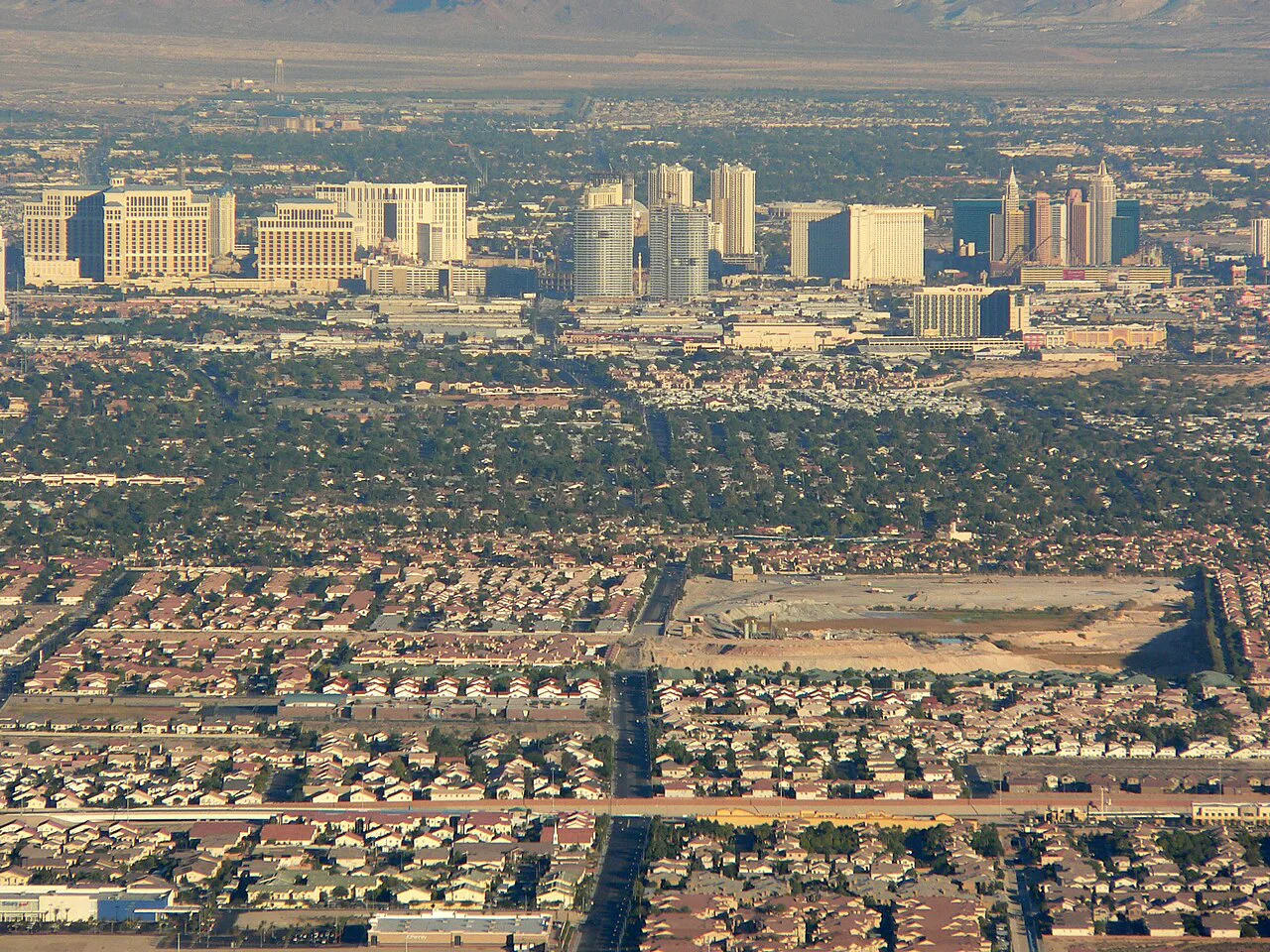
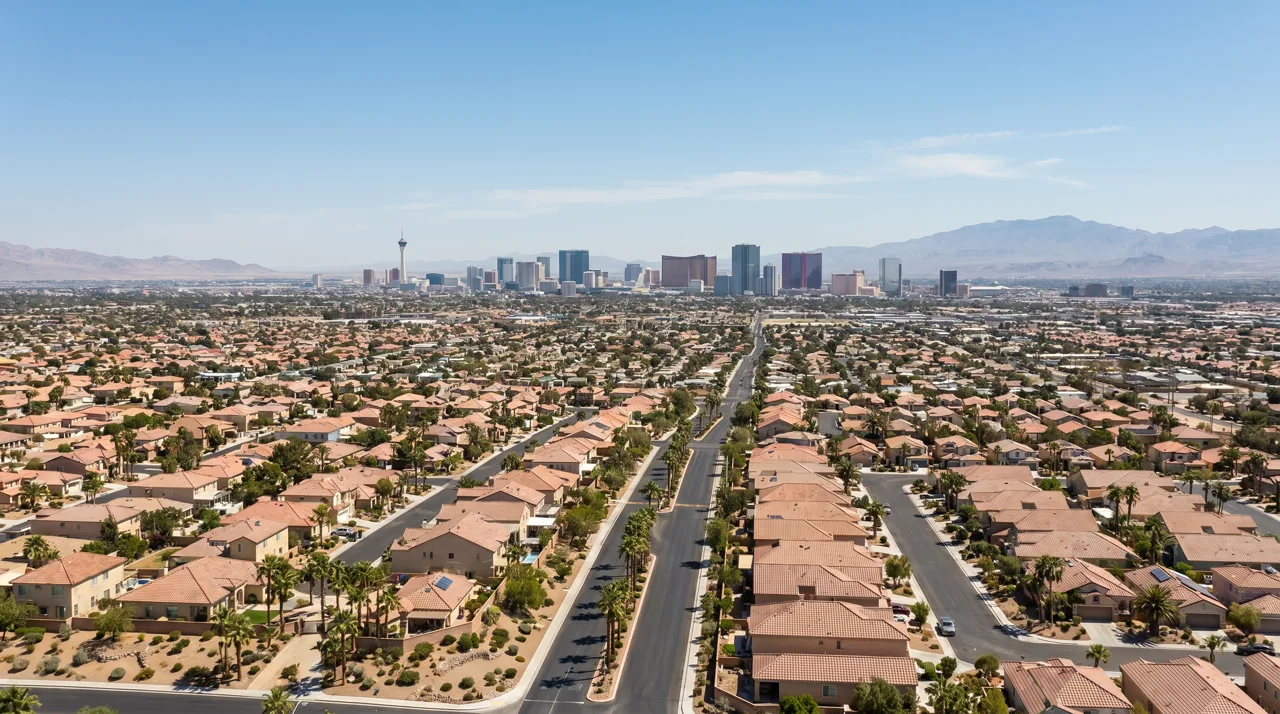
Las Vegas in 2026 is not the Vegas of 2005. The Strip is one piece of a much bigger valley. Locals live in Summerlin, Henderson, the southwest, and the northwest, where the lifestyle looks a lot more like a sunny Phoenix or a Scottsdale than a casino corridor. You've got Red Rock Canyon 25 minutes from most neighborhoods, Lake Mead an hour out, and Mount Charleston an hour the other way for actual snow in winter. Three major-league sports franchises (Raiders, Golden Knights, Aces) play within a 20-minute drive of most homes. The food scene rivals any U.S. city for high-end dining, and Spring Mountain Road's Chinatown gives you the mid-range diversity Austin has worked hard to build.
Austin's lifestyle leans live music, BBQ, college-town energy, and Hill Country greenery. The food scene is exceptional. The traffic is famously bad, especially on I-35. Summers are humid and long, fall is short, and the green-vs-brown landscape is a real preference difference for transplants.
Migration Pressure
Both cities are growth markets, but Vegas's recent migration story has accelerated. Clark County is projected to add roughly 115 residents per day, with about a third arriving directly from California. That's part of why home prices, even in a cooled market, haven't dropped further: demand keeps absorbing supply. Austin's growth has slowed slightly in 2025 and 2026 as some of the post-pandemic California rush plateaued and inventory increased. For a buyer, that means Austin currently has more negotiating room and Vegas has tighter pricing power, though both markets are well off the 2021-2022 peaks.
Who Should Pick Vegas, Who Should Pick Austin
After all the math, the decision usually comes down to a handful of priorities. Here's how to think about it.
You're probably a Vegas person if:
- You plan to buy a home and want the lower long-term carrying cost. The property tax delta over 10+ years is the single biggest financial driver in this comparison.
- You prefer dry heat over humid heat, and you actually like the desert aesthetic.
- You want fast access to outdoor recreation (Red Rock, Lake Mead, Mount Charleston, Zion two hours away).
- You want pro sports, world-class dining, and entertainment without a Texas-sized commute to get to it.
- You're moving for a remote job or work in healthcare, hospitality management, gaming tech, or sports tech.
- You'd rather not deal with toll roads as a daily commuter expense.
You're probably an Austin person if:
- You're chasing a specific tech-sector role at a major Austin employer where the salary premium offsets the higher property tax.
- Live music, Hill Country green, and a college-town vibe are non-negotiable for you.
- You're renting and not planning to buy, so the property tax gap doesn't apply to you the same way.
- You like the cultural mix of Austin's traditional city neighborhoods more than the master-planned, suburban-feeling layout that defines most of the Vegas Valley.
FAQs Most "Vegas vs Austin" Articles Skip
Is Las Vegas really cheaper than Austin overall?
Yes, but only by a small margin on broad cost-of-living indexes (Vegas is roughly 2% cheaper). The bigger gap shows up in specific categories: home buying, property tax, and tolls all favor Vegas. Auto insurance and rent in some submarkets favor Austin. The composite picture leans Vegas, but the answer depends on your specific spending profile.
What's the catch with Las Vegas?
Three things to budget for. Summer electric bills (especially July through September), high auto insurance premiums, and the fact that Vegas's economy is still more concentrated in hospitality than Austin's. Diversification is happening, but if you work in a niche tech or biotech specialty, Austin has more job density right now.
Is the no-state-income-tax thing actually a difference between these two cities?
No. Both Nevada and Texas have zero state income tax. The difference between the two cities is property tax, not income tax. Anyone telling you to pick one over the other based on income tax is either confused or selling something.
What about HOAs?
Both cities have heavy HOA use in newer master-planned communities. Vegas HOA dues typically run $50 to $300 a month in standard communities, climbing to $400 to $900 in luxury high-rises. Austin's HOA structure is similar. Some Vegas communities also carry SID (Special Improvement District) bonds on top of HOA, which can add $50 to $200 a month to your payment. Always verify total monthly obligations before making an offer in either city.
Will home values keep dropping in Las Vegas?
Vegas values were down roughly 2.7% year over year in spring 2026 according to Zillow's metro data. Whether that continues depends on interest rates, migration patterns, and inventory. The 115-residents-a-day inflow into Clark County tends to support pricing, but rates above 6.5% will keep some buyers sidelined. As always, no one can guarantee future appreciation in either market.
Bottom Line
If you're moving for a job offer in Austin's tech ecosystem, Austin probably wins on raw take-home pay even after the property tax hit. For just about everyone else, especially anyone planning to buy a home and stay more than three years, Las Vegas comes out ahead on the math. The property tax gap alone is enough to swing the long-term decision for most buyers, and Vegas's lifestyle, weather, and proximity to outdoor recreation give it a quality-of-life argument that doesn't depend on the spreadsheet.
The most important thing in either city is matching the neighborhood to the life you actually want to live. A $500K home in Henderson with a 12-minute commute, $2,500-a-year property tax, and a backyard pool is a different life than a $500K home 35 minutes outside Austin with $7,500-a-year property tax and a daily toll-road bill. Both might be "affordable" by national standards. Only one is going to feel that way after the first 12 months.
If Las Vegas is on your shortlist and you want to dig into specific neighborhoods or run actual numbers on a property, the zip code map and mortgage calculator are decent starting points. From there, the decision really does come down to what you want your day-to-day to look like, not just what it costs.
Categories
Recent Posts