How Much Las Vegas Buyers and Sellers Pay in Closing Costs

If you're buying or selling a home in Las Vegas, the price on the listing is only part of the story. The rest shows up at the closing table, and most people are genuinely surprised by what's there. Here's a plain-English breakdown of Las Vegas closing costs explained the way they actually work in Clark County, with the real numbers, the negotiable lines, and the pieces nobody bothers to mention until escrow is already open.
Closing costs in Las Vegas usually land in two buckets. Buyers see something in the neighborhood of 2 to 5 percent of the purchase price, mostly in lender fees, title and escrow charges, prepaid taxes and insurance, and recording. Sellers typically pay 6 to 8 percent including agent compensation, transfer tax, owner's title, escrow, HOA resale paperwork, and prorated taxes. Statewide data from Rocket Mortgage puts the average Nevada buyer at about 2.94 percent of purchase price.
Those ranges are useful to know, but the more interesting question, and the one most people Googling this actually want answered, is which of those costs are fixed by Clark County or Nevada law and which are negotiable between you and the other side. That's where the real money gets made or saved.
Buyer Closing Costs in Las Vegas: The Real Line Items
Most buyers in Clark County see a settlement statement that looks something like this. Some of these are tied to your loan, some are tied to the property, and a few are just government recording charges that everyone pays.
| Buyer Cost | Typical Amount | Fixed or Negotiable |
|---|---|---|
| Loan origination | 0.5-1% of loan | Lender-driven, shop around |
| Appraisal | $500-$800 | Lender-required on financed deals |
| Credit report | $50-$100 | Lender-driven |
| Processing / underwriting | $800-$1,500 | Lender-driven |
| Lender's title insurance | Varies by loan amount | Required if financing |
| Escrow / settlement (buyer's half) | ~$400-$800 | Customarily split 50/50 |
| Recording fees | ~$150-$250 total | Fixed by Clark County |
| Prepaid interest | Daily prorated | Depends on closing date |
| Homeowners insurance (1 year) | Varies | Collected upfront on financed deals |
| Property tax reserves | ~3 months | Lender impound requirement |
The lender-side fees are where a lot of buyers leave money on the table. Origination, processing, and underwriting can vary by hundreds of dollars between two lenders quoting on the exact same loan. Get more than one Loan Estimate and compare them side by side, especially the Section A "origination" lines.


FHA, VA, and the Loan-Specific Stuff
If you're using a government-backed loan, Las Vegas closing costs change in a few specific ways.
FHA buyers owe an Upfront Mortgage Insurance Premium (UFMIP) on most single-family loans. HUD allows it to be financed into the loan, but it's still a real cost. It just shows up in the loan balance instead of cash to close. Plan for it.
VA buyers get the best deal on the structural costs (no PMI, often zero down), but the "VA loans have no closing costs" line you'll see online is wrong. The VA itself states that on a purchase loan, only the funding fee can be financed. Everything else, including appraisal, title, escrow, and prepaids, is paid at closing the same as any other buyer.
Las Vegas has a huge military and veteran population thanks to Nellis and Creech, so this comes up a lot. As a Military Relocation Professional, I work with VA buyers regularly, and the cleanest path is asking the seller for a closing cost concession during negotiation. In a normal market that's negotiable. In the softer 2026 market, it's becoming pretty standard.
Seller Closing Costs in Las Vegas: Where the Money Actually Goes
Sellers carry a heavier load at closing in Clark County, mostly because the agent compensation lives on this side of the ledger. Here's the typical lineup.
| Seller Cost | Typical Amount | Notes |
|---|---|---|
| Agent compensation | 5-6% (negotiable) | Usually the largest single line |
| Real Property Transfer Tax | $2.55 per $500 of price | Clark County rate, payer is negotiable |
| Owner's title insurance | Varies by price | Customarily seller-paid in Clark County |
| Escrow / settlement (seller's half) | ~$400-$800 | Split 50/50 by custom |
| HOA resale package | $300-$600 typical | Capped by Nevada law (see below) |
| Home warranty | $500-$800 | Optional but common as buyer perk |
| Termite (WDO) inspection | ~$125 | Often required for VA / FHA buyers |
| Mortgage payoff | Principal + interest + fees | Wired directly from escrow |
| Prorated property taxes | Varies | Depends on Clark County tax bill |
| Buyer concessions / credits | 0-3% (market dependent) | Common in 2026's softer market |
On a $500,000 Las Vegas resale, a seller paying a 5 percent commission, owner's title, half the escrow, transfer tax, and an HOA resale fee can easily be looking at $32,000 to $35,000 in total seller closing costs before mortgage payoff. That's the real number to plug into your "what do I net?" math, not just the sale price minus your loan balance.
The Clark County Transfer Tax Most People Underestimate
This is the closing cost line that catches the most sellers off guard, and it's worth understanding because the math is simple and the dollars are real.
Clark County charges a Real Property Transfer Tax (RPTT) of $2.55 per $500 of value, or any fraction of that. That works out to roughly 0.51 percent of the sale price, or $5.10 per $1,000. Per the Clark County Recorder, this is the rate that applies to every recorded transfer of real property in the county.
$400,000 Sale
$2,040 in transfer tax
$400,000 ÷ 500 × $2.55
$500,000 Sale
$2,550 in transfer tax
$500,000 ÷ 500 × $2.55
$750,000 Sale
$3,825 in transfer tax
$750,000 ÷ 500 × $2.55
$1,000,000 Sale
$5,100 in transfer tax
$1,000,000 ÷ 500 × $2.55
$1,500,000 Sale
$7,650 in transfer tax
$1,500,000 ÷ 500 × $2.55
$2,000,000 Sale
$10,200 in transfer tax
$2,000,000 ÷ 500 × $2.55
One detail worth knowing: Clark County's transfer tax rate hasn't changed since October 1, 2003. The bill has gone up over the years not because the rate moved, but because Las Vegas home prices have tripled. The county's own statistics show monthly RPTT collections regularly clearing $11 million, which gives you a sense of how much this line item adds up across the valley.
Transfer Tax Exemptions That Can Save You Thousands
Most consumers think transfer tax is unavoidable. It isn't. Nevada law (NRS 375.090) lists multiple exemptions that come up more than people realize.
- Transfers between former spouses in compliance with a divorce decree
- Transfers to or from a trust without consideration, with proper certificate
- Transfers between joint tenants or tenants in common in some cases without consideration
- Transfers between certain affiliated entities (parent-subsidiary structures)
- Transfers within first-degree lineal consanguinity (parent to child, for example)
If you're moving title for estate planning, divorce, or a family transfer, talk to a real estate attorney before you record. A correctly claimed exemption on a $1 million home can save you over five thousand dollars at the recorder's window. Clark County publishes a practical exemption summary on its website to help filers identify which boxes to check on the Declaration of Value form.


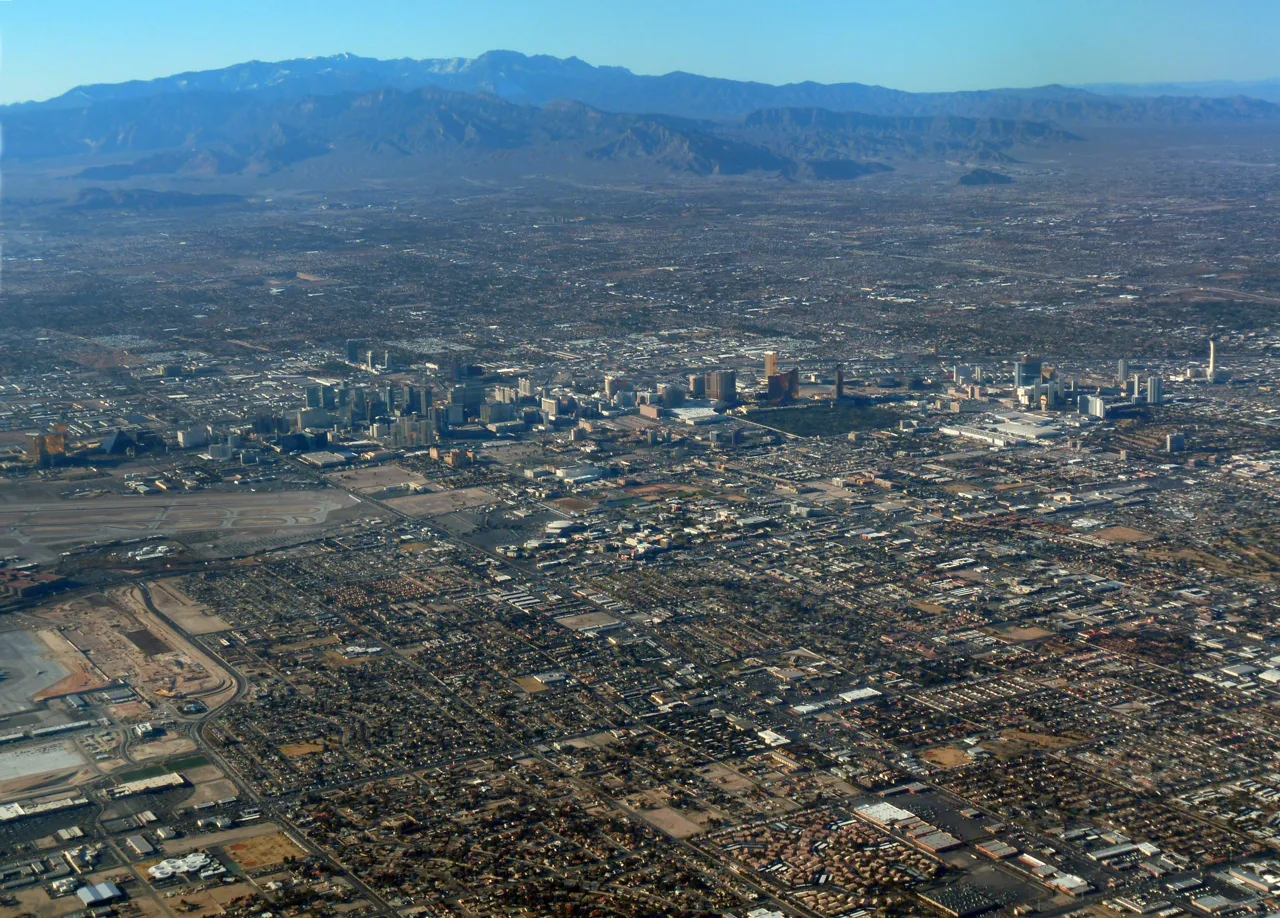
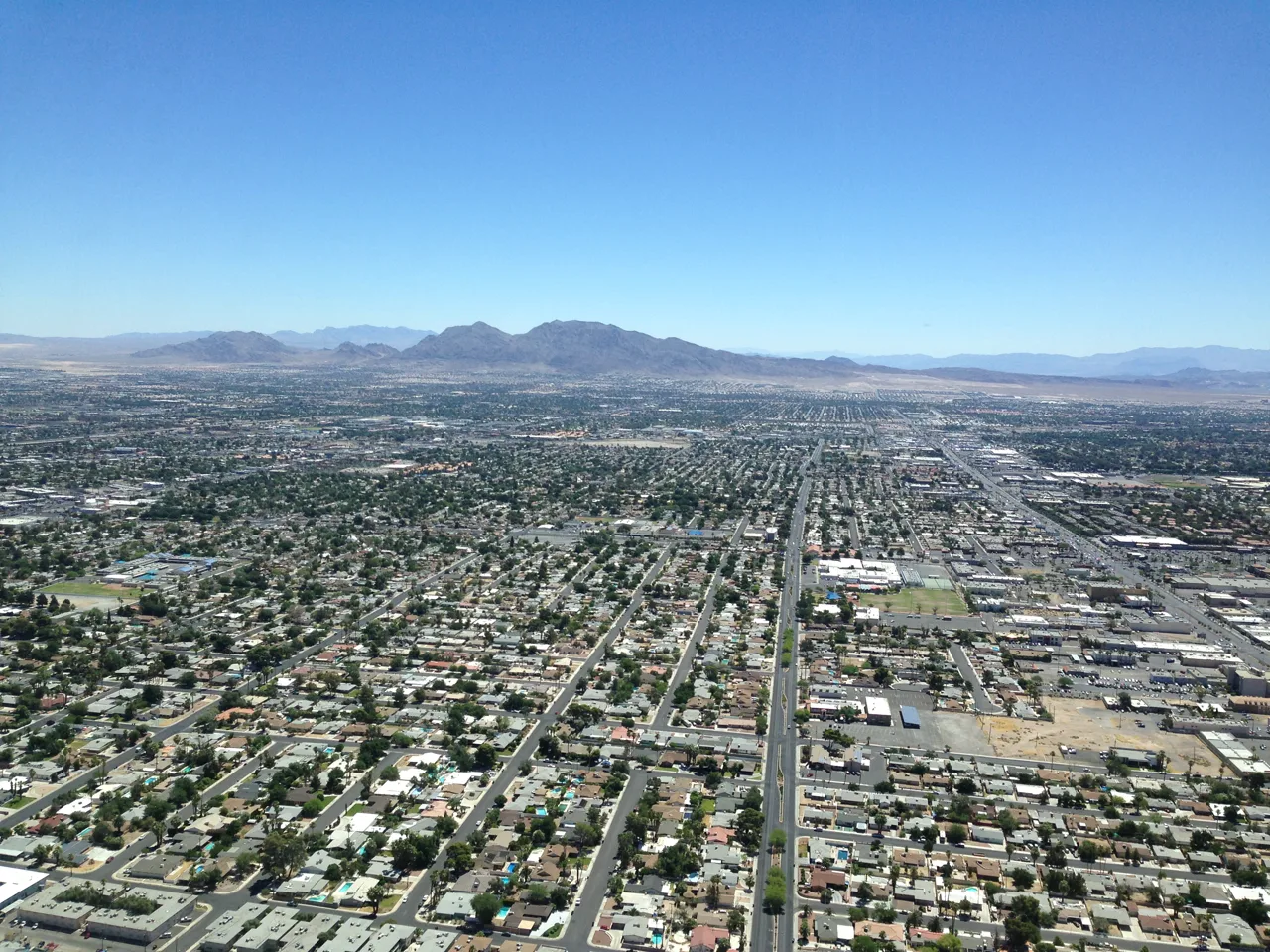
Photo by Coolcaesar · CC BY-SA 4.0 · Wikimedia Commons
HOA Resale Packages: A Las Vegas-Specific Closing Cost
This is the part of a Clark County closing that surprises out-of-state sellers most. Roughly speaking, if you're selling in Summerlin, Henderson, Aliante, Mountain's Edge, Cadence, or any one of the dozens of master-planned or guard-gated communities in the valley, you're in a common-interest community, and Nevada's HOA resale rules apply.
Under NRS 116.4109, the seller (or seller's agent) must provide the buyer with a resale package. The HOA is allowed to charge for preparing the certificate that goes inside that package, but the fee is capped by statute.
In practice, sellers in Las Vegas usually budget $300 to $600 total for the full resale package, because the certificate fee is just one piece. There are also costs for the actual document compilation, the meta-HOA in master-planned communities like Summerlin (the village association plus the master association both prepare docs), and any rush charges if the buyer's timeline is tight.
The resale package is also where things tend to slow down. The HOA management company typically has up to 10 business days to deliver it, and any unpaid assessments, violations, or transfer fees due at closing have to come out of the seller's proceeds. If your HOA management company is slow, your closing date moves.
The 5-Day Cancellation Window Most Sellers Don't Know About
Here's the part Las Vegas sellers should pay extra attention to. Once the buyer receives the resale package, Nevada gives them five calendar days to review it and cancel the contract for any reason. That window resets if the package arrives late.
If the docs slip out a few days before closing, the buyer's cancellation right hasn't expired yet, which can technically push the closing date or, in a worst case, blow up a deal that looked locked in. Smart listing agents in Las Vegas order the resale package as soon as the contract is accepted to get that 5-day clock started early.
Property Taxes at Closing: Why the Number Looks Weird
Property tax prorations on a Las Vegas closing disclosure trip up almost every first-time buyer in Clark County. The math isn't intuitive because Nevada uses an unusual three-step calculation plus an annual cap.
Per the Clark County Assessor, here's how the actual tax bill is calculated:
- The county sets a taxable value on the property (not necessarily the sale price)
- Multiply by the 35 percent assessment ratio to get assessed value
- Apply the local district tax rate (around 3.28 per hundred dollars in many parts of Clark County, depending on your tax district)
So a home with a $200,000 taxable value comes out to roughly $2,295 a year before any caps or abatements. Then Nevada's tax cap kicks in: 3 percent annual cap on owner-occupied primary residences and up to 8 percent on non-owner-occupied properties, per the Clark County Tax Abatement rules.
What that means at closing: two identical homes on the same street can have noticeably different prorated tax amounts because of how each owner's tax cap status carried forward. If the previous owner lived there as a primary residence and you're buying it as a rental, your future tax bill could jump up to the 8 percent cap class. The proration on the closing disclosure shows the current bill, not the future one.
The Supplemental Tax Bill Nobody Warns You About
This one matters. When ownership changes in Nevada, the property gets reassessed. If your purchase price is significantly higher than the prior taxable value, the county sends a one-time supplemental tax bill for the difference between what the old owner was paying and what the new value supports.
It comes directly to you, the new owner, usually a few months after closing. It is not always picked up by your lender's escrow impound account. Read your mail carefully in the first six months after you buy, because if you ignore the supplemental bill, it becomes delinquent the same as any other tax bill.
Title Insurance and Escrow: The Big Variable Charges
Outside of agent commissions and lender fees, title and escrow are usually the largest closing-cost lines on a Clark County closing. They're also the ones with the most variation between providers.
There are two title policies on most financed transactions:
- Owner's title insurance protects the buyer against future claims on title (forged deeds, unrecorded liens, missed heirs). Per Clark County custom, this is usually paid by the seller.
- Lender's title insurance protects the lender against the same risks for the loan amount. The buyer pays for this on financed deals.
The premiums are tied to the sale price and loan amount, but actual office fees vary by title company. Sit-down fees, courier fees, wire fees, and "settlement fees" are all separate from the premium itself, and they're not regulated. Two title companies can quote the same insurance premium but a $200 difference in office fees on the exact same deal.
Escrow services in Southern Nevada are usually bundled with title (the same company handles both). The escrow fee is customarily split 50/50 between buyer and seller, but everything is negotiable in the contract. A seller in a slow market might offer to pay the entire escrow fee as a small concession.
The selection of the title company is negotiable, though the party paying for the policy often suggests the provider. In Las Vegas, owner's policies are customarily seller-paid and lender's policies are buyer-paid, with escrow split 50/50.
The Timing Costs Nobody Talks About
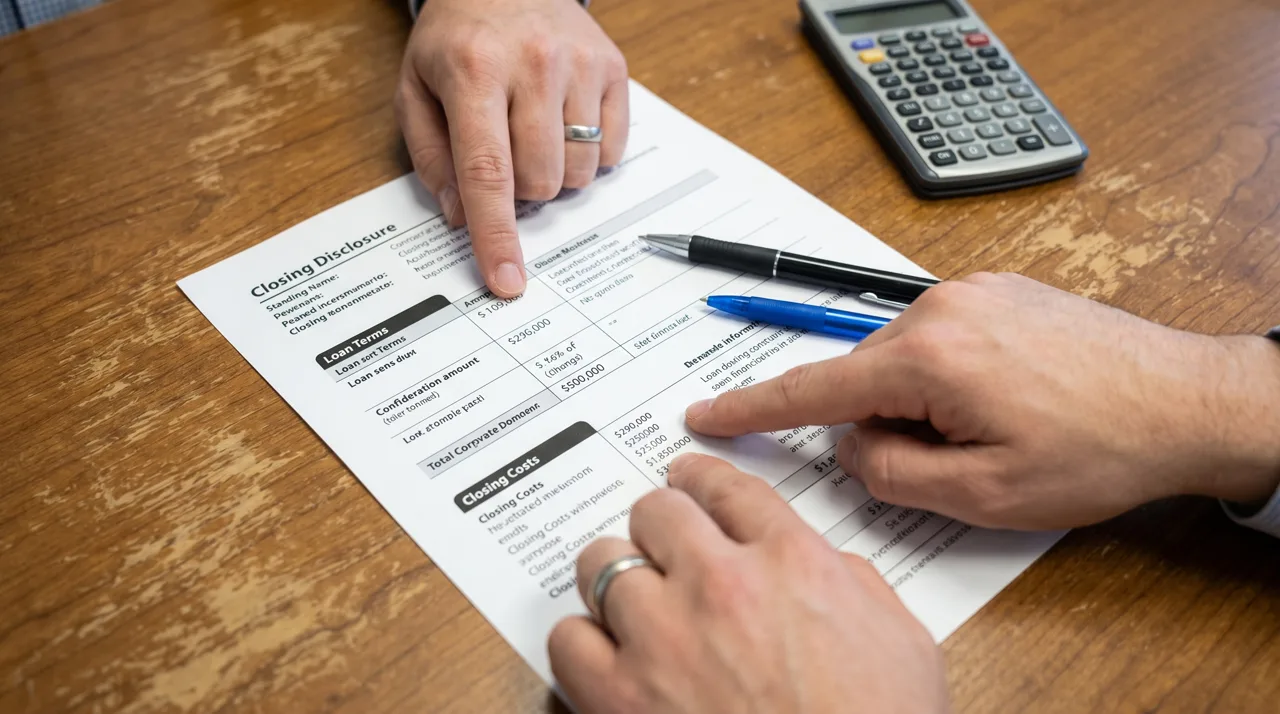
Federal law gives borrowers a Closing Disclosure (CD) at least three business days before closing, per CFPB rules. That's the document with all the final numbers, and once it's issued, certain changes restart the 3-day clock.
What restarts the clock: a change in the loan product (fixed to ARM), the addition of a prepayment penalty, or an increase in the APR beyond a certain threshold. What doesn't: small fee tweaks, lender credit adjustments, or correcting a clerical error.
Why this matters for closing costs: late changes (a re-quoted lender fee, a surprise repair credit, an HOA doc that arrived three days before closing with a fee discrepancy) can all push your closing date by three business days. That can cost a buyer per-diem interest on their rate lock extension, and it can cost a seller mortgage interest on their existing loan that they thought would be paid off Friday but now closes on Wednesday.

Recording Issues That Can Add Costs After Closing
The Clark County Recorder rejects documents for things like missing APN numbers, incomplete legal descriptions, missing Declaration of Value forms, or illegible scans. When a deed gets rejected after funding, the title company has to re-cut the document and re-record it, usually at no cost to you. But if a lender release of an old loan gets stuck for the same reason, your home equity can technically be clouded for weeks. It's not a "closing cost" in the line-item sense, but it's a real risk that comes from sloppy paperwork.
How the 2026 Las Vegas Market Affects Who Pays What
Closing costs aren't fixed norms in Las Vegas. They move with the market. Recent Fox 5 Vegas reporting on Las Vegas Realtors data shows the median single-family home price hovered around $480,000 to $482,000 through the early months of 2026, with inventory rising and conditions trending more buyer-friendly than they were two years ago.
What that means in practice: when buyers have leverage, sellers cover more closing costs to keep deals together. In the current market I'm seeing more sellers willing to:
- Pay the buyer's transfer tax on top of their own customary share
- Cover a full year of HOA dues as a closing concession
- Fund a 2-1 rate buydown that knocks 2 percent off the buyer's first-year mortgage rate, then 1 percent off year two
- Throw in repair credits in lieu of doing the repairs themselves
- Pay buyer-side closing costs up to 3 percent for FHA buyers, 4 percent for VA
None of this is automatic. Concessions are negotiated, and what you can ask for depends on the property, the days on market, and how leveraged the seller is. As a Top 1 percent Las Vegas agent who's negotiated 600+ closings, my honest take is that the spread between a well-negotiated and a poorly-negotiated 2026 deal is often 2 to 4 percent of the purchase price. That's $10,000 to $20,000 on a typical Las Vegas home, which is real money.
Working Examples: A $500K Buyer and a $500K Seller
Concrete numbers tend to land better than tables of percentages. Here's roughly what a closing looks like at the median Las Vegas price point in 2026.
Buyer Side: $500,000 Home, Conventional 20% Down
Loan-related fees
Origination, processing, underwriting, appraisal, and credit report combined typically run $2,500 to $4,500 depending on lender. Worth shopping at least three lenders.
Title and escrow (buyer's portion)
Lender's title policy plus half of the escrow fee runs roughly $800 to $1,500 combined.
Recording and Clark County fees
Around $150 to $250 total. Fixed by county schedule.
Prepaids
One year of homeowners insurance ($1,200-$2,000), about 3 months of property tax reserves ($600-$900), prepaid daily interest from closing to month-end. Typically $2,500 to $4,000 combined.
Estimated buyer total
$11,000 to $14,500 at closing, or roughly 2.2% to 2.9% of purchase price. Higher with rate buydowns or upfront points; lower with seller concessions.
Seller Side: $500,000 Home, 5% Commission, Owner Occupied, In an HOA
Agent compensation
5% commission = $25,000. This is by far the largest seller cost and is fully negotiable.
Real Property Transfer Tax
$500,000 × ($2.55/$500) = $2,550, customarily paid by the seller in Clark County.
Owner's title and seller's escrow share
Owner's title policy ($1,400-$2,000) plus half of the escrow fee. Roughly $2,000 to $2,800 combined.
HOA resale package
$300 to $600 typical, sometimes higher in Summerlin and other master-planned communities with two layers of association.
Optional extras
Home warranty for the buyer ($500-$800), termite report ($125), prorated HOA dues, prorated property taxes. Maybe $1,000 to $1,500 in soft costs.
Estimated seller total (before mortgage payoff)
$32,000 to $36,000, or roughly 6.4% to 7.2% of sale price. Mortgage payoff and any seller concessions to the buyer come out of proceeds on top of this.
Common Myths About Las Vegas Closing Costs
| Myth | Reality |
|---|---|
| "Closing costs are mostly junk lender fees." | In Las Vegas, transfer tax, HOA resale costs, title and escrow, and prorated taxes can add up to more than the lender's side. |
| "VA buyers don't pay closing costs." | Only the VA funding fee can be financed. Everything else is paid at closing like any other loan. |
| "Transfer tax always falls on the seller." | The rate is fixed by Clark County. Allocation is set by contract, and it can be seller, buyer, or split. |
| "HOA documents are just paperwork." | The certificate fee is statutorily allowed up to $185 plus expedite. The total resale package usually runs $300-$600 in Las Vegas. |
| "Property tax prorations are simple." | Clark County's calculation depends on taxable value, district rate, and abatement caps. Two identical homes can have very different prorations. |
| "Closing costs are non-negotiable." | Title, escrow, lender fees, and concessions are all negotiable. In a soft market, sellers may cover a meaningful chunk of buyer costs. |
How to Reduce Your Closing Costs in Clark County
Whether you're buying or selling, there are real ways to bring the cash-to-close down. Some of these require asking, and most people simply don't.
If You're Buying
- Get Loan Estimates from at least three lenders. Compare Section A (origination) and Section C (services you can shop) line by line.
- Ask the seller for a closing-cost concession. In 2026, this is often available, especially on listings sitting more than 30 days.
- Consider a lender credit. A slight rate increase can offset thousands in upfront costs if you'll be in the loan less than 5-7 years.
- Shop title and escrow. The title insurance premium is regulated, but office fees aren't. Ask for an itemized quote.
- If you're a first-time buyer, look at Nevada Housing Division programs like Home Is Possible. They can fund up to 4% of the loan amount toward down payment and closing costs.
- Time your closing toward the end of the month to minimize prepaid interest.
If You're Selling
- Negotiate the commission. Anything you save on commission flows directly to your bottom line.
- Order the HOA resale package the day the contract is accepted. Late docs cause delays that can cost you per-diem mortgage interest.
- Get a pre-listing inspection. Surprises during the buyer's inspection turn into credits at closing, often more than the inspection itself would have cost.
- Know your Clark County tax cap status. Owner-occupied properties under the 3% cap are easier to sell and have cleaner prorations.
- Push back on transfer tax allocation if you're in a competitive market segment. It's not always the seller's by law.
- Ask your title company to itemize the office fees separately from the title premium. It's the easiest place to find $100 to $300 of negotiable cost.


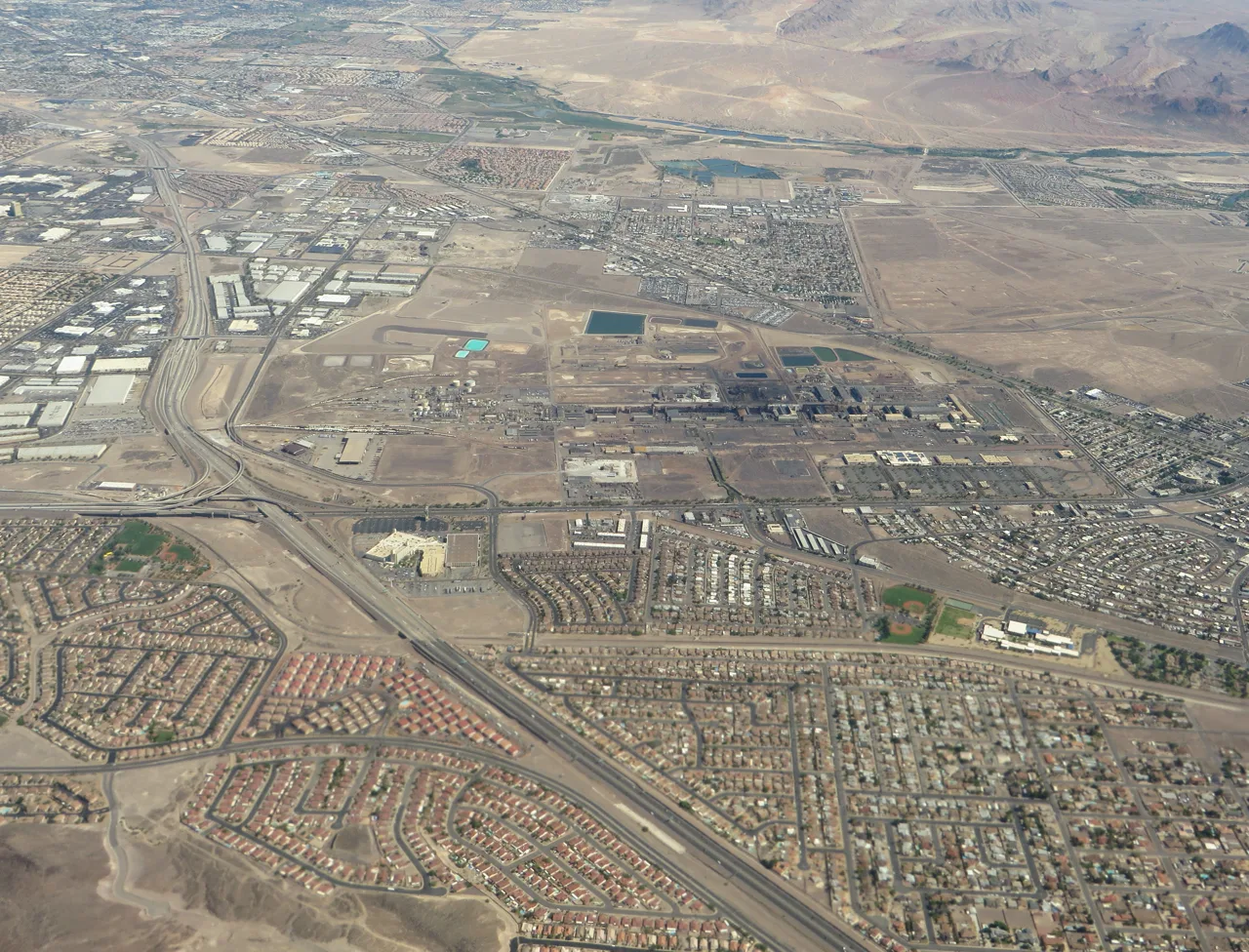
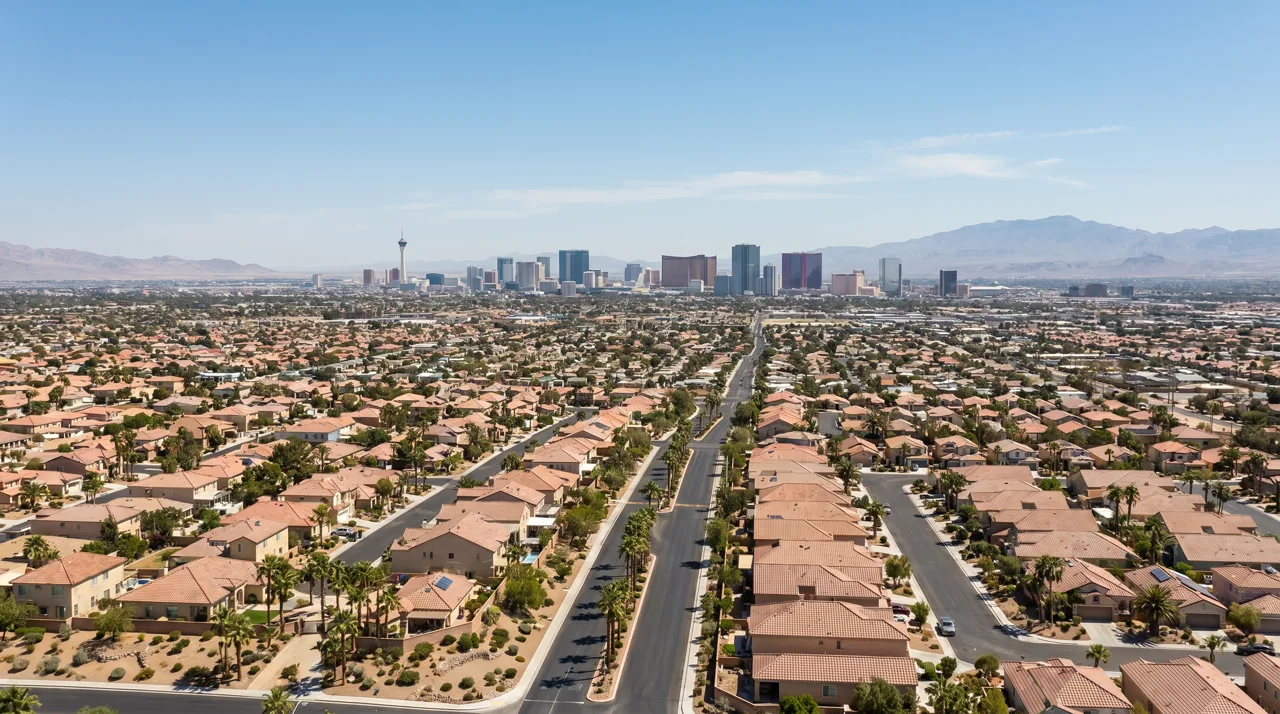
Photo by Ken Lund from Reno, Nevada, USA · CC BY-SA 2.0 · Wikimedia Commons

Frequently Asked Questions About Las Vegas Closing Costs
Are closing costs higher in Las Vegas than in other cities?
Mixed answer. Clark County's transfer tax ($2.55 per $500) is meaningful but not the highest in the country. California and New York both run higher. The HOA resale package cost is somewhat unique to Nevada because so much of the valley is in common-interest communities. Overall, total buyer closing costs in Las Vegas are middle-of-the-road nationally, helped by Nevada's 0% state income tax.
Can I roll closing costs into my mortgage?
Some of them, sometimes. On a refinance, yes, most closing costs can be rolled in. On a purchase, you generally cannot finance closing costs into the loan unless you're using FHA UFMIP or the VA funding fee. What you can do instead is negotiate seller concessions to cover them. The IRS-allowed seller concession caps are roughly 3% for FHA, 4% for VA, and 3-9% for conventional depending on your down payment.
What's the cheapest way to close on a Las Vegas home?
Typically: a single, all-cash investor closing with a co-op title company, no lender, no HOA, and a seller-paid transfer tax. That collapses lender fees, lender's title, and most prepaids out of the picture. Most regular buyers won't be in that situation, but knowing where the costs come from tells you which ones you can actually move.
Do I need an attorney for a Las Vegas closing?
No. Nevada is an escrow state, not an attorney state. Title and escrow companies handle the closing as neutral third parties. You can hire an attorney to review documents if you want, but it's not required for a standard residential transaction.
When do I actually get the keys?
Funds and recording happen on the same day in Clark County. You get the keys when the deed records with the Clark County Recorder, which usually happens between 2 and 5 PM on the closing day. If recording slips into the next business day for any reason (rejected document, late wire), possession slips with it.
The Bottom Line on Las Vegas Closing Costs
Closing costs in Las Vegas aren't mysterious. They're a stack of separate line items, some fixed by Clark County or Nevada law, most negotiated between buyer and seller in the contract. Buyers should plan for 2 to 5 percent of the purchase price. Sellers should plan for 6 to 8 percent including agent compensation and transfer tax. The middle of those ranges is what most deals look like, with seller concessions in 2026 often closing some of the buyer's cash-to-close gap.
The biggest cost-saving move on either side is getting good information early. Run a real seller net sheet before listing. Get three Loan Estimates before picking a lender. Order the HOA resale package the day you go under contract. Ask your title company for itemized fees. None of these are exotic moves, but together they can shift several thousand dollars on a typical Las Vegas closing.
If you want a clean breakdown for your specific home or purchase, the math is the math. Every line on a Clark County settlement statement traces back to one of the categories above. The numbers feel less scary once you can name what each one is and why it's there.
Categories
Recent Posts