Sustainable and Off-Grid Living Near Las Vegas: Options for Eco-Conscious Buyers

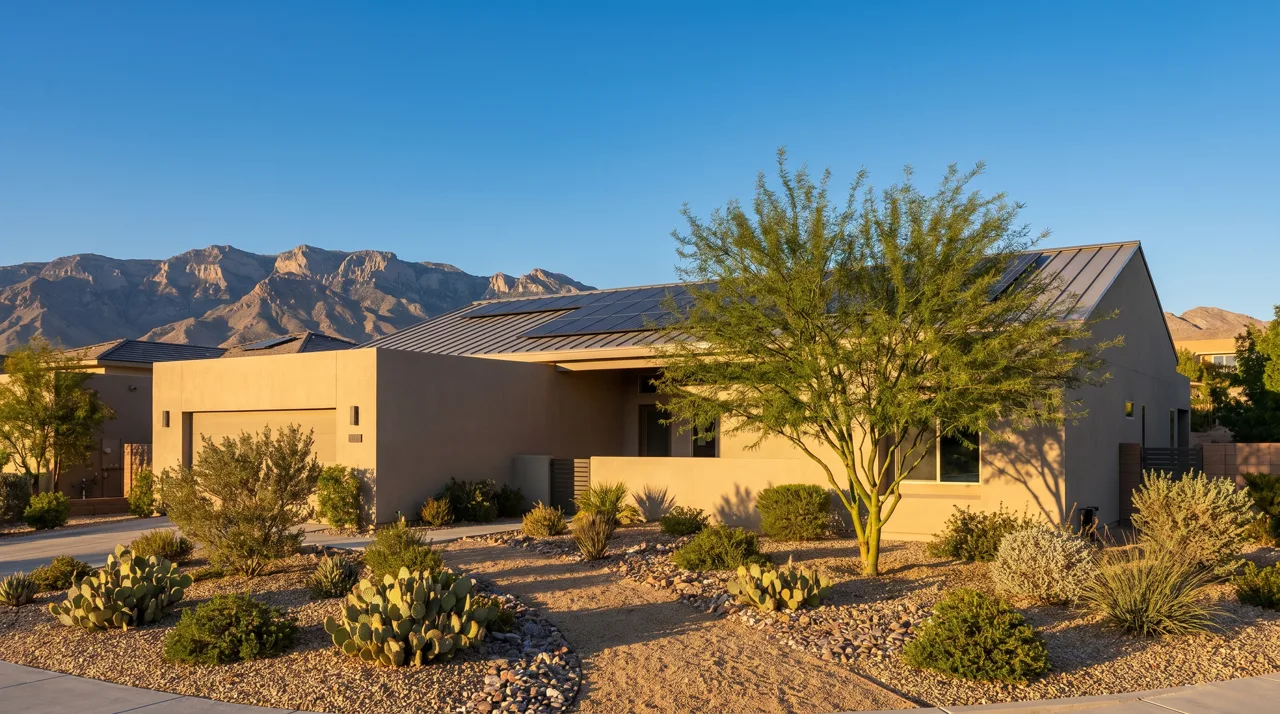
Las Vegas runs on roughly 300 sunny days a year, so the math on solar is almost too easy. The harder math, and the part most buyers chasing Las Vegas off grid and sustainable living don't fully think through until they've put earnest money down, is water. If you can solve water, almost everything else here works in your favor.
I've worked with buyers who showed up looking for a five-acre desert parcel and left with a Summerlin home wired for batteries. I've also closed for buyers who genuinely wanted to drill a well, install solar, and never see a utility bill again. Both can be the right answer. They're just very different financial and lifestyle commitments, and the rules around them have changed a lot in 2026.
This guide walks through what's actually possible inside the Las Vegas Valley and out in the rural communities surrounding it. It covers the costs that don't make it into Zillow listings, the laws that just changed, and the specific locations where eco-conscious buyers are most often landing.
What Off-Grid Living Actually Means Here
"Off-grid" gets used loosely. It's worth being precise, because the price difference between the three real options is enormous.
Urban Sustainable Living
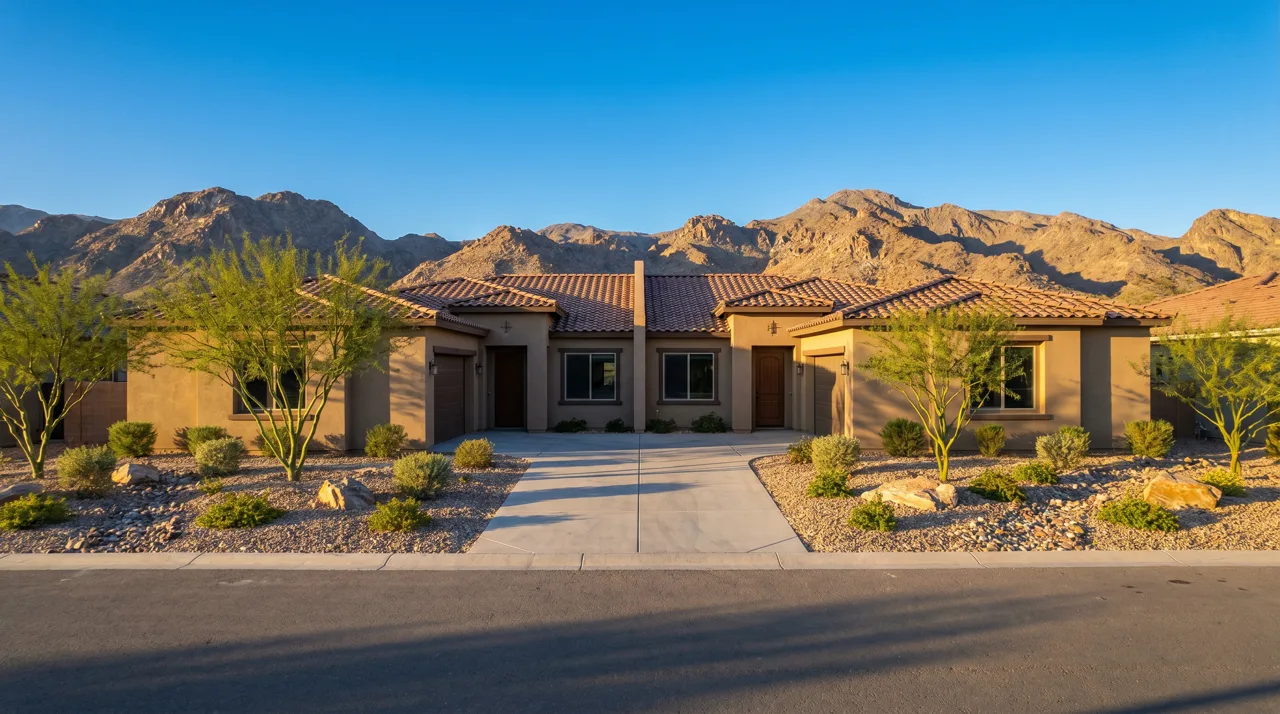
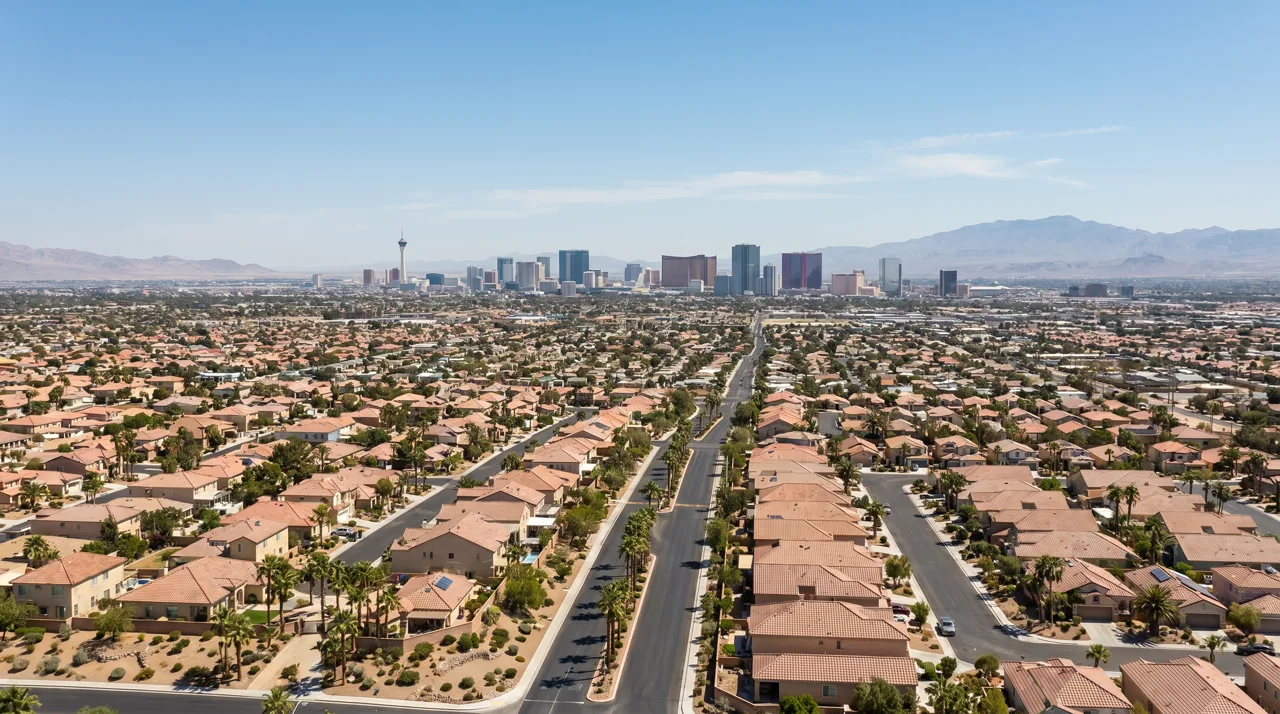
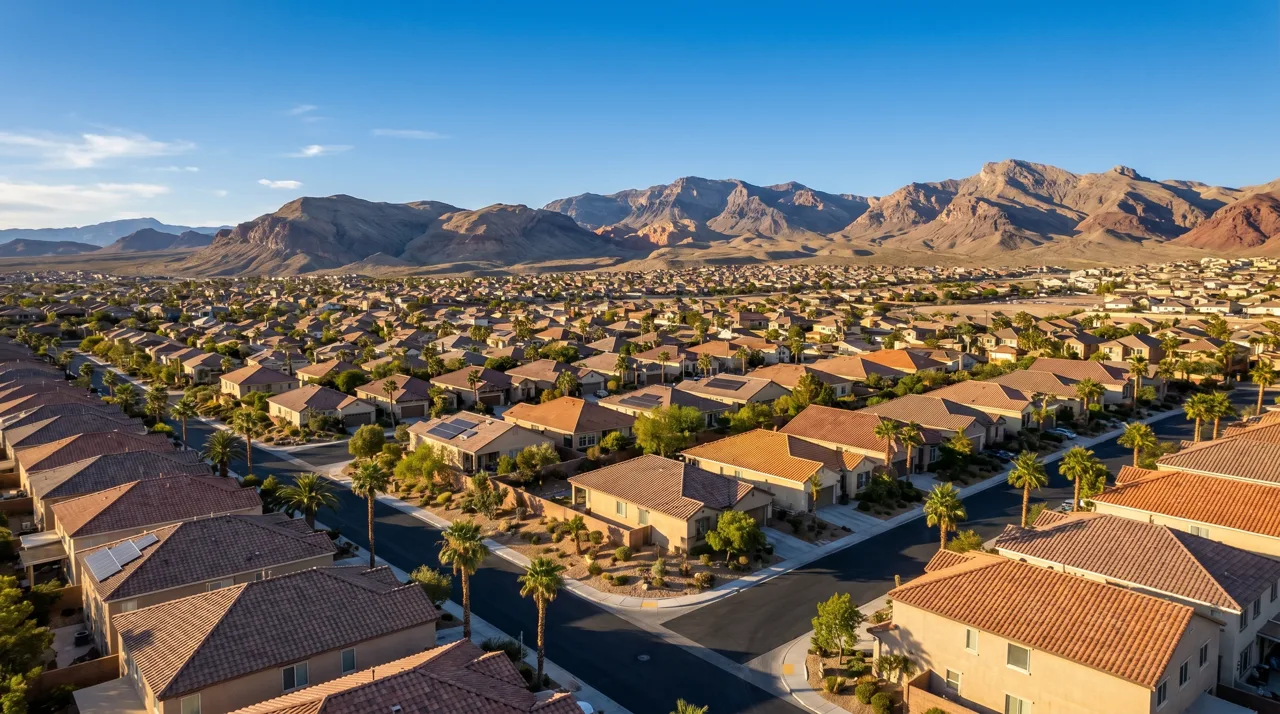
A grid-tied home in Las Vegas, Henderson, or North Las Vegas with solar panels, a battery, xeriscape, and high-efficiency appliances. You still get a power bill and a water bill, but they can be small. This is by far the most popular path for buyers who want a lighter footprint without giving up jobs, schools, and Costco.
Semi-Rural Resilient Living
A property in places like Sandy Valley, Indian Springs, or Cold Creek where you might have utility access for some services and self-sufficient systems for others. Buyers here usually combine solar plus battery with a domestic well, septic, and propane. There's still a road, a school bus, and an internet option, but you're trading commute time for space and autonomy.
True Off-Grid Homestead
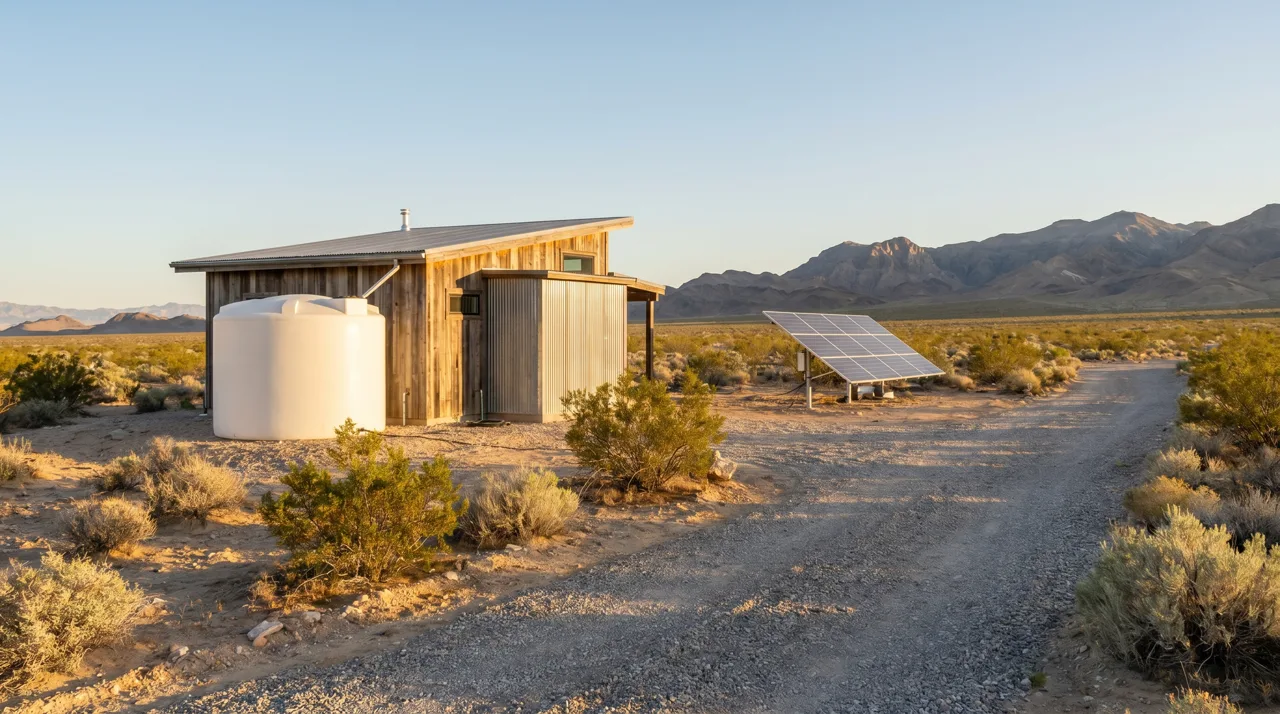
A remote parcel, often in Nye County around Pahrump, with no utility hookups at all. Power is solar plus battery plus a backup generator. Water is hauled, harvested, or pulled from a permitted well. Wastewater goes to an engineered septic system. This is the lowest monthly cost and the highest upfront commitment, and the legal due diligence is where most deals fall apart.
The mistake I see most often is buyers assuming "off-grid" automatically means "cheaper." It can be, eventually. But raw desert land typically needs site work, well drilling, septic engineering, power systems, propane storage, road grading, and sometimes a fire-protection plan before it's actually buildable. Add those up and you're often at the price of a finished home in a master-planned community.
Why Southern Nevada Is Genuinely Great for Solar
Nevada ranks 6th nationally for solar energy production with 3,903.8 MW of installed capacity and roughly 67,650 solar installations statewide. The National Renewable Energy Laboratory has called out Las Vegas as part of the country's strongest solar resource zone, with sun output of 6 kWh per square meter per day or better. That's the technical version of what locals already know: panels here just work.

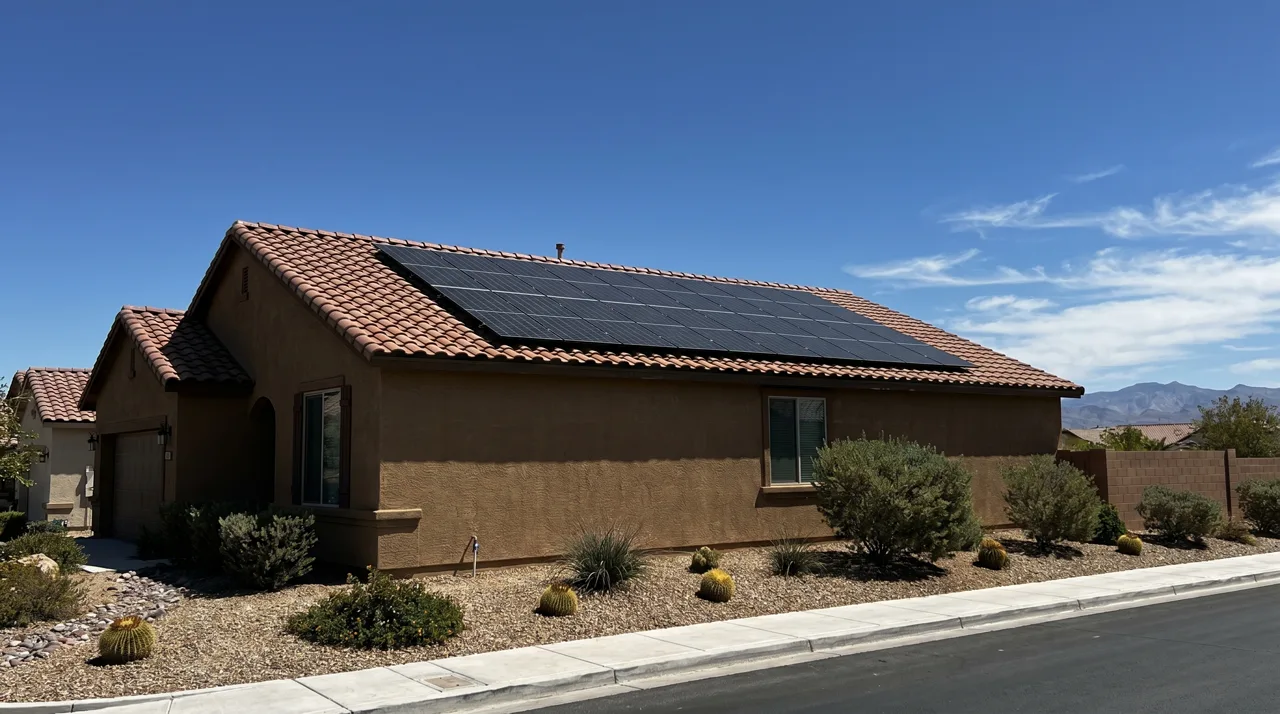
For sizing, EnergySage estimates the average Nevada household needs about a 12.05 kW system to cover a typical electric bill. That's larger than what you'd see in milder climates, mostly because of summer cooling loads. NV Energy's residential rates currently sit around $0.1178 per kWh in Southern Nevada, with a summer peak window from June 1 through September 30, weekdays 6 PM to 9 PM. A demand charge tied to your highest 15-minute usage interval rolled in starting April 1, 2026, which makes battery storage substantially more useful than it was a few years ago.
One detail that surprises a lot of HOA buyers: under Nevada NRS Chapter 278, deed restrictions that prohibit or unreasonably restrict solar are void and unenforceable. Your guard-gated community can have opinions about panel color and placement. They can't tell you no.
Water Is the Real Constraint
Southern Nevada draws most of its drinking water from the Colorado River through Lake Mead, with about 10% of municipal supply coming from groundwater under the Las Vegas Valley. The Southern Nevada Water Authority recycles nearly all indoor water on a community-wide scale, which is why outdoor use is the part of the equation locals fight over.
For grid-tied buyers, the implications are straightforward and mostly good. You'll get watering days assigned by group: one day per week in winter, three days per week in spring and fall, and Monday through Saturday in summer with no spray irrigation between 11 AM and 7 PM from May through August. Sundays are off-limits year-round. Rates run roughly $1.56 to $4.14 per 1,000 gallons depending on tier, with a $9 per 1,000-gallon excessive-use surcharge that bites hard if you ignore the schedule.
For rural buyers, the picture is more complicated.
Wells, Hauled Water, and the Pahrump Trap
Nevada generally exempts domestic wells from water-right permitting under NRS 534.013. The 2023 Las Vegas Valley pumpage inventory from the Nevada Division of Water Resources actually counted 3,924 exempt domestic wells still operating in the basin, which is a lot more than most people would guess. The state assumes 2 acre-feet per well as a committed domestic resource.
Drilling costs vary widely. In the broader Las Vegas area, a domestic well typically runs $3,750 to $15,300. In Pahrump Valley, where the water table has been declining, the same project can run $15,000 to $40,000 or more. Per-foot costs land around $25 to $65.
Nevada law also allows rooftop rainwater harvesting from single-family dwellings for non-potable uses without a permit, which can supplement irrigation water in semi-rural setups. Don't count on it as a primary supply. The valley averages just 4.18 inches of rain per year across roughly 21 precipitation days.
The Rebate That Actually Moves the Needle
If you stay grid-tied, the single most impactful sustainability move you can make in this region isn't another solar panel. It's grass.

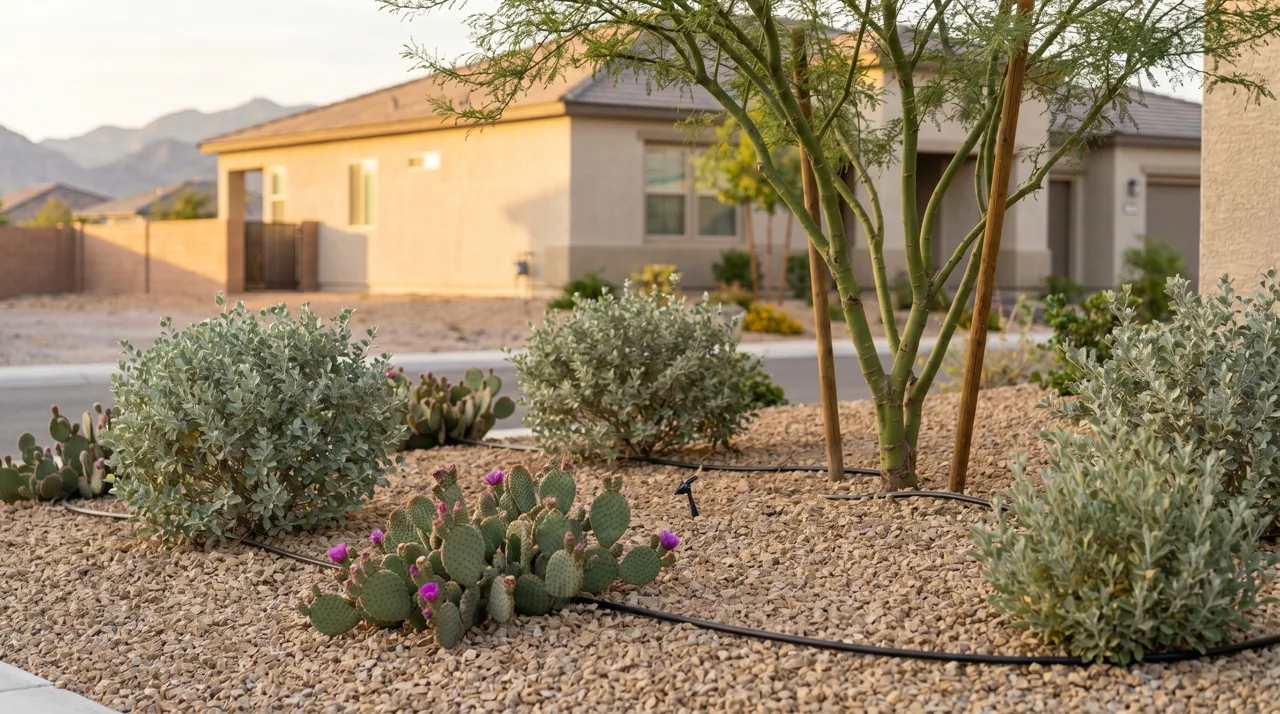
The SNWA's Water Smart Landscapes program has converted 250 million square feet of grass since 1999 and saved 203 billion gallons of water. Residential properties currently get $5 per square foot for the first 10,000 square feet converted, and $2.50 per square foot after that, per fiscal year. Las Vegas Valley Water District customers who applied on or after January 1, 2025 may qualify for an additional $2 per square foot for functional turf conversions. There's also a Tree Enhancement rebate paying $100 per new tree, up to 100% canopy coverage.
Where Eco-Conscious Buyers Are Actually Landing
The "near Las Vegas" search universe spans from urban Henderson to remote Nye County. Here's how the realistic options compare.
| Area | County | Best For | Main Caution |
|---|---|---|---|
| Las Vegas Valley (urban) | Clark | Solar, batteries, xeriscape, ADUs, EV readiness | HOA design rules; can't go fully off-grid |
| Sandy Valley | Clark | Larger parcels, homestead culture, alternative housing | Long commute; limited services |
| Searchlight | Clark | Quiet desert living south of the valley | Service access; distance from employment |
| Indian Springs | Clark | Rural feel north of Las Vegas, lower density | Job and school tradeoffs |
| Cold Creek | Clark | Higher elevation, cooler summers, mountain-edge setting | Fire and weather exposure; HOA restrictions |
| Moapa Valley | Clark | Agricultural heritage, larger lots, traditional rural feel | Distance from metro jobs |
| Pahrump | Nye | Cheapest land; established off-grid culture | Well restrictions; advanced septic required |
Sandy Valley is probably the most popular truly rural choice for buyers who still want a Clark County address. The annual Earth Day "Micro*Fest" gives you a sense of the community's lean toward sustainability, and informal listings often advertise compounds, homesteads, and container-home projects. Population sits around 1,663 according to the most recent Census CDP figures.
Cold Creek sits in the Spring Mountains roughly 45 minutes from town. It's higher, cooler, and operates with a community water system fed from the mountains plus heavy reliance on solar. The HOA has specific rules covering pets, campfires, and construction. Listings here regularly feature custom off-grid homes with substantial battery storage.
Pahrump is in Nye County, about an hour west, and it's the destination most "Vegas off-grid" YouTubers are actually filming from. Population is around 44,738. Land is cheaper than anywhere else in this comparison. The catches are real, though. New domestic wells are restricted, and the City of Pahrump has been designated a Nitrogen Management Area by the Nevada Division of Environmental Protection, which means onsite septic systems below 3,000 gallons must use advanced de-nitrifying treatment. That alone can add five figures to a build budget.
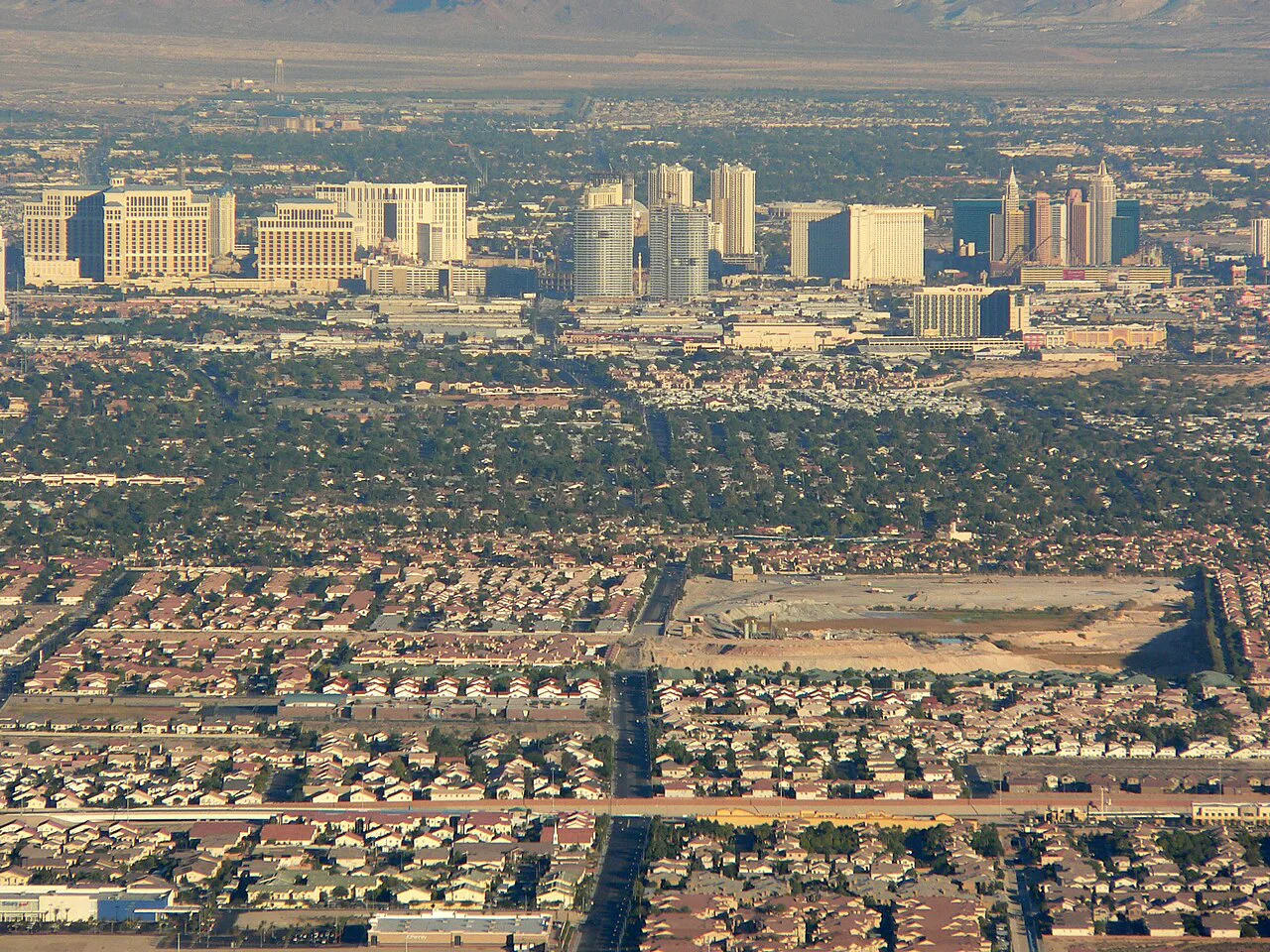
For the urban-side path, communities like Centennial Hills and Henderson have a healthy mix of newer construction with strong efficiency baselines, and you'll find horse properties and one-acre lots tucked among standard subdivisions. Buyers who want the lowest-friction sustainable home, with full grid access and rebate eligibility, usually start in the Las Vegas Valley rather than the rural fringe.
What This All Costs
Here's where most articles wave hands. The honest answer is that costs vary dramatically by site, but a few benchmarks help calibrate expectations.

| Sustainability System | Typical Cost (Southern NV) | Notes |
|---|---|---|
| Residential solar (grid-tied) | $10,300-$14,600 | Roughly 12 kW average system size in Nevada |
| Battery storage | $10,000-$20,000+ | Adds outage resilience; tax credits may apply |
| Domestic well (Las Vegas area) | $3,750-$15,300 | $25-$65 per foot drilled |
| Domestic well (Pahrump) | $15,000-$40,000+ | Where allowed; basin restrictions apply |
| Septic system | $8,000-$25,000+ | Pahrump requires advanced de-nitrifying systems |
| Turf removal rebate (income) | +$5/sq ft (first 10,000 sq ft) | Optional +$2/sq ft LVVWD bonus for functional turf |
| HVAC replacement | $6,000-$12,000 | 10-14 year lifespan due to heat load |
For framing on the resale side, the U.S. Census QuickFacts puts the median value of owner-occupied homes in the City of Las Vegas at $427,900 (2020-2024), with median household income at $73,877. A grid-tied home with a paid-off solar system, battery, and converted xeriscape yard usually appraises and resells well in this market because buyers here understand cooling costs.
Big Code and Law Changes Buyers Should Know in 2026
This is the part of the article that goes stale fastest, and 2026 is a busy year for Southern Nevada land use.
- 2024 IECC adoption. The City of Las Vegas adopted the 2024 International Energy Conservation Code effective January 5, 2026, with Clark County following on January 11, 2026. New permits will need to demonstrate compliance, which raises the baseline for envelope and HVAC efficiency.
- Clark County Title 30 rewrite. The fully rewritten development code took effect March 5, 2026, changing how rural parcels, setbacks, and residential approvals are interpreted. Don't rely on old forum advice or seller assumptions.
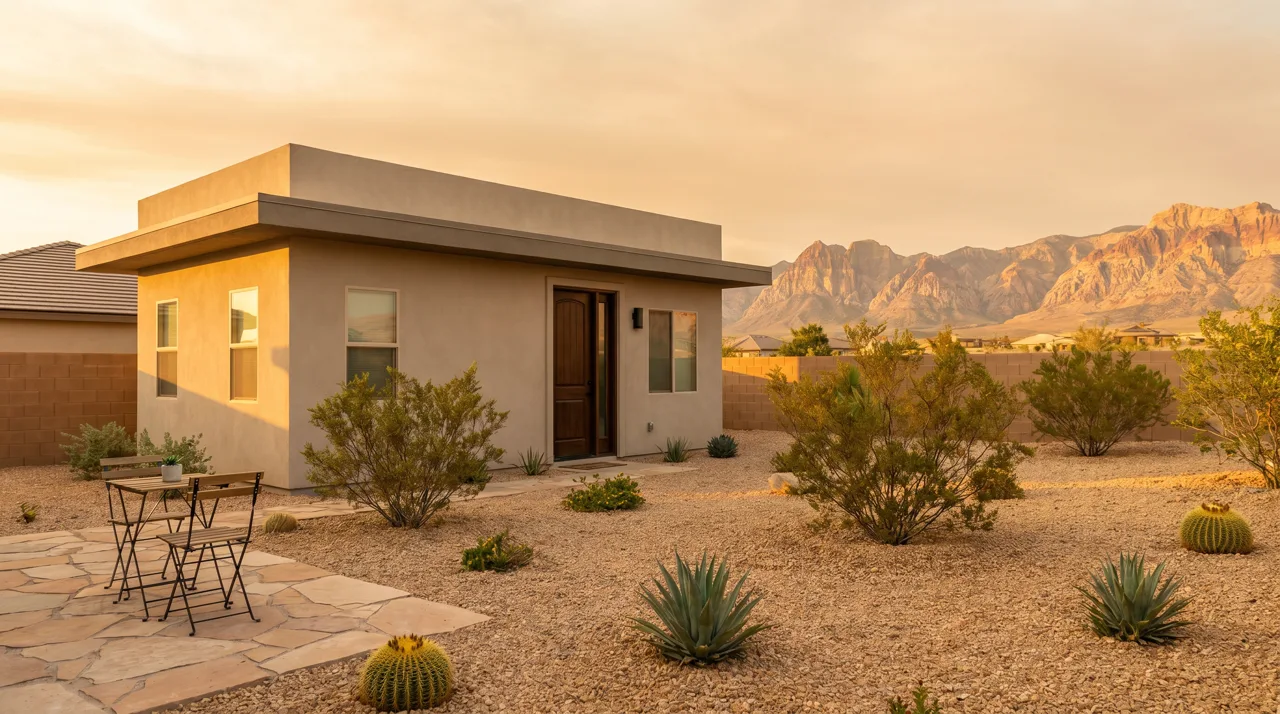
- Nevada ADU law. A 2025 statute requires major jurisdictions like Clark County and Las Vegas to authorize accessory dwelling units. If local ordinances aren't aligned by July 1, 2026, ADUs become broadly authorized on residential parcels by default. This is one of the most consequential moves for compact, multigenerational, lower-footprint housing in the state.
- Solar planning language. 2025 statute updates direct zoning regulations to consider solar access and shadow impacts from new buildings, which strengthens an already protective regime under NRS Chapter 278.
- Non-functional grass ban. Colorado River water can't be used to irrigate non-functional grass on certain commercial, HOA, and median landscapes starting in 2027. HOAs are already converting common areas now to beat the deadline.
As a CRS designee and a member of the Real Estate Advisory Review Committee for the Nevada Real Estate Division, I pay attention to how these changes show up at the closing table. The honest answer right now is that buyers hunting rural parcels need professional water and septic review on every offer. The "research it after we go under contract" approach has gotten people stuck on land they can't actually build on.
The Path Most Eco-Conscious Buyers Should Probably Take
This will be a controversial take in some homestead forums. For most people I talk to, the highest-impact sustainable lifestyle near Las Vegas isn't a remote desert compound. It's a well-built grid-tied home with solar plus battery, full xeriscape with the SNWA rebate banked, an ADU for family or income, and an electric vehicle on the EV-recharge time-of-use rate.

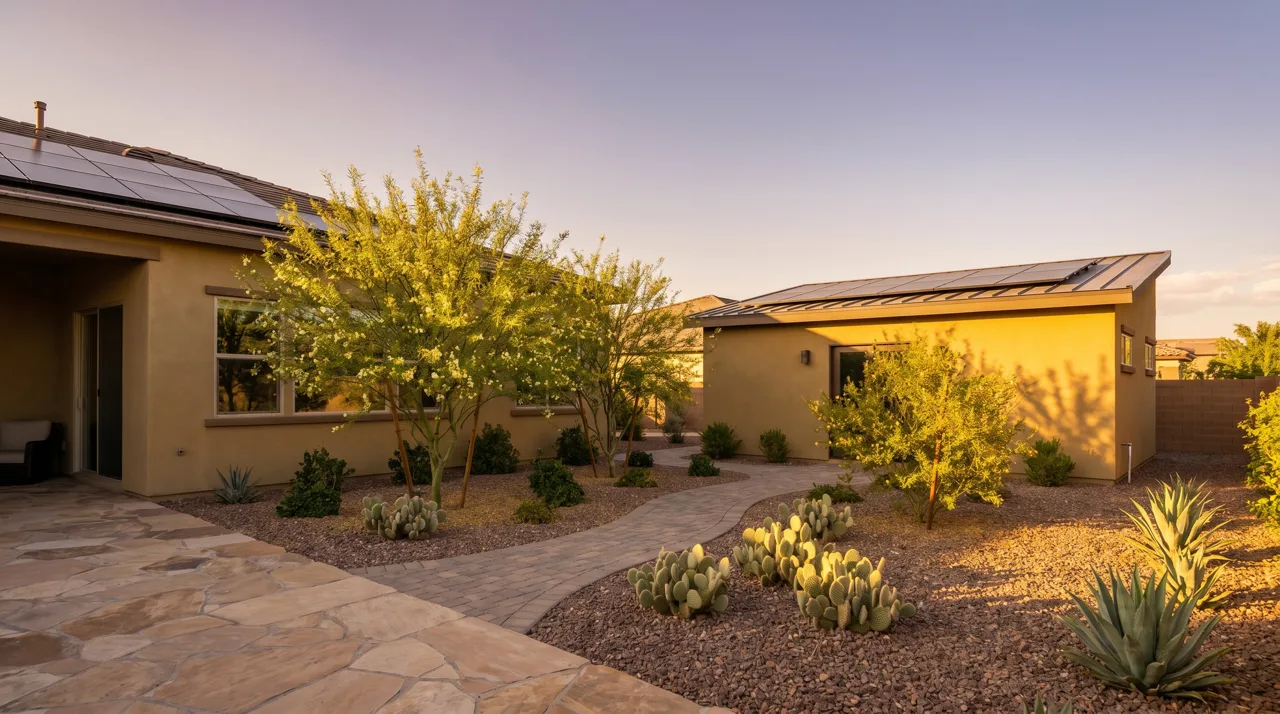
The reasons are practical. Indoor water in the valley is recycled at near-100% rates, which means a metro home is already plugged into one of the most aggressive water-reuse systems in the country. Solar performs well anywhere in Southern Nevada. Net metering, even at 75% of retail, still pencils out across most system sizes. ADUs are about to become much easier statewide, which makes a 2,400-square-foot main home plus an 800-square-foot ADU a very efficient use of land and infrastructure.
True off-grid living is genuinely viable here, and for the right buyer it's life-changing. But it should be a deliberate choice, not a default reaction to a high power bill in August.
Buyer Due Diligence Checklist for Rural and Off-Grid Parcels
If you are going rural, this is the short list I run with clients before we put pen to paper.
- Confirm the basin and the well status with the Nevada Division of Water Resources. In some basins, including Pahrump, new wells require relinquished water rights.
- Pull the septic requirements with the Nevada Division of Environmental Protection and the Southern Nevada Health District for Clark County parcels. Pahrump requires advanced de-nitrifying systems.
- Verify zoning, lot size minimums, and allowable structure types under the new Clark County Title 30 if your parcel is unincorporated.
- Get a written solar site assessment, not a "south-facing roof so we're good" estimate, especially if there are nearby ridgelines or planned future structures.
- Walk the access road in the rain or shortly after. Monsoon-season washouts are real, and emergency vehicle access is required for permitting.
- Price the full system stack honestly: well, septic, solar, battery, propane, generator, water storage, communications, and any required road or fire-protection improvements.
- If there's an HOA, like Cold Creek, get a copy of the CC&Rs and current architectural rules in writing before going under contract.
FAQs and Local Quirks
Can I really live off-grid in Las Vegas city limits?
Not in the way most people mean. You can build a highly efficient home with solar and a battery and dramatically reduce your bills, but municipal water and sewer connections are typically required where they're available. The "off-grid in the city" path is closer to "as close to net-zero as code and connection rules allow."
Is rainwater collection legal in Nevada?
Yes for residential rooftops, for non-potable uses, without a permit on single-family dwellings. Don't expect it to replace a well or municipal connection, given the average rainfall here.
How does HOA approval work for solar?
Under NRS 278, an HOA can't prohibit or unreasonably restrict solar. They can have reasonable design standards, like preferring black panels or specifying mounting hardware. If you're getting a flat denial, that's almost certainly unenforceable, and you have grounds.
What about tiny homes?
Nevada code references tiny-home park standards, and Clark County's Title 30 includes related lot-size language. In practice, tiny homes still hit zoning friction in most metro Las Vegas neighborhoods. A FOX5 Vegas report from April 2026 documented continued hurdles even with state-level approval progress on certain product types. For most buyers wanting compact sustainable housing, the new ADU law is the more realistic path forward.
What's the easiest first move toward sustainability for a current homeowner?
Convert turf to xeriscape and bank the SNWA rebate. It's the highest-ROI sustainability project available in this market, and the same plant choices that qualify for the rebate also reduce summer heat retention around the home, which lowers your AC load. Solar comes second, batteries third.
If you're trying to figure out where on the spectrum your ideal home actually sits, the honest answer usually surfaces fast once you put real numbers on each path. That's the conversation worth having before you start touring.
Categories
Recent Posts