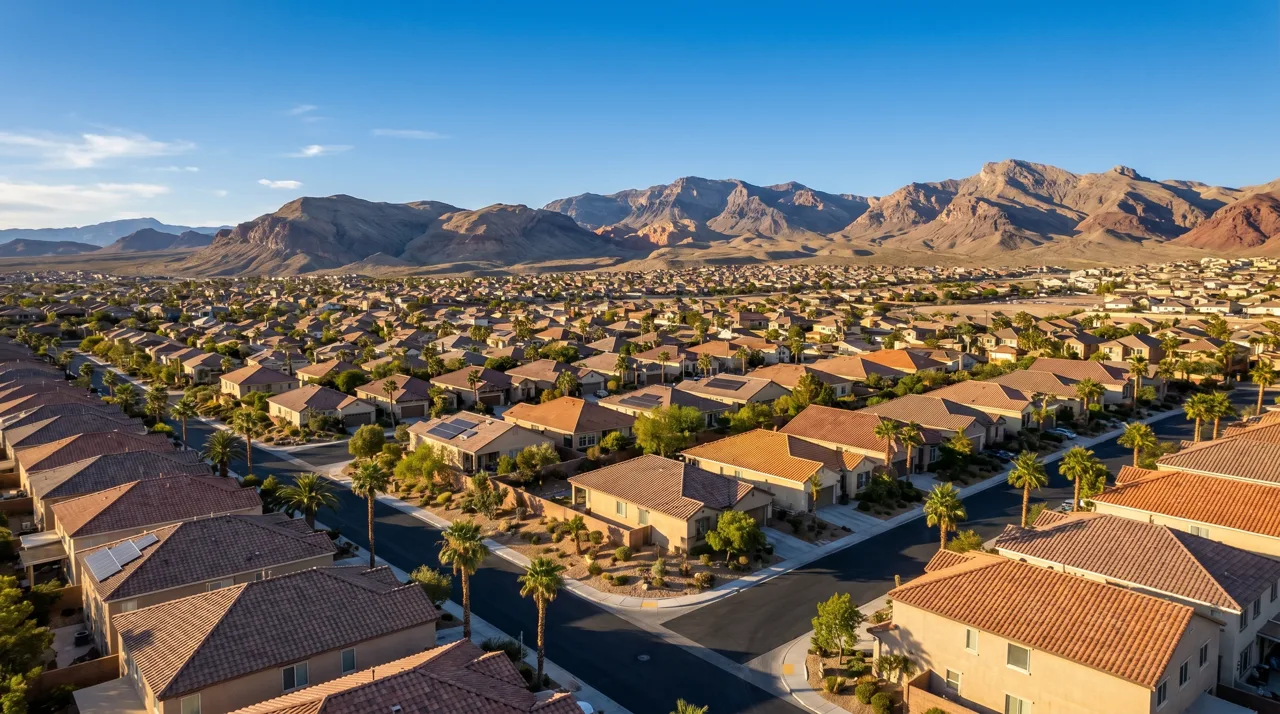
A Brief History of Las Vegas High Rise Living

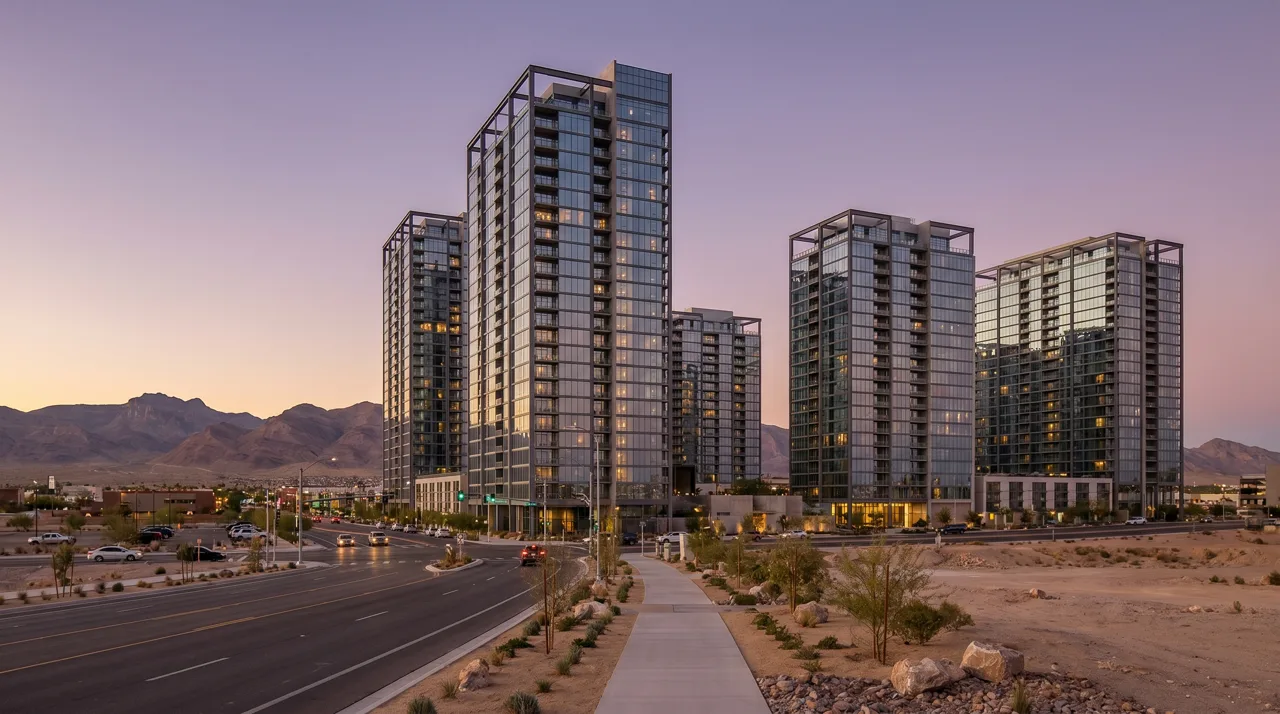
For most of the city's history, the towers along Las Vegas Boulevard were built for tourists, not residents. The story of how they became homes (luxury homes, in many cases) is shorter than people think, and it's still being written.
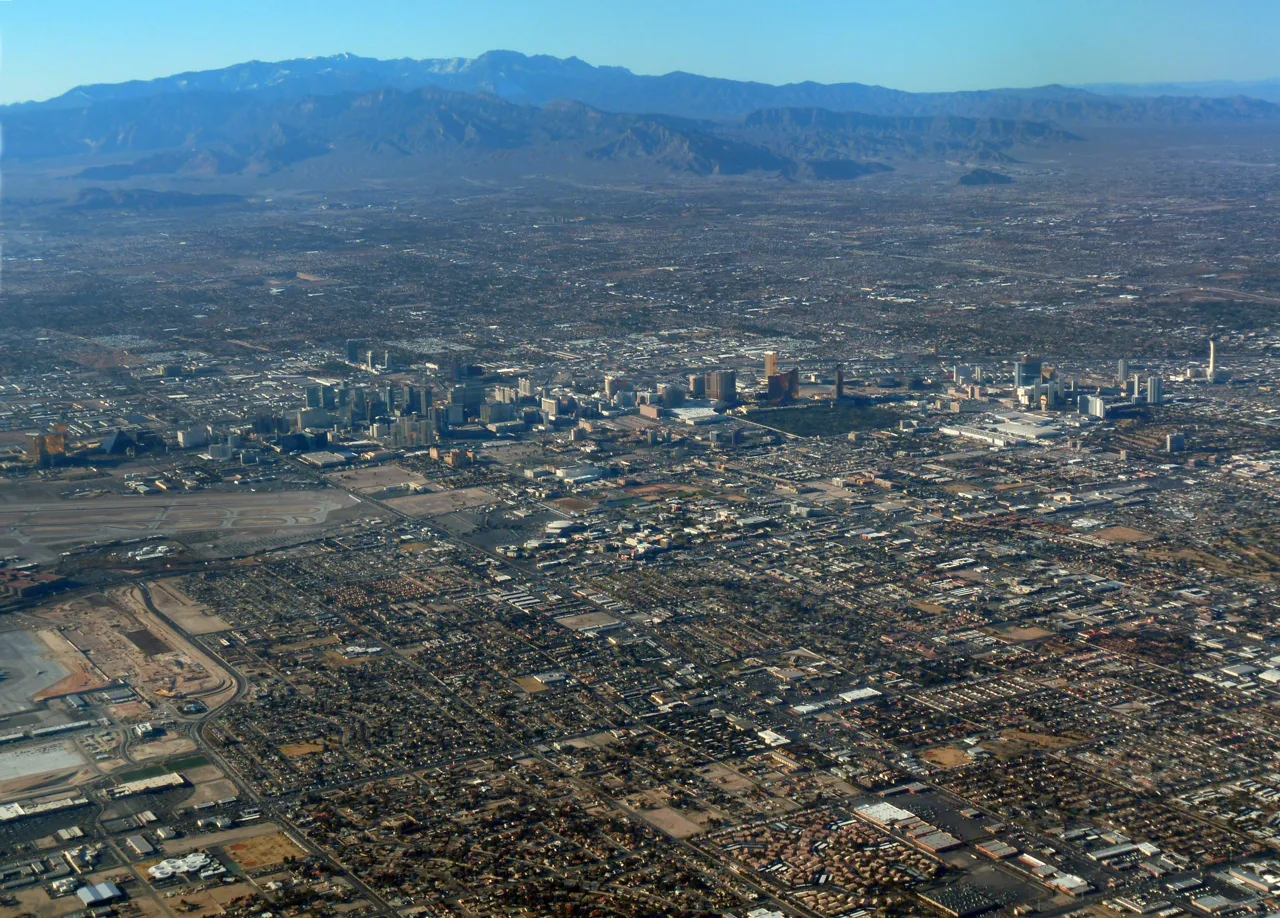
The Las Vegas high rise buildings history is really a story of two cities trying to grow vertically at the same time. The Strip corridor wanted glamour and second homes for affluent buyers. Downtown wanted a real urban neighborhood. Both got off to a fast start in the early 2000s, both got hammered by the 2008 crash, and both are now in a quieter, more disciplined second act. If you're shopping a condo in 2026, the building you're touring almost certainly has a backstory tied to that arc.
How vertical living actually started here
The first piece of trivia worth knowing: Las Vegas got its first true high-rise residential building all the way back in 1974, when Regency Towers opened. For nearly 25 years after that, almost nothing happened on the residential tower front. The valley grew outward, not upward. Tourist hotels kept getting taller, but residents stayed in single-family homes and garden-style apartment communities.
That changed at the very end of the 1990s. Turnberry Associates announced Turnberry Place in June 1998, broke ground on the first tower in August 1999, and finished it in 2001. Park Towers at Hughes Center, developed by a partnership that included Steve Wynn, opened around the same time. A 2001 feature in Nevada Business Magazine described the two projects as the luxury high-rise condo developments that had just "blossomed" in Las Vegas. They were more than buildings. They were a proof of concept that affluent Strip-adjacent buyers actually wanted full-service, lock-and-leave residential living instead of an estate in Spanish Trail or Anthem.
That's the part that surprises people. Vertical living in Las Vegas didn't start downtown the way it did in Chicago or Manhattan. It started near the Strip, driven by demand for second homes and convenience, and downtown spent the next decade trying to catch up.
The boom years: when Las Vegas tried to "Manhattanize"
From 2003 to about 2007, things got wild. Developers announced project after project across the valley, riding cheap money, soaring land prices, and the conviction that Las Vegas was finally maturing into a 24/7 city instead of a tourist town with a residential ring around it.
The numbers from that era are still the most jaw-dropping part of the story. By May 2005, plans called for roughly 25,000 condo units and another 8,300 condo-hotel units valley-wide. Reporting from Nevada Business Magazine in 2007 noted more than 100 high-rise projects in some stage of the pipeline at the peak. A local author even put out a book in 2005 titled Manhattanizing Las Vegas, which gives you a sense of the mood.

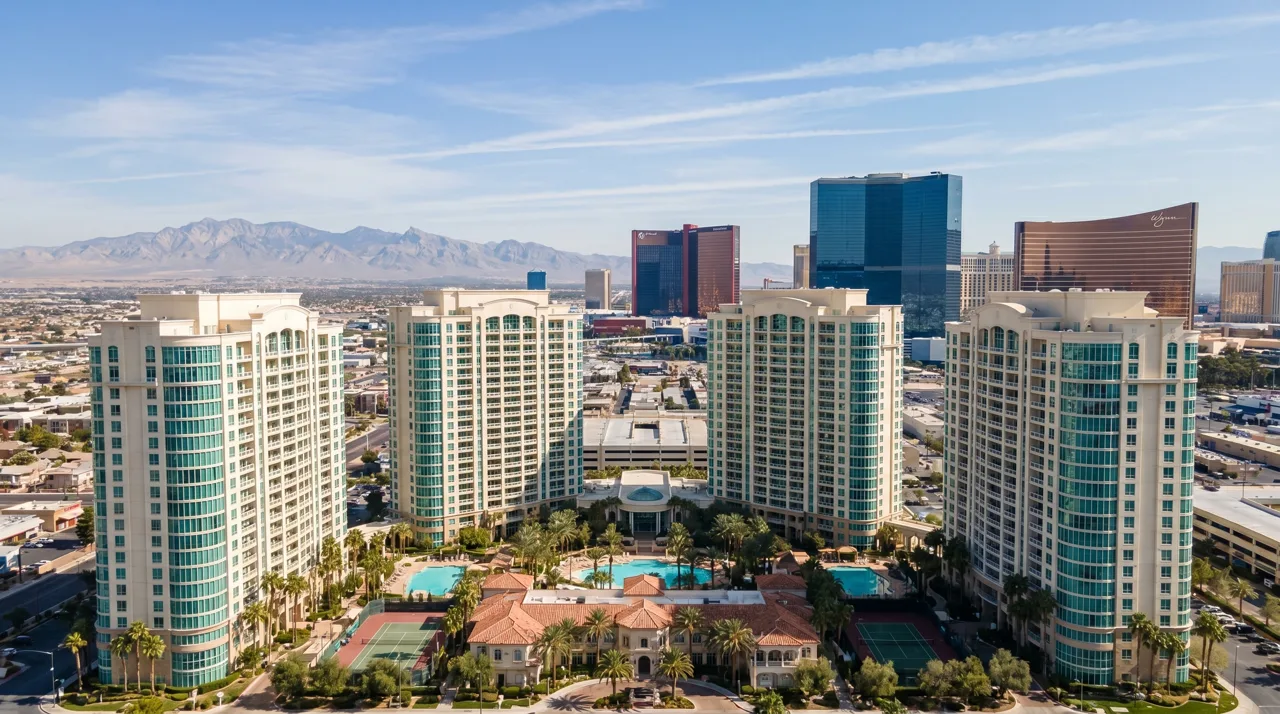
The Strip-corridor towers that defined the era
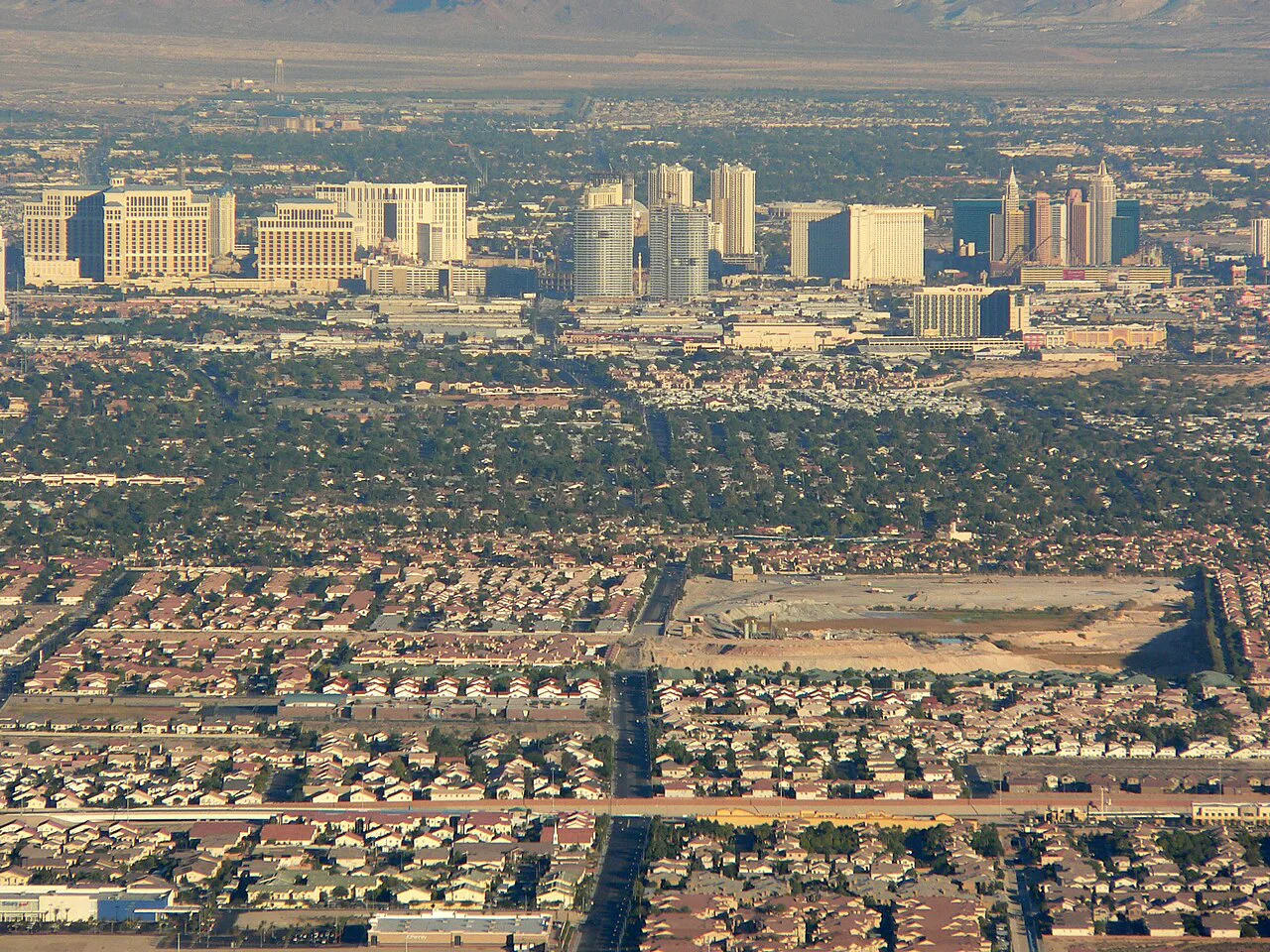
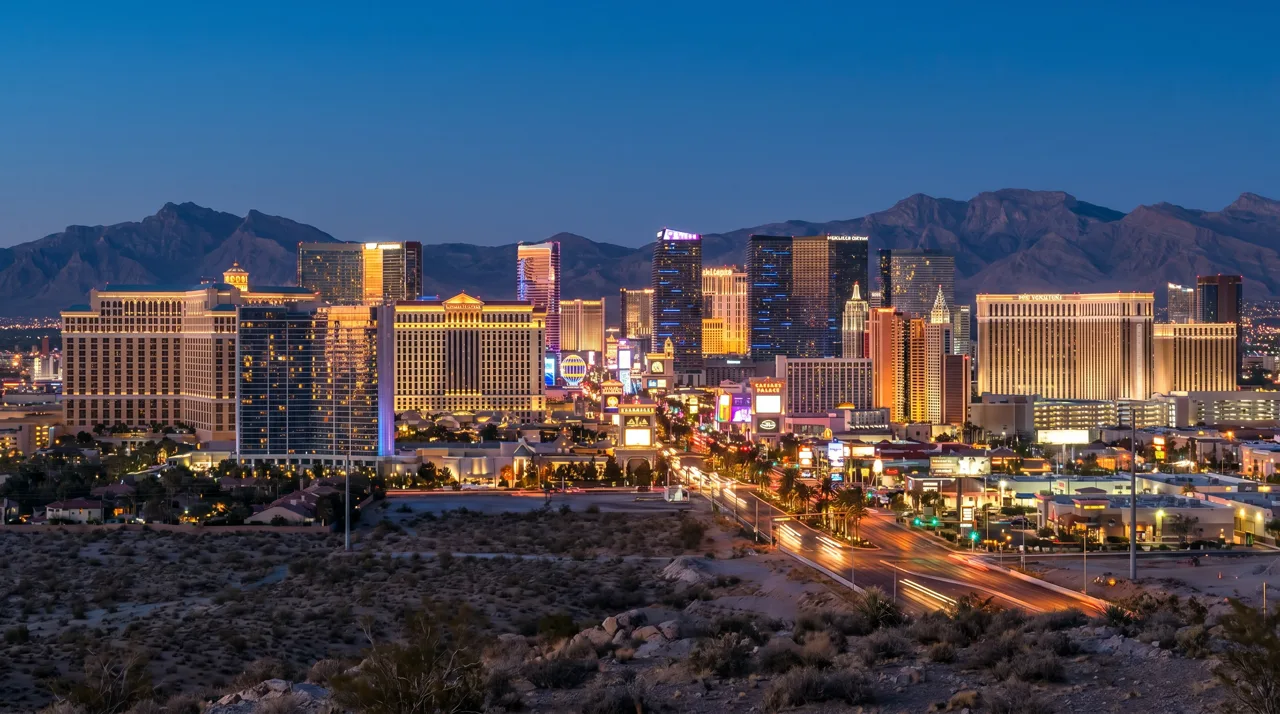
Most of the buildings we still talk about today came out of that single boom window. They were finished within a few years of each other, which is part of why the Las Vegas high-rise market has such a synchronized "third decade" maintenance challenge ahead of it now. Here's the lineup that mattered most.
| Building | Year | Stories / Units | Why it matters |
|---|---|---|---|
| Turnberry Place | 2001 (Tower 1) | 38 stories, 4 towers | The luxury high-rise pioneer; Stirling Club anchor |
| Park Towers | 2001 | 20 stories, 84 units | Ultra-private boutique luxury, only 84 total residences |
| Soho Lofts | 2006 | 16 stories, 112 units | First high-rise condo project in Downtown Las Vegas |
| Trump International | 2006 | 64 stories, 1,282 units | Tallest residential tower in Las Vegas at 622 feet |
| Panorama Towers | 2006-2008 | 33 stories, 650 units | Iconic aqua-blue glass; celebrity resident draw |
| MGM Signature | 2006 | 38 stories, 1,728 units | The defining condo-hotel on the Strip |
| Sky Las Vegas | 2007 | 45 stories, 409 units | First high-rise condominium project to open on the Strip itself |
| Allure Las Vegas | 2007 | 41 stories, 428 units | Tallest residential building within Las Vegas city limits at completion |
| The Martin | 2007 (built), 2011 (rebrand) | 45 stories, 372 units | Originally Panorama North; rebranded after the crash |
| Veer Towers | 2009 | 37 stories, 669 units | Twin towers leaning 5 degrees in opposite directions |
| Waldorf Astoria | 2009 (condos) | 47 stories, 225 units | Originally Mandarin Oriental; still the price-per-sqft leader |

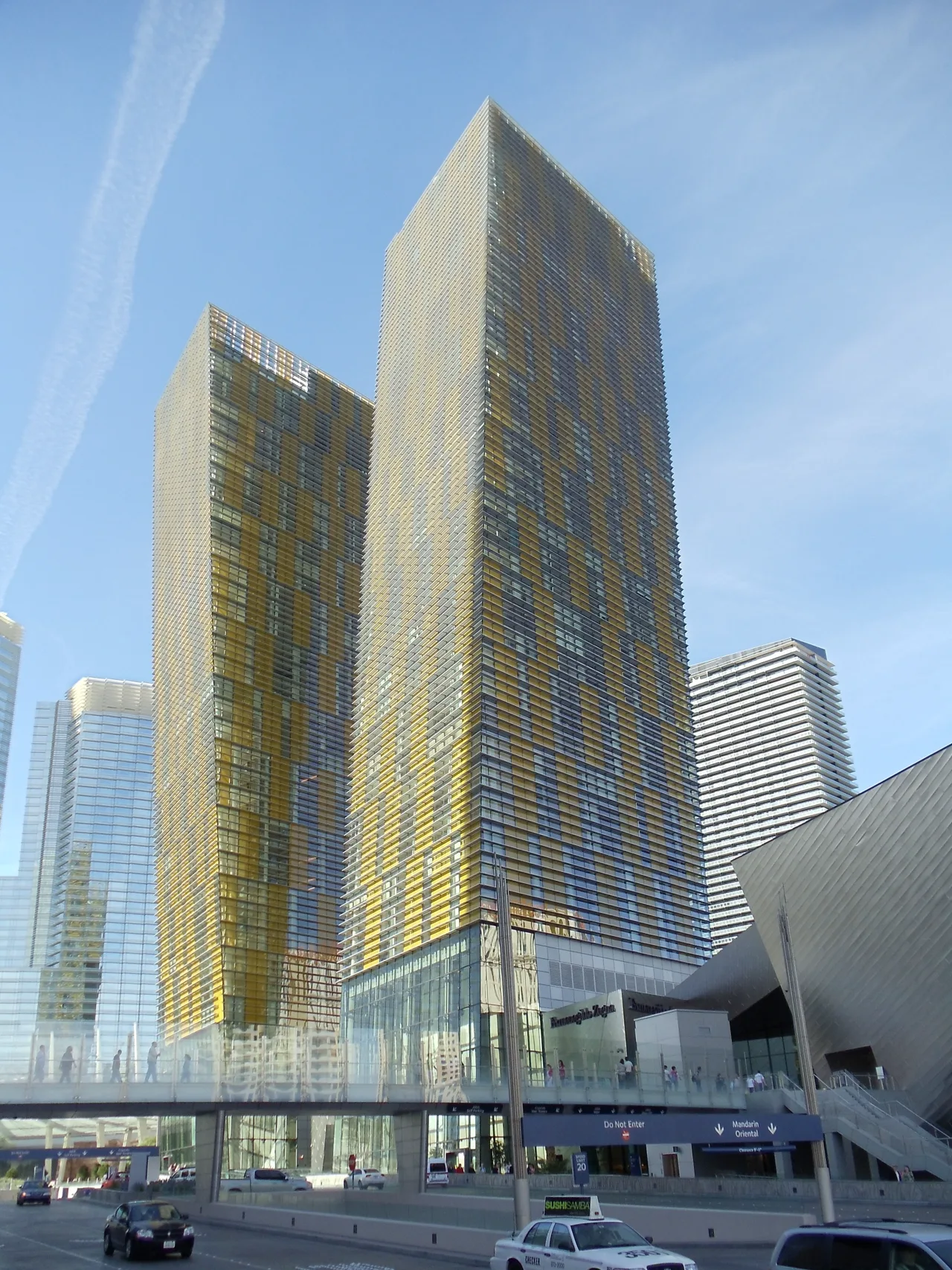
Photo by Jim G · CC BY 2.0 · Wikimedia Commons
A few of these deserve a closer look because they each represent something different about the era. Sky Las Vegas opened in May 2007 and gets credit for being the first true residential condo project to open on the Strip itself. Allure was the tallest residential building inside the Las Vegas city limits when it finished. Veer Towers, designed by Helmut Jahn at CityCenter, lean about five degrees in opposite directions and remain the only purely residential project at CityCenter. Trump's gold-glass tower on Fashion Show Drive topped out at 622 feet, making it the tallest residential building in the city.
Downtown's parallel story
While the Strip corridor was filling up with luxury towers, downtown was running a different experiment. The City of Las Vegas had created its Redevelopment Agency back in 1986 specifically to revitalize aging commercial districts, and by the mid-2000s the dream was finally happening on paper. A retrospective from the Las Vegas Sun's VEGAS INC reported that 46 residential projects had reportedly been approved for downtown by fall 2005. That number is still hard to believe.
Most of those never got built. But a few did, and they're the foundation of downtown high-rise living today.
Soho Lofts (2006)
The first high-rise condo project in Downtown Las Vegas. 16 stories, 112 units, Art Deco styling and 11-foot ceilings. It's anchored the Arts District feel for almost two decades.
Newport Lofts (2006)
22-story raw-loft tower with exposed ductwork, concrete floors, and a rooftop jogging track that's still one-of-a-kind in the valley. 168 units.
Streamline Tower / The Ogden (2007-2008)
Originally branded Streamline Tower, this 21-story project topped out in May 2007. After the crash it was rebranded as The Ogden in 2015 with a multi-million dollar common-area renovation. For years it was the only true residential high-rise in the heart of downtown.
Juhl (2008-2009)
A 15-story mixed-use anchor at Bonneville and Third with 344 units across 100+ floor plans. Topping-off coverage in the Review-Journal put it at $170 million in mixed-use development cost. It's still the closest thing downtown has to a "true" urban condo experience.
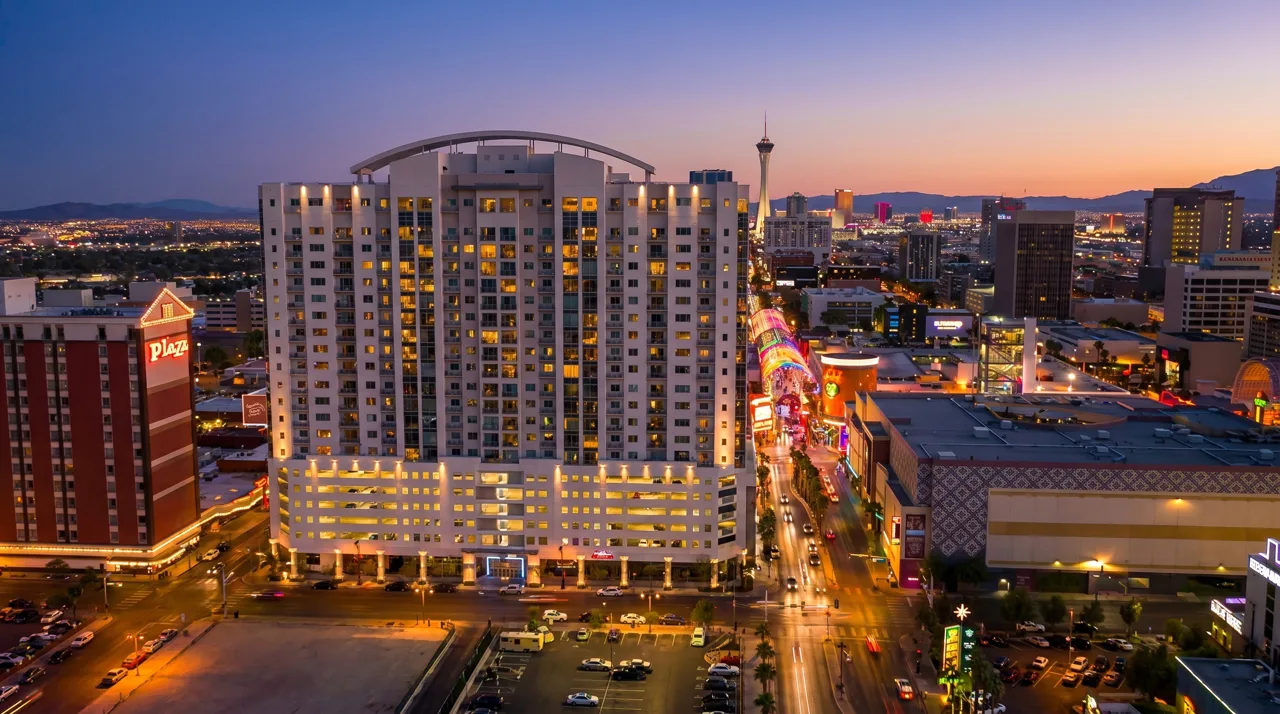
Why didn't more downtown projects get built? Part of it was the crash, but part of it was an ecosystem problem the city itself acknowledged later. Downtown didn't have grocery stores, day-to-day services, or a critical mass of full-time residents. You can build the tower, but if there's nowhere to buy a gallon of milk on a Tuesday night, people don't move in.

The crash and what survived
2008 hit Las Vegas residential real estate harder than almost any other major U.S. market, and the high-rise sector took the brunt of it. Towers that had pre-sold at boom prices saw units close at half off. A 2012 Review-Journal report said roughly 125 projects had been planned during the boom and that high-rise units were trading at about half their original asking prices. Some projects went into foreclosure. Others were rebranded. The Martin, for example, was originally called Panorama North before its 2011 reset.
Construction defect litigation became its own subplot. The most famous case was the long-running Panorama Towers dispute over defective window assemblies, which eventually settled after the Nevada Legislature extended the statute of repose to ten years.
The quiet decade and the comeback
From roughly 2010 to 2024, Las Vegas high-rise living went through something unusual: stability. Existing buildings filled up, prices recovered, and HOAs slowly rebuilt their reserves. The City of Las Vegas now describes downtown high-rise living as "alive and well," noting that towers that stagnated during the downturn are nearing full occupancy again.
The market also tiered out in a way it hadn't before. The Waldorf Astoria (originally the Mandarin Oriental, converted to that brand in 2018) emerged as the price-per-square-foot leader, with units regularly trading north of $1,600 per foot. One Queensridge Place out near Summerlin earned the nickname "Custom Homes in the Sky" thanks to its Jerusalem stone, full-floor units, and Roman-style spa. Park Towers and Turnberry Place held their old-money status. Meanwhile, MGM Signature became the default high-volume play for investor buyers, with 97 units changing hands in the most recent 12 months.

The numbers behind today's market
Where does that leave 2026? Mature, but bifurcated. The broader condo segment is softening faster than single-family homes. Median condo prices were near $275,000 at the end of 2025, a roughly 5.2% year-over-year decline. At the same time, premium "Strip-view" units in the elite towers have appreciated as much as 19% annually thanks to scarcity and the global brand pull of a Las Vegas Boulevard address.
A 2024 Las Vegas Review-Journal report captured the split: high-rise sales fell to their lowest level since 2020, but the average sale price hit an all-time high near $697,890, up from $587,823 in 2023. Fewer deals, but more expensive ones, and an increasing share are cash buyers and international purchasers drawn by the city's sports and entertainment growth.
HOA fees and ownership reality
This is the part of high-rise history a lot of buyers don't think about until it's too late. Las Vegas high-rise HOAs are significantly higher than national averages, typically running $400 to $1,200+ a month, and the top-tier towers can run much higher than that. Waldorf Astoria HOAs hit $1,600 to $4,000 a month. One Queensridge Place can run $2,400 to $3,800. Park Towers can hit $4,900 at the high end.
Those fees pay for things you can't really replicate in a single-family home: 24/7 valet, concierge, security, full gym and spa access, vertical infrastructure like high-speed elevator banks and cooling towers, and in many cases utilities like water, gas, and trash. They also fund reserves for the kind of building-wide capital projects that get more pressing as towers age.
- Pull the resale package and read the reserve study before you write an offer
- Ask about pending litigation and any past special assessments, since both affect financing
- Check whether the building is "warrantable" by Fannie Mae and Freddie Mac (most condo-hotels are not, which means cash or specialized loans only)
- Verify rental rules: minimum lease length, short-term rental allowances, and any caps on rented units
- Confirm pet rules early if you have a dog over 25 pounds; some towers have weight or breed limits
- Ask whether the building has done a recent capital project (elevators, HVAC, facade) or has one coming

Condo-hotels: the side category that almost defined the era
You can't tell the Las Vegas high-rise story without the condo-hotel chapter. These are residential units that operate inside a hotel, so owners can choose to opt into a rental management agreement (typically a 40-60 split of gross revenue) and treat the unit as an investment property. MGM Signature, Trump Tower, Vdara, Palms Place, and Elara are the main names.
The model has always been a love-or-hate proposition. Premium units at MGM Signature have hit 80%-94% occupancy in peak convention seasons with average daily rates of $180 to $250-plus, which can be a real income stream. The catch: most condo-hotels are non-warrantable, meaning conventional FHA and VA financing isn't available. Most deals close as cash or with a portfolio loan requiring 30-40% down. Owner-occupancy in some buildings sits below 10%. If you're buying for primary residence, this is a different product than a true condominium and should be evaluated differently.
The new wave: what's coming next
For about 15 years after the crash, no one was building meaningful new residential high-rise inventory in Las Vegas. That just changed.
Cello Tower at Symphony Park (Downtown)
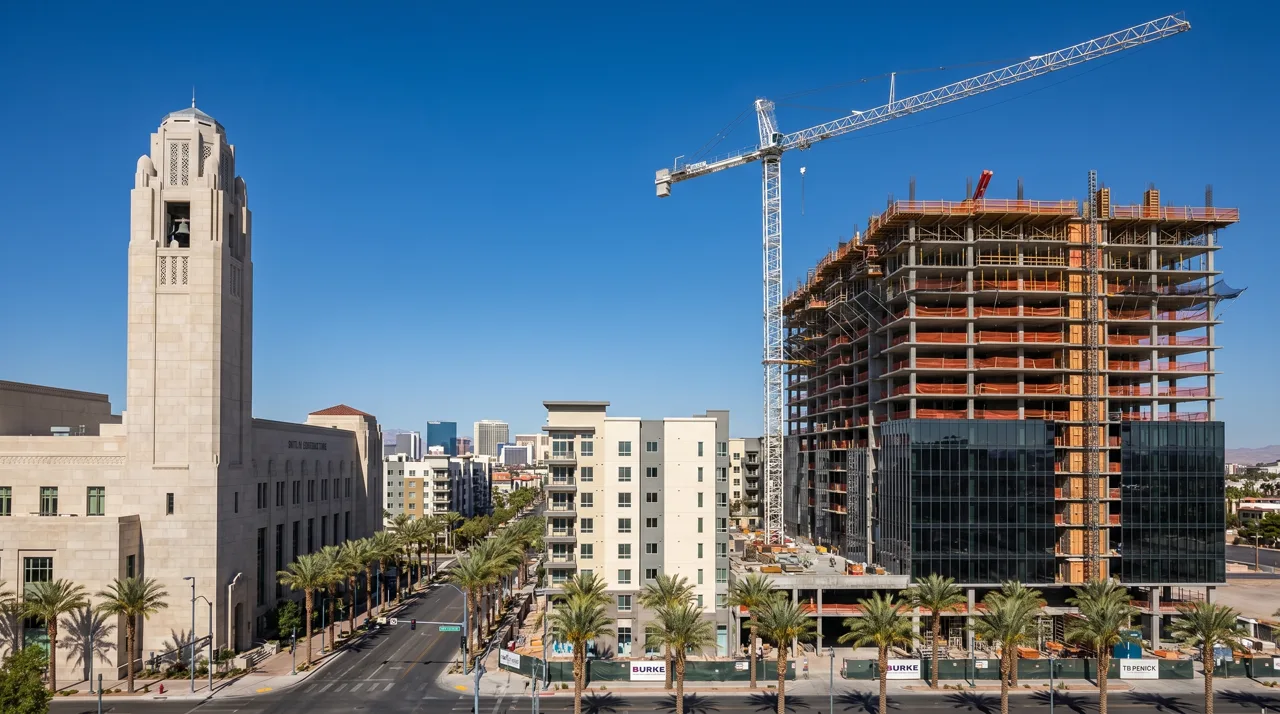
Part of the Origin at Symphony Park development, Cello broke ground in 2025 and is targeting 2028 completion. The full project includes a 32-story, 240-unit luxury condominium tower, 150 apartments, a 30,000-square-foot grocery store (the missing piece downtown spent 20 years chasing), 40,000 square feet of office, 20,000 square feet of retail, and a 700-stall parking garage. KTNV reported it as the first residential-only high-rise to break ground in downtown Las Vegas in roughly 15 years. Pricing runs from $780K to about $9M, with a penthouse already trading at $9M.
Four Seasons Private Residences (Henderson)
A 171-unit luxury mid-rise being built on a ridge in MacDonald Highlands, scheduled for 2027 completion. Pricing runs from $3M to $27.5M, and the project already has roughly $750M in pre-sales. It will offer the highest residential views in the valley, perched well above the city.
The English Residences (Arts District)
A Marriott Tribute condo-hotel that broke ground in April 2025. It's a smaller-scale, lifestyle-driven project, and a sign that the Arts District is being treated as its own legitimate sub-market for vertical living instead of just an extension of downtown.
The strategy behind this new wave is genuinely different from the 2003-2007 boom. The old logic was "build the tower and the rest will follow." Symphony Park's logic is "tower plus grocery plus apartments plus office plus walkable retail plus cultural anchors like the Smith Center." The mid-2000s assumed the city would urbanize. The 2026 wave is investing in the urban infrastructure first.


What the history means if you're buying now
If you're shopping a Las Vegas high-rise condo in 2026, the historical context actually changes how you should evaluate buildings. Three things are worth keeping in mind.
The buildings are aging together. Most of the major towers were built between 2001 and 2009, which means they're hitting their major capital cycles in the same window. Strong reserves and well-managed HOAs matter now more than they did five years ago. Pull the reserve study, not just the budget.
"Strip view" is a real premium. The towers that ride the Las Vegas Boulevard brand (Waldorf, Veer, Trump, Sky after the Fontainebleau opened across the street) have appreciated faster than off-Strip buildings, even when those off-Strip buildings are objectively luxurious. If you care about resale, location still wins.
The new product is going to put pressure on older towers. Cello Tower and Four Seasons Private Residences will set a new ultra-modern standard for finishes and amenities. Older buildings that haven't done a major common-area refresh are likely to feel dated by comparison. Buildings like The Ogden, which renovated in 2015, are better positioned for that transition than buildings still running their 2007 finishes.
FAQs and local quirks
What was the first high-rise residential building in Las Vegas?
Regency Towers, completed in 1974, is generally cited as the first true residential high-rise in Las Vegas. Modern luxury high-rise living, though, didn't really start until Turnberry Place's first tower opened in 2001 and Park Towers opened the same year.
What was the first high-rise condo on the Strip itself?
Sky Las Vegas opened in May 2007 and is described as the first high-rise condominium project to actually open on Las Vegas Boulevard. Most of the earlier towers were Strip-adjacent, on Karen Avenue or Paradise Road or Dean Martin Drive, but not on the Boulevard itself.
Which is the tallest residential building in Las Vegas?
Trump International Hotel & Tower, at 622 feet and 64 stories, is the tallest. Allure was the tallest residential building inside Las Vegas city limits at the time of its 2007 completion.
Why was the 2008 crash so brutal for Las Vegas high-rises specifically?
Two reasons. The boom had massively overbuilt luxury inventory aimed at second-home buyers and investors, who pulled back hardest when the financial crisis hit. And many projects had pre-sold during the bubble at prices that were never coming back, which forced foreclosures and rebrandings rather than orderly resales.
Are most Las Vegas high-rises pet-friendly?
Most are, but they all have rules and you should check before you fall in love with a unit. Common limits include weight caps (sometimes 25 pounds, sometimes 80 pounds combined), breed restrictions, and a maximum number of pets. A handful of buildings, like Vdara, are notably pet-friendly with on-site dog parks.
Why don't more high-rise condos qualify for FHA or VA financing?
Most condo-hotel buildings (MGM Signature, Trump, Vdara, Palms Place, Elara) are classified as non-warrantable by Fannie Mae and Freddie Mac because of their hotel operations and high investor-ownership ratios. That makes FHA and VA loans unavailable. Most transactions in those buildings are cash or specialized portfolio loans with 30%+ down. Standard residential towers (Turnberry Place, Park Towers, Veer, Waldorf, The Ogden, Juhl) are typically warrantable and can qualify for conventional financing.
Is downtown Las Vegas really viable for high-rise living now?
It's getting there. The Ogden, Juhl, Soho Lofts, and Newport Lofts have been the core of downtown vertical living for a decade-plus, and occupancy has steadily improved. Cello Tower and the Symphony Park grocery anchor are the missing pieces that should finally answer the "where do I buy groceries" question that held downtown back during the original boom.
Categories
Recent Posts