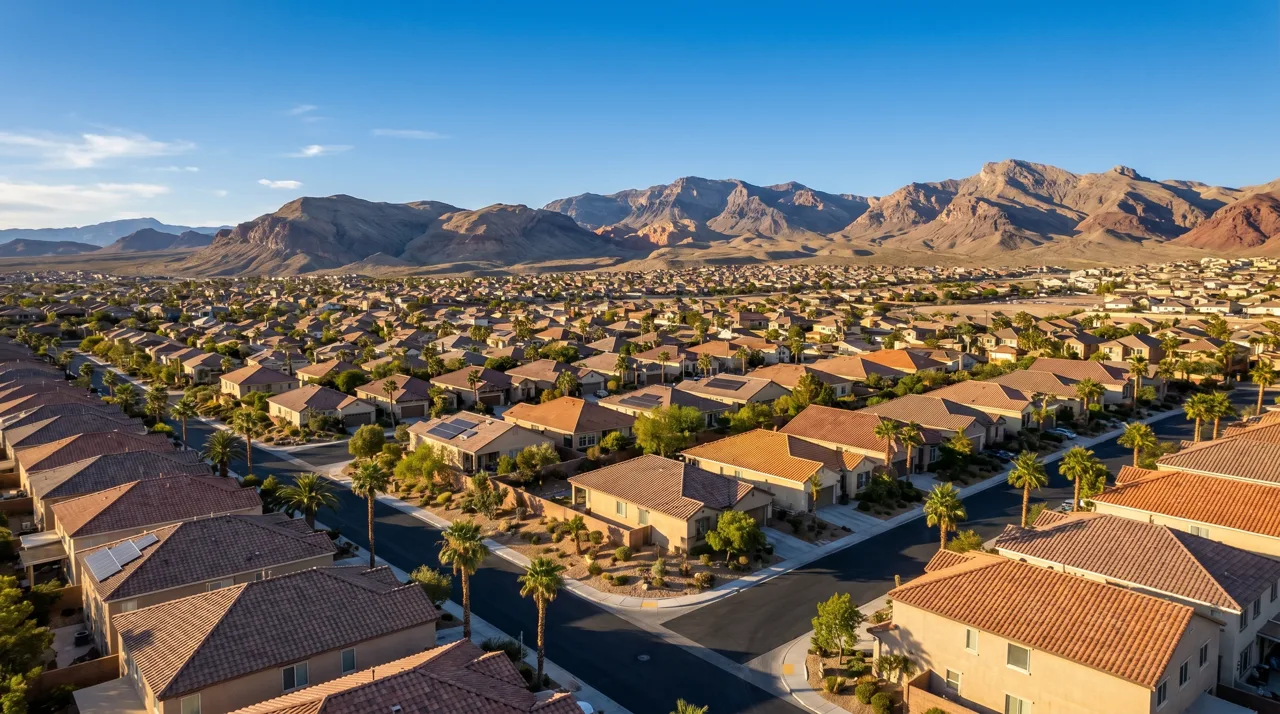
Why Las Vegas Mid-Rise Condos Cost Less Than High Rises

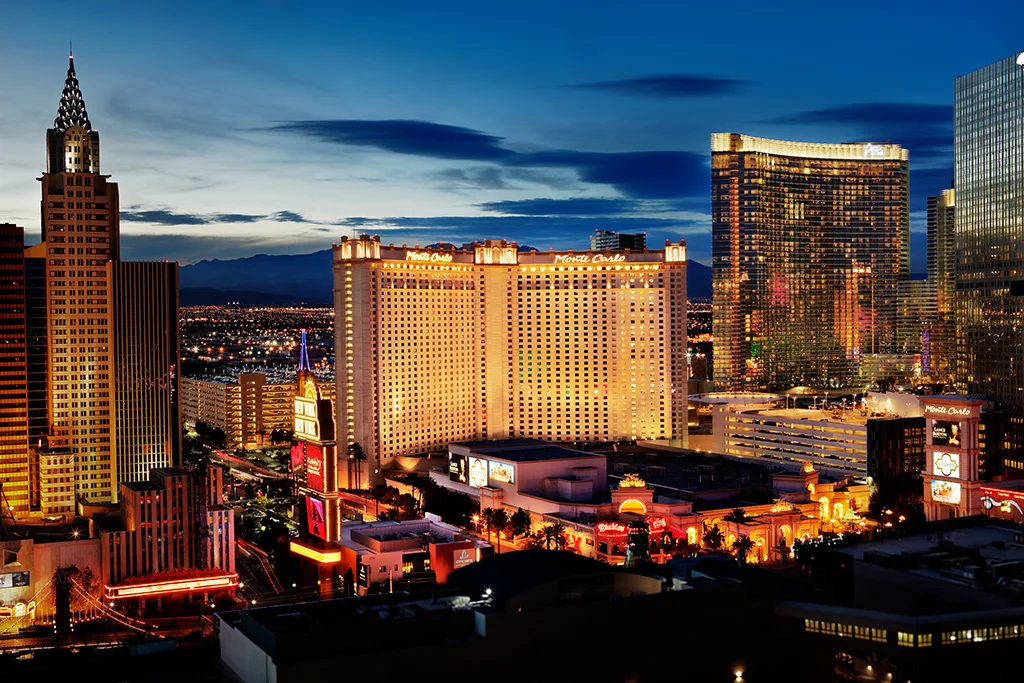
Photo by MGM Resorts International · CC BY-SA 2.0 · Wikimedia Commons
Walk into a 7-story condo building south of the Strip and a 47-story tower at CityCenter, and you're looking at two completely different products even though both technically count as "vertical living" in Las Vegas. The price tags reflect that. Mid-rise condos here typically run hundreds of dollars per square foot less than the towers, and the gap isn't shrinking.
Most buyers who start shopping mid rise condos Las Vegas have been quoted high-rise pricing first and assumed all condo buildings cost roughly the same. They don't. The difference comes down to land cost, construction cost, the size of the staff that keeps the lights on every night, and a quiet financing reality that hardly anyone talks about until escrow falls apart. This article walks through what each tier actually costs in 2026 and where the line between "mid-rise" and "high-rise" gets blurry enough to matter when you're writing offers.
What the Price Gap Actually Looks Like Right Now
Pull up the most recent market data and the spread is almost embarrassing. The Las Vegas Review-Journal's high-rise tracking pegged the 2024 average sale price at $697,890, with average price-per-square-foot at $537. Douglas Elliman's Q2 2025 Nevada High-Rise Report came in at $831,000 average and $485 per square foot across 183 residential high-rise sales.
Now put a couple of mid-rise reference points next to those numbers. Park House, a boutique 3-story building on the west side, posted a 2025 median sale price of $345,000 at $240 per square foot. Meridian at Hughes Center, a 2-story resort-style condo community walkable to the Strip and the Sphere, came in at a $300,000 median and $360 per square foot. That's a 2025 sale near a major employment corridor for less than half what the average tower unit went for in the same year.
| Segment | Typical Sale Price | Typical $/Sq Ft | Source |
|---|---|---|---|
| Las Vegas residential high-rise (Q2 2025) | ~$831,000 avg | ~$485 | Douglas Elliman Q2 2025 |
| Las Vegas high-rise full-year 2024 | ~$697,890 avg | ~$537 | Las Vegas Review-Journal |
| Meridian at Hughes Center (mid-rise) | ~$300,000 median | ~$360 | 2025 sold-data tracking |
| Park House (boutique low-rise) | ~$345,000 median | ~$240 | 2025 sold-data tracking |
| One Queensridge Place (luxury tower) | ~$1.52M median, ~$2.85M avg | ~$575 | Douglas Elliman Q2 2025 |
One more piece of context worth sitting with. The broader Las Vegas condo segment ended 2025 with a median price near $275,000, down about 5.2% year-over-year, while single-family homes held steady around $470,000. The high-rise tier set records on a per-foot basis at the same time the standard condo segment softened. That tells you most of the price story right there: the towers are pulling away from the rest of the condo market.

Land Cost: Where the Gap Starts
Real estate is always partly about dirt, and Las Vegas dirt prices vary more than people realize. A 2.2-acre parcel on the south end of the Strip recently sold for almost $6 million per acre. A 2-acre plot inside CityCenter went for around $40 million per acre. The countywide median for Southern Nevada land sits closer to $47,475 per acre.
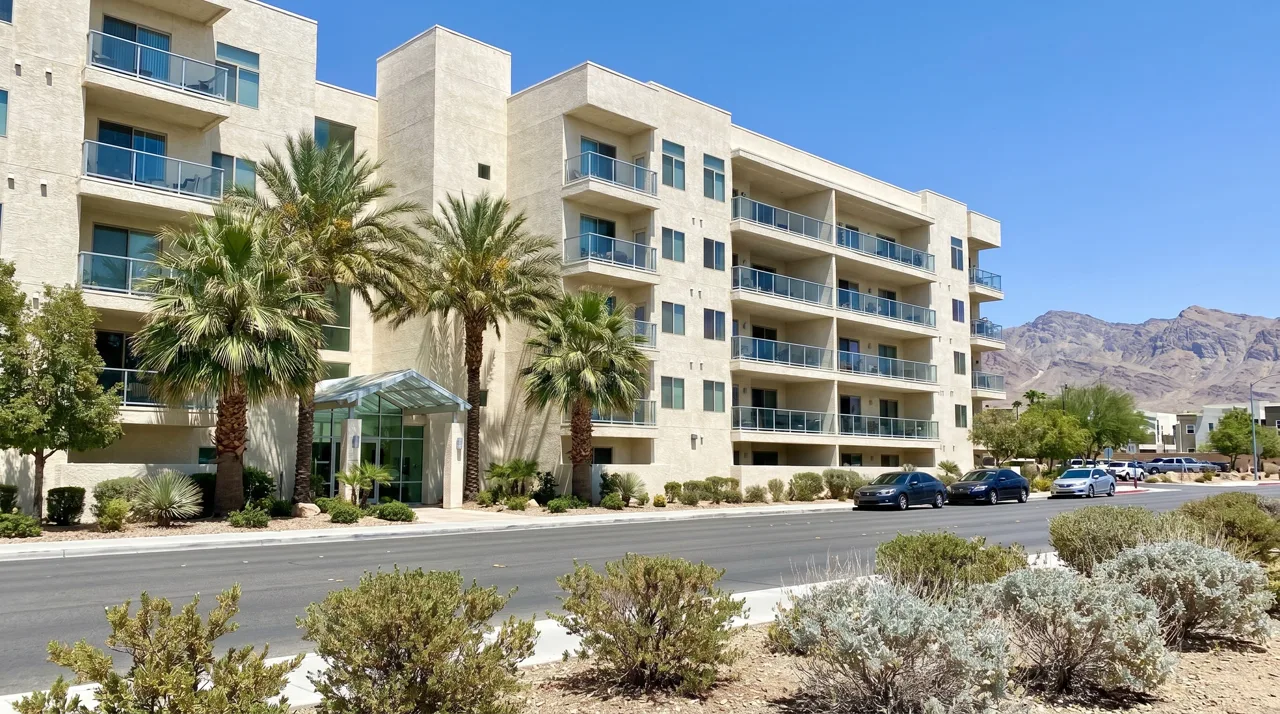
That's not a typo. The gap between Strip-frontage land and a residential parcel two miles off the corridor is enormous, and it has to be paid back somehow. A high-rise developer either prices units high enough to recover that land cost or the project doesn't get built. A mid-rise developer can put 6 stories of condos on a far cheaper site near Sahara, the Hughes Center area, or in Henderson and still pencil out at meaningfully lower per-unit pricing. That's why a lot of the well-known Las Vegas mid-rise stock sits just off the most expensive corridors rather than directly on them.
Construction Cost: Why Towers Are Just More Expensive to Build
Once a building goes past a certain height, almost every system in it has to be upgraded, not just the elevators. The structural frame switches from wood or light-gauge steel to reinforced concrete and structural steel. Foundations get deeper and more expensive. Fire and life-safety design has to meet high-rise provisions in the International Building Code that Clark County has adopted, which add cost across the board. Wind-load engineering becomes a real factor. Vertical transportation needs multiple high-speed elevator banks instead of one or two service cabs. Even something as simple as moving construction materials hundreds of feet up takes specialized cranes and labor.
A 4-to-7 story mid-rise project skips most of that. Standard construction methods, fewer elevators, less complex life-safety design, smaller mechanical rooms. The hard cost per square foot for an 8-to-24 story building is meaningfully higher than for a 4-to-7 story building according to standard apartment construction cost benchmarks, and that delta shows up in resale pricing for years after the building is finished.
Here's the thing most buyers miss. A building's cost structure doesn't just show up in the original sale price. It also shows up every month, for the rest of the building's life, in the HOA dues. That's the next part.
HOA Dues: The Monthly Number That Actually Decides Affordability
If there's a single line item that explains why a mid-rise condo costs less to own than a high-rise condo in Las Vegas, this is it.
Mid-Rise HOA
$200 - $600/mo
Pool, gym, gated security, basic maintenance. Some buildings include water, sewer, and trash.
High-Rise HOA
$500 - $1,200+/mo
24/7 concierge, valet, multiple elevator banks, master insurance, pool deck, fitness, spa, doormen.
Ultra-Luxury Tower HOA
$1,600 - $4,900/mo
Forbes-rated spa, private dining, butler service, wine cellar, private garages. Buildings like Waldorf Astoria, Park Towers, and One Queensridge Place.
Look at what those numbers actually buy. The Ogden Downtown runs roughly $400 to $1,100 a month. Veer Towers at CityCenter ranges from $500 to nearly $2,800 depending on unit size. Park Towers at Hughes Center can hit $4,900. Waldorf Astoria penthouse-tier units carry HOAs near $4,000 a month, which is more than the entire mortgage payment on a starter home in some Las Vegas zip codes.
Mid-rise communities don't carry that overhead because they're not running a hospitality operation. No valet pulling cars 16 hours a day, no front-desk concierge on shift around the clock, no full-time engineer responsible for high-speed elevators and cooling towers. A mid-rise HOA is paying for a pool, a gym, some landscaping, and reserves for the roof and parking deck. The bill is smaller because the operation is smaller.
And here's the underwriting piece that catches first-time condo buyers off guard. Lenders don't care about your purchase price. They care about your total monthly housing cost: principal, interest, taxes, insurance, and HOA. A $500,000 mid-rise unit with a $400 HOA can qualify a buyer who can't touch a $500,000 high-rise unit with a $1,200 HOA, even though the sticker price is identical. The HOA literally shrinks the buyer pool for the tower, which over time pushes high-rise resale toward all-cash and high-income borrowers.
Financing: The Hidden Reason Some Towers Are Harder to Sell
Plenty of Las Vegas high-rise buyers find out partway through escrow that their building is "non-warrantable," and at that point the conventional 5%, 10%, or 20%-down loan they were quoted just evaporates.
Non-warrantable means the project doesn't fit Fannie Mae or Freddie Mac's box, which is the box almost every standard mortgage runs through. Common reasons in Las Vegas: condo-hotel operations, hotel-branded amenities, high investor concentration, ongoing litigation, or commercial space taking up too much of the building. The MGM Signature towers, Trump Tower, Vdara, and Palms Place all sit somewhere on that spectrum because they function as condo-hotels, with nightly rentals allowed and a hotel operator in the mix. Most transactions in those buildings end up being all-cash or use specialized non-QM portfolio loans with 30% to 40% down and higher rates.
Mid-rise condo buildings are usually structured as straight residential associations. There's no hotel operator, no rental program, no commercial component to underwrite. That means broader mortgage availability, FHA and VA potential in some buildings, and a much wider buyer pool at resale. The end result is that mid-rise units transact more easily, which over time also helps support their values.
As a CRS and Top 1% Las Vegas agent, I always run the warrantability question before clients fall in love with a unit. The fastest way to lose 60 days in escrow is to write an offer in a building where your lender can't fund.

Amenities and Service: You're Paying for a Mini-Hotel
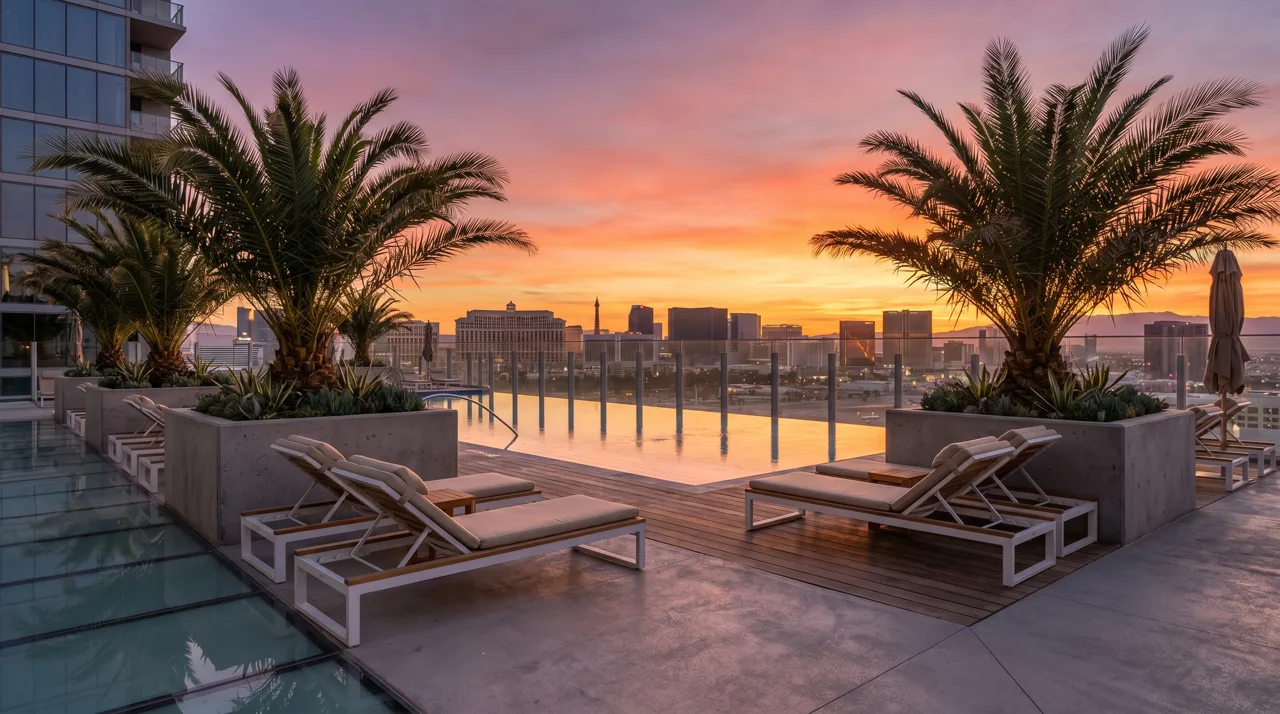
Look at what a true Las Vegas high-rise actually delivers and the price gap stops being mysterious. Waldorf Astoria runs a Forbes 5-Star Spa, a 23rd-floor SkyBar, a tea lounge, and Technogym fitness, with valet, concierge, and 24/7 security woven into the daily experience. Park Towers at Hughes Center has a Grand Salon that holds 100 people, a Roman spa, a wine cellar with deeded lockers, a tennis court, and rose gardens for 84 total residences. The Martin runs a private Range Rover house car. Newport Lofts has a rooftop jogging track that doesn't exist anywhere else in the city. One Queensridge Place includes a Roman-style spa, a 24-seat screening room, and a Rosewood wine tasting cellar.
None of that is in a mid-rise. A typical mid-rise gives you a clean pool deck, a fitness room, gated parking, maybe a small lounge, and calls it a day. That's not a knock on mid-rises. It's the whole reason they cost less. You're buying housing, not buying into a private resort that happens to have residences attached.
The buyer in a high-rise tower isn't just paying for square footage. They're buying a share of a mini-hospitality operation: staff, services, insurance, reserves, the whole stack. A 6-story condo building in Henderson doesn't have any of that overhead, which is why the dues and the resale prices can sit lower without the building being any less well-run.

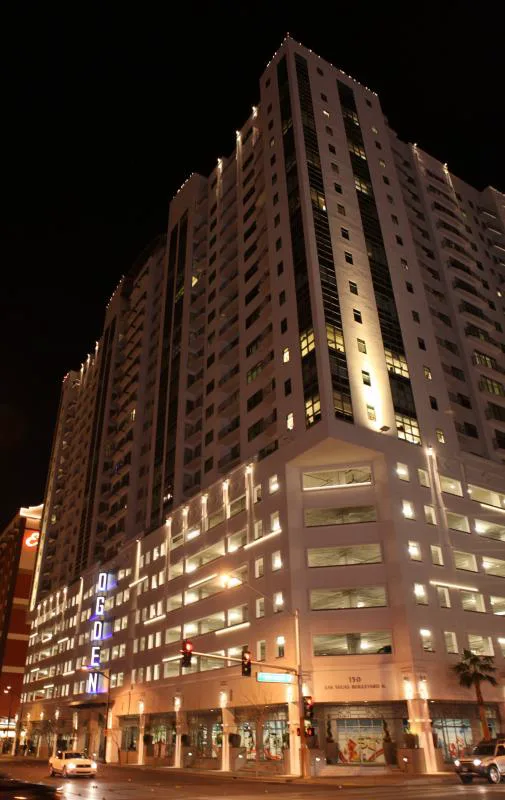
Photo by Michael Dorausch · CC BY-SA 2.0 · Wikimedia Commons
Concrete Examples: Where to Look on Each Side of the Line
The mid-rise side
Meridian at Hughes Center Guard-Gated
2-story resort-style condo community walkable to the Strip and the Sphere, with underground parking. 2025 median near $300,000 at roughly $360 per square foot. One of the easiest ways to live near the corridor without tower pricing.
Park House
Boutique 3-story west-side building with underground parking and concierge-style amenities. 2025 median around $345,000 at roughly $240 per square foot. About as cheap as central, secured condo living gets in this market.
Boca Raton
Two 7-story buildings totaling 378 units south of the Strip. A clean example of true mid-rise product close to Mandalay Bay and the airport, with quieter HOA economics than tower neighbors a few blocks north.
Juhl Mixed-Use
The hybrid case. Six residential buildings, a 15-story tower, ground-floor retail, and 344 units in the Arts District. HOA roughly $500 to $800 a month. Some Juhl product trades closer to mid-rise pricing than tower pricing.
The high-rise side
The Ogden
21-story Downtown tower, the only true high-rise in the heart of DTLV until Cello opens. Recent sales from $297,500 to $405,000 with HOA in the $400 to $1,100 range.
Panorama Towers
Two 33-story towers steps from CityCenter, around 650 units, HOAs around $600 to $1,200 and recent transactions near $367 per square foot. Tower economics, full-service operations.
Veer Towers CityCenter
The only strictly residential project inside CityCenter, 669 units across the leaning twin towers. HOA from about $500 to nearly $2,800 a month depending on unit size.
One Queensridge Place
20-story luxury benchmark in the Queensridge community. Q2 2025 median around $1.52 million, average around $2.85 million at roughly $575 per square foot. HOA dues commonly $2,400 to $3,800. Top of the food chain.
For more context on Queensridge as a community, the Queensridge guide covers the surrounding neighborhood, schools, and the broader luxury market around Tivoli Village.
Where the Mid-Rise vs High-Rise Line Gets Blurry
Worth saying out loud: not every high-rise costs more than every mid-rise. Allure on Sahara is a 41-story tower with 2025 sales around $298 to $336 per square foot, which sits right inside upper-end mid-rise territory. Some older tower units on lower floors with views obstructed by newer construction can quietly trade below boutique mid-rise pricing. The honest claim isn't "high-rises are always more expensive." It's that, on average, mid-rise condos in Las Vegas cost less because the building economics and ownership costs are lower.
Then there's the wildcard: the luxury mid-rise. Four Seasons Private Residences in MacDonald Highlands, currently under construction in Henderson, is being marketed as a luxury mid-rise on a mountain ridge with 171 units priced from $3 million to $27.5 million. Pre-sales are reportedly already past $750 million. That product will land at the top of the per-foot rankings in the valley despite not being a tower at all. The lesson is that "mid-rise costs less" is a useful general rule, not a law of physics.
HOA Friction Most Buyers Don't See Until Closing
Beyond the monthly dues, condo buyers in Nevada deal with a layer of one-time and event-driven costs that single-family buyers never think about. Reserve-study planning is required for common-interest communities under NRS Chapter 116, and the Nevada Real Estate Division has a standardized Form 609 Reserve Study Summary that any well-run association will have on file.
The friction items to budget for in either tier:
- Resale package document fees, typically $100 to $300
- Transfer fees at closing, typically $200 to $500
- Capital contribution at closing, often 1 to 2 months of dues in some HOAs
- Move-in deposits and elevator-reservation fees in tower buildings
- Special assessments for major capital work (this is the big one in older towers)
Special assessments are where the cost asymmetry between mid-rise and high-rise really shows up. A roof replacement on a 6-story building is expensive. A facade and elevator overhaul on a 30-story tower is a different universe of money, and that bill always lands on owners eventually if reserves aren't funded properly.


How the Math Plays Out for a Real Buyer
Picture two condos at the same $500,000 sticker price. One is a mid-rise at $400 a month in HOA. The other is a high-rise at $1,100. Same down payment, same rate, same property tax. The high-rise unit costs about $700 more every single month to own. Over a 7-year hold, that's almost $60,000 in extra carrying cost without a dollar of it touching principal.
For some buyers that bill is worth it because the high-rise gives them concierge service, valet, a Strip-view rooftop pool, and a level of security a mid-rise can't match. For others, especially primary residents who don't need a hospitality operation built into their housing, that monthly delta funds an entire vacation budget for the year. The mortgage calculator bakes HOA, taxes, and insurance into the monthly payment so you can model the actual numbers before you fall in love with a unit.
What Mid-Rise Buyers Actually Need to Check
Even though mid-rises generally cost less to own, that doesn't mean every mid-rise is a great deal. The same due diligence that protects you in a tower protects you here.
- Pull the most recent reserve study and check the funding percentage
- Read the prior 12 months of HOA board minutes for any signs of upcoming assessments
- Verify whether the building is warrantable for conventional financing before you write an offer
- Ask for the master insurance policy and confirm what your individual HO-6 needs to cover
- Check the rental restriction language if you ever plan to lease the unit out
- Confirm pet weight, breed, and quantity limits if pets are part of your life
- Understand the parking allocation, especially in older buildings where deeded versus assigned matters
One detail worth flagging: most Las Vegas mid-rise associations require minimum lease terms of 30 days, 6 months, or even a year, and Clark County's short-term rental rules have tightened across the valley. If your investment thesis depends on Airbnb income, verify the rules in writing before you spend earnest money.



What's New on Both Sides of the Line
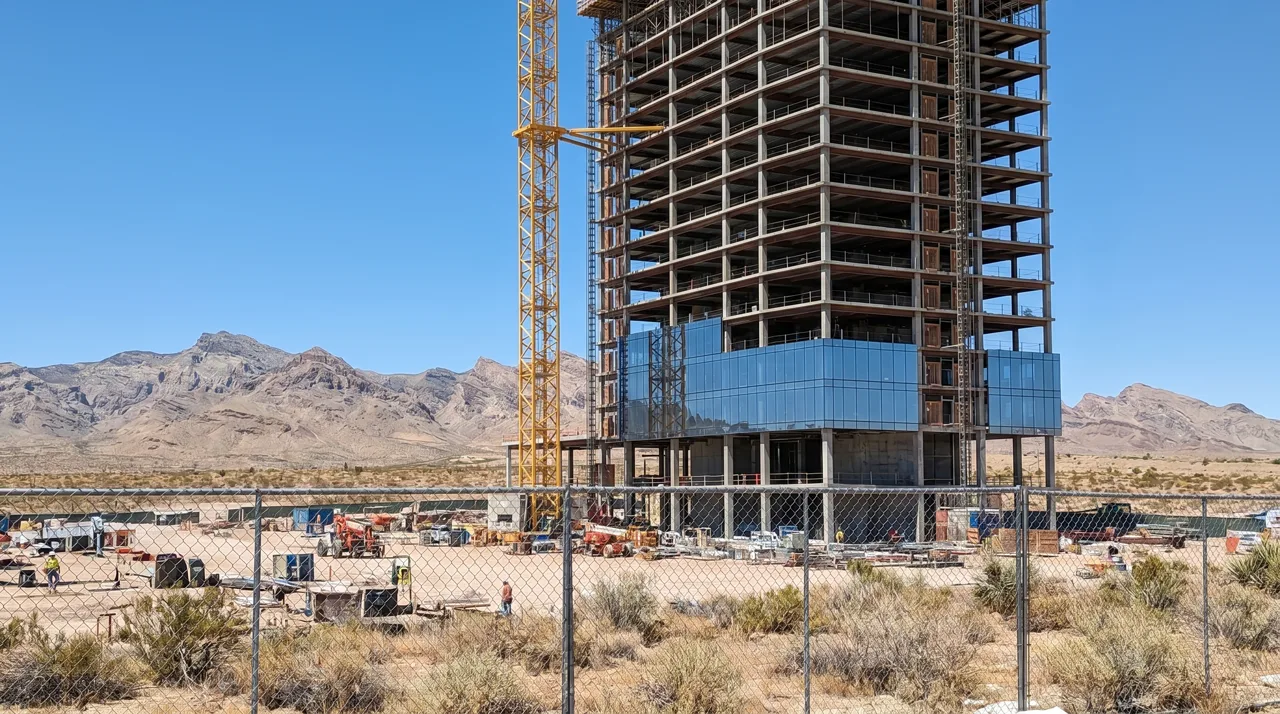
The pipeline matters because it affects pricing for existing inventory. On the tower side, Cello Tower in Symphony Park is the headline. 240 units, prices starting at $780,000 and climbing past $9 million, completion targeted for 2028. It's the first new Downtown high-rise in over a decade and it's going to reset the comp set for The Ogden, Juhl, and Newport Lofts when it opens. The English Residences in the Arts District (a Marriott Tribute condo-hotel) and Four Seasons Private Residences in MacDonald Highlands are also under construction.
The mid-rise condo pipeline has been thin by comparison, which means existing mid-rise buildings should hold their relative value as the high-rise side absorbs more new luxury supply.
Common Questions From Mid-Rise Buyers
Are mid-rise condos a good investment compared to high-rises?
For an owner-occupant, mid-rises are often the better monthly value because the HOA isn't fighting your mortgage payment for room in your budget. For investors chasing nightly-rental income on the Strip, the answer flips toward condo-hotel high-rises like MGM Signature, Vdara, or Palms Place. Different products, different goals.
Can I get FHA or VA financing on a mid-rise condo?
Sometimes. The building has to be on the FHA-approved list or get a single-unit approval, and the project has to meet specific owner-occupancy and investor-concentration ratios. Mid-rise residential associations are more likely to qualify than condo-hotel towers, but it's never automatic.
Do mid-rise condos appreciate as well as high-rises?
It depends on the specific building. Premium Strip-view tower units have posted some of the strongest localized appreciation in the city. Strong mid-rise buildings near employment corridors have appreciated steadily without the same volatility. Tower appreciation is high-beta, mid-rise appreciation is lower-beta.
What's the best mid-rise area for a primary residence?
For central access, the Hughes Center area, the Arts District, and the corridors near the Strip all have credible mid-rise stock. For a quieter feel, mid-rise communities in Henderson and the western valley near Summerlin generally combine lower HOAs with more space and easier parking.
The short version: Las Vegas mid-rise condos cost less than high rises because they're cheaper to build, cheaper to operate, cheaper to insure, and easier to finance. High-rises layer on premium land cost, complex engineering, full-service hospitality operations, and luxury amenity packages that all show up in both the sticker price and the monthly dues. Both products have a place in this market. The mistake is assuming they're the same product just at different heights.
If you're trying to figure out which side of the line fits your situation, browsing current Las Vegas condo listings across both segments is usually the fastest way to feel the difference. Standing in a 6-story mid-rise and then walking through a 40-story tower the same afternoon tells you everything the comp data can't.
Categories
Recent Posts