Cost of Living: Las Vegas vs. San Diego


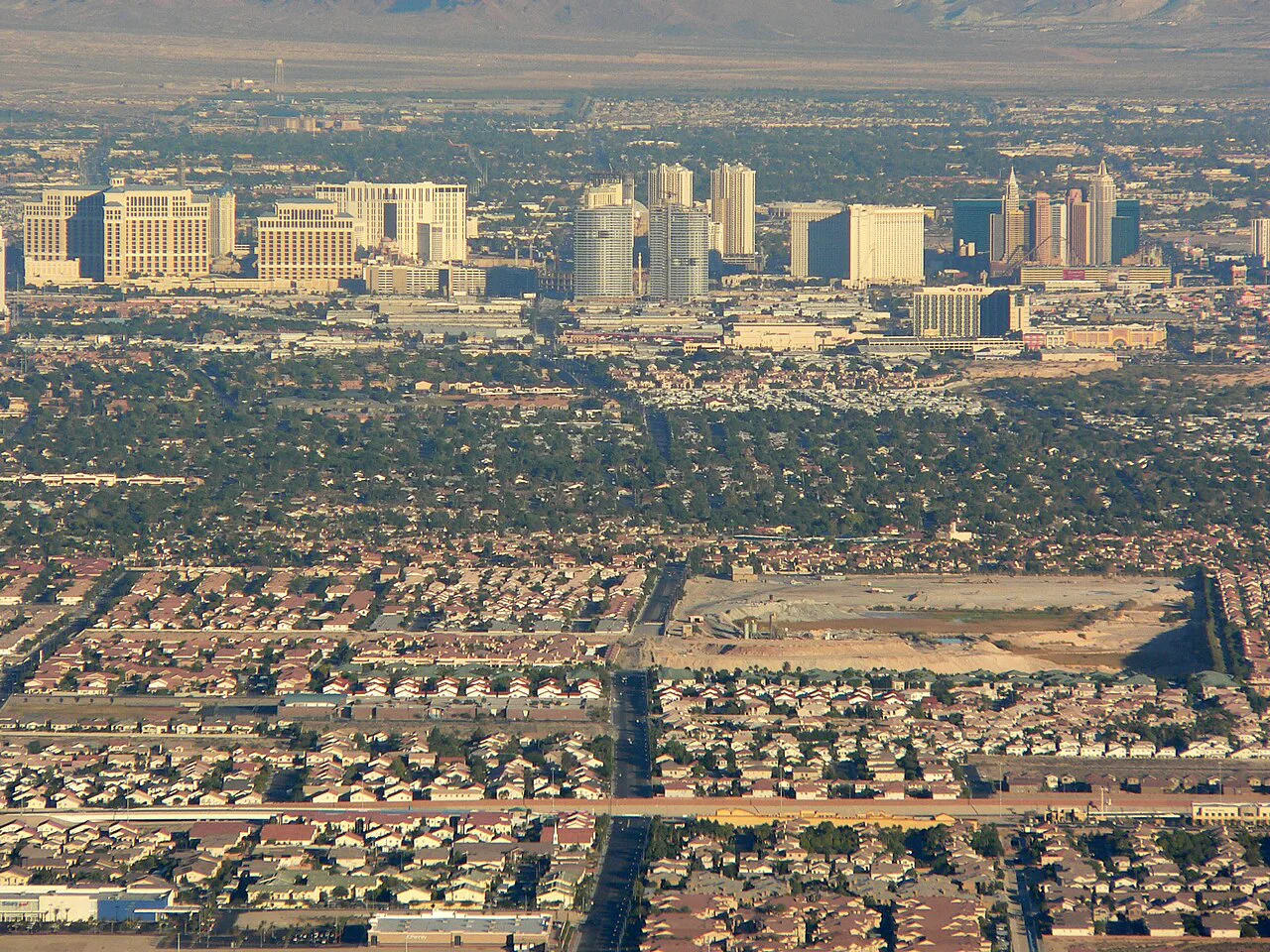
Photo by Lasvegaslover · CC BY 3.0 · Wikimedia Commons
If you're weighing a move from San Diego to Las Vegas, the math is almost embarrassingly lopsided. Housing, taxes, utilities, gas, water, even the new trash fee that just hit San Diego homeowners last summer. Almost every line on the household budget swings in favor of Southern Nevada, and on the biggest one (the mortgage) the gap is roughly two to one. Here's what the cost of living Las Vegas vs San Diego comparison actually looks like in 2026, with real numbers from the agencies that publish them.
I work with a lot of buyers coming over from coastal California. The conversation almost always starts the same way: they ran a basic cost-of-living calculator, saw that San Diego runs around 54% more expensive overall, and want to know if the headline number actually holds up once you live it. Short answer: yes, and in a few specific areas it understates the gap. Long answer is below.
The Headline: How Much Cheaper Is Las Vegas, Really?
Aggregate cost-of-living calculators put San Diego about 54% above Las Vegas overall. That's a useful starting point, but it hides the real story, which is that the gap isn't evenly spread. Housing is dramatic. Taxes are dramatic. Utilities are meaningful. Groceries, healthcare, and a few other categories are closer than people expect.
The way I'd frame it for someone actually planning a move: figure out where your money goes today, then apply the relevant comparisons below to your real budget. A retiree with a paid-off house and a fixed income will see a different swing than a remote tech worker pulling $250K who's currently renting in North Park.
| Category | Las Vegas | San Diego | The Gap |
|---|---|---|---|
| Median home value / sale price | ~$425,546 (metro) | $916,000 (county) | San Diego ~2.15x higher |
| Average rent (overall) | $1,701 (Zillow, Apr 2026) | 2BR HUD benchmark ~$3,000 | Rent roughly 75-90% higher |
| State income tax | 0% | 1.0%-13.3% (CA) | Nevada wins outright |
| Gas (regular, mid-May 2026) | $5.27/gal | $6.17/gal | San Diego ~$0.90 more |
| Water base fee (5/8" meter) | ~$13.88/mo (LVVWD) | $35.53/mo | San Diego 2.5x higher before usage |
| Property tax (effective, $400K home) | ~0.50%, ~$2,000/yr | ~0.70%, ~$2,800/yr | Bigger gap on bigger homes |
Sources for the table: Redfin for San Diego County sales, Zillow for Las Vegas metro values and rent, the Nevada Department of Taxation and California Franchise Tax Board for income tax, AAA for gasoline, the Las Vegas Valley Water District and City of San Diego for water, and county assessor data for property taxes.
Housing: Where the Real Money Lives

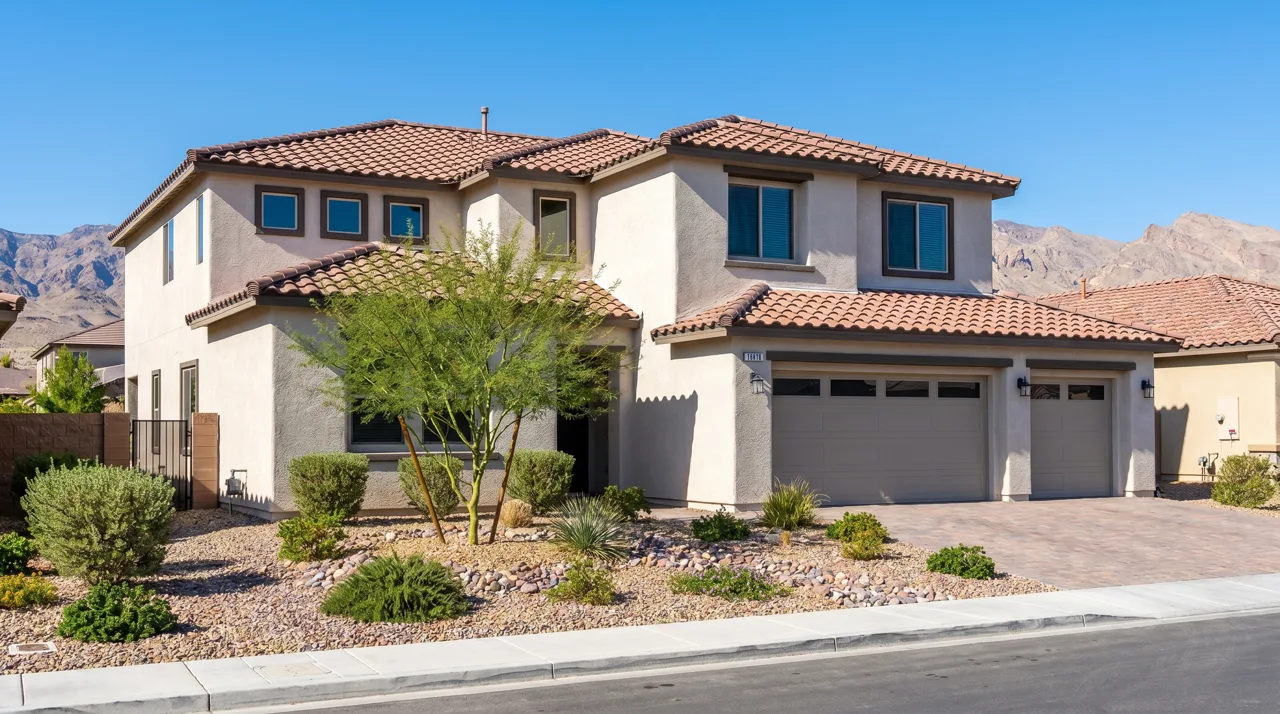
If you only look at one comparison, look at this one. San Diego County's median home sale price was $916,000 in March 2026, up just 0.1% year over year. Homes were going under contract in 27 days at 99.5% of list price. Las Vegas, by contrast, has a metro-wide average home value around the mid-$400Ks and is currently sitting in roughly 3.35 to 4.6 months of supply, which is a more balanced market that gives buyers room to negotiate.
What that looks like in practical terms: the same $900K that buys you a median-grade single-family home in Chula Vista or Bay Park gets you a 3,000-square-foot custom-feeling build in Summerlin West, or a guard-gated home in Anthem Country Club, or pretty much any 4-bedroom you can think of in Henderson with a pool and a 3-car garage.
An Axios analysis based on a Bankrate study reported earlier this year that only 1.6% of San Diego homes are affordable to the typical household, with buyers needing roughly $221,900 in annual income to afford a typical home there. That's the kind of stat that quietly drives a lot of relocation decisions.
San Diego Median
$916,000
Single-family median sale price, March 2026, per Redfin. Average 27 days on market.
Las Vegas Metro
~$425,546
Average home value across the Las Vegas-Henderson-Paradise metro, per Zillow. Roughly half of San Diego.
Mortgage Gap
~$3,000/mo
Rough monthly payment difference between the two on equivalent loans. About $36,000 a year that stays in your pocket.
What rent looks like in both cities
Renters see a similar gap. HUD publishes Fair Market Rents that act as a clean apples-to-apples benchmark across metros. For the FY 2026 cycle:
| Unit Size | Las Vegas FMR | San Diego SAFMR (typical ZIP) | Monthly Difference |
|---|---|---|---|
| Studio | $1,333 | $2,290 | +$957 |
| 1 Bedroom | $1,478 | $2,460 | +$982 |
| 2 Bedroom | $1,735 | $3,000 | +$1,265 |
| 3 Bedroom | $2,413 | $4,000 | +$1,587 |
| 4 Bedroom | $2,764 | $4,840 | +$2,076 |
A family-of-four 3-bedroom rental difference of about $1,587 per month works out to roughly $19,000 a year. That's a real-money number, and it doesn't even capture what the asking rents look like in San Diego's most desirable neighborhoods (which routinely exceed those HUD benchmarks).
One detail that tilts even further in Las Vegas's favor right now: Zillow's February 2026 rent report flagged Las Vegas as having one of the largest year-over-year increases in the share of rental listings offering concessions. Free first month, reduced deposits, that kind of thing. So the gap in real-world monthly outlay is often wider than the asking rents suggest.
Taxes: Nevada's Quiet Superpower


This is where the math really compounds. Nevada has no state individual income tax. None. California's brackets range from 1.0% all the way up to 13.3%, the highest top marginal rate in the country. For most households moving from California, this is the single biggest line-item swing in the entire comparison.
The savings table below uses estimated effective rates for single filers and is meant as a planning benchmark, not a substitute for an actual tax return. But the directional point is the point.
| Household Income | CA State Income Tax (est.) | NV State Income Tax | Annual Savings |
|---|---|---|---|
| $75,000 | ~$4,500 | $0 | $4,500 |
| $100,000 | ~$6,200 | $0 | $6,200 |
| $150,000 | ~$11,500 | $0 | $11,500 |
| $200,000 | ~$16,800 | $0 | $16,800 |
| $300,000 | ~$28,500 | $0 | $28,500 |
Property tax: a smaller but real edge
Both states use real-property tax to fund local government, but the structures differ in ways that matter.
Nevada's effective property tax rate in Clark County runs roughly 0.47%-0.59%, with a typical $400,000 home generating an annual bill of about $2,000. San Diego sits closer to 0.70% effective, or about $2,800 on the same home. The gap widens fast on bigger homes. The other piece California buyers should know about: Nevada's Assembly Bill 489 caps annual property tax increases on a primary residence at 3%, and 8% on other properties. California has its own protection through Proposition 13, which generally caps the ad valorem rate around 1% and limits annual assessed-value growth until the property changes hands. Different mechanism, similar philosophy, just at different starting price points.
Sales tax: roughly a wash
Clark County's combined sales tax is 8.375%. San Diego sits in a similar range depending on the exact district. Sales tax is mostly a draw between the two, and isn't usually a deciding factor in a move.
Utilities: San Diego Hurts More Than People Expect

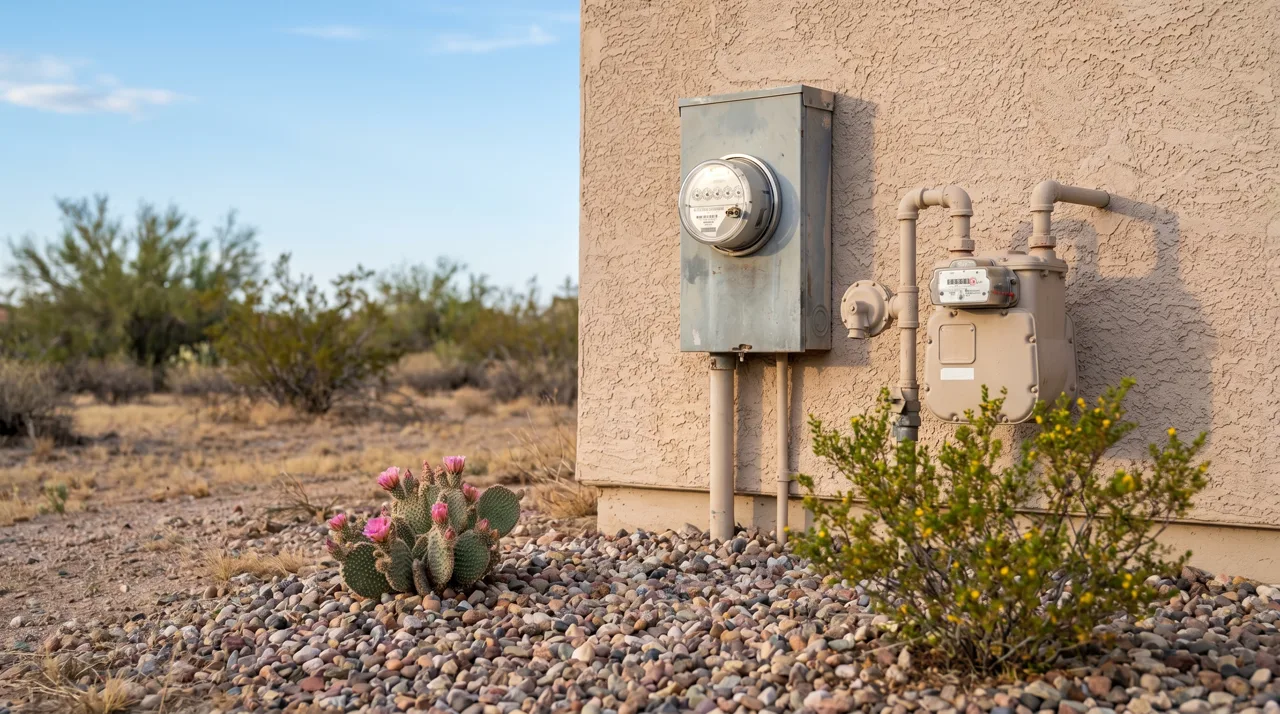
Coastal climate has a real perk, which is that you don't run AC for half the year. But San Diego electricity is so expensive that the savings on usage gets eaten by the rate. And water in San Diego costs more before you've used a drop.
Electricity
San Diego Gas & Electric customers have been catching the worst of California's rate increases. Axios reported in April that the average SDG&E bill was $147.07 in March, up from $97.04 in March 2021. That's about a 50% jump in five years.
Las Vegas runs on NV Energy, and rates here are materially lower. The catch: summer cooling demand is real. From June to September, a typical Las Vegas home might pull $250-$470 a month in electricity, sometimes more in older houses with weaker insulation. Winter bills back off to $100-$180. So Las Vegas wins on rate, but you have to budget for the summer spike. Newer homes with high-SEER HVAC systems handle this much better. If you're buying, ask when the unit was last replaced.
Water
This one is interesting because the conventional wisdom (desert = expensive water) actually inverts. The Las Vegas Valley Water District charges roughly $13.88 a month for a 5/8" meter base service charge, then tiered usage starting at $1.61 per 1,000 gallons. The City of San Diego charges $35.53 a month for the same base meter, with usage starting at $8.51 per HCF.
The reason is hidden infrastructure. San Diego imports as much as 90% of its water from the San Diego County Water Authority, which builds a long supply chain into every bill. Las Vegas pulls from Lake Mead and Colorado River allocations through SNWA. Less import overhead.
The asterisk for Las Vegas: outdoor overuse gets punished. LVVWD adds a $9 per 1,000 gallon excessive-use charge above seasonal thresholds. If you fill a pool, hose down your driveway every weekend, or try to maintain a Kentucky bluegrass lawn in a Mojave climate, your bill can spike fast. Most newer homes here use desert landscaping for exactly this reason.
The new San Diego trash fee
This is one of those details that gets missed in older relocation guides. San Diego rolled out a citywide residential trash fee for FY 2026, ending more than a century of "free" trash pickup for many city-serviced homeowners. Per the City's fee calculator, monthly bundle pricing currently runs roughly:
- $32.82 for a 35-gallon bin
- $38.94 for a 65-gallon bin
- $43.60 for a 95-gallon bin
If you owned a home in San Diego five years ago and didn't pay anything for trash, that's a brand-new $400 to $525 annual line item. In Las Vegas, residential trash service is typically included in your HOA dues or billed by Republic Services at modest rates.
Transportation: Gas, Cars, and Insurance
Gasoline tells the simplest story. In mid-May 2026, AAA put the Las Vegas average at $5.274 per gallon and the San Diego average at $6.17. About a 90-cent gap. If you commute and burn 50 gallons a month, that's roughly $45 a month, or $540 a year. Not life-changing, but it adds up.
Transit fares are closer to even than you'd think. Las Vegas RTC sells a 30-day pass for $65 (or $32.50 reduced). San Diego MTS adult one-way fares run $2.50 regional and $6.50 for premium/rapid express service. San Diego has the better-developed rail and trolley network, especially along the coast and into downtown. Las Vegas transit is decent for getting around the resort corridor and along major arterials but most residents end up car-dependent.
One area where Las Vegas is genuinely more expensive than expected: car insurance. Nevada is currently the most expensive state in the country for auto insurance, with full coverage averaging $2,824 to $3,568 per year. The drivers are a combination of a high uninsured-driver rate, 24/7 nightlife traffic patterns, and increased collision risk. Budget for this when you're modeling your move. California auto insurance is also expensive, but Nevada is worse on this one specific line.
Groceries, Healthcare, and Everyday Stuff
This is the category where the gap narrows. Groceries in San Diego run roughly 9.5% higher than in Las Vegas. That's noticeable over a year but it's not the housing-and-tax kind of swing. Las Vegas actually trends slightly above the national grocery average because of its landlocked desert location, although it's still cheaper than coastal California.
Healthcare in San Diego is about 12% more expensive than Las Vegas on most aggregator data. That said, San Diego has access to several top-tier hospital systems and academic medical centers (UCSD, Scripps, Sharp). Las Vegas's healthcare network is good and growing fast, with the Roseman University medical school, expanded HCA and UMC facilities, and major investments at Sunrise and Summerlin Hospital, but it's still building out the depth that San Diego has had for decades. For most routine care this doesn't matter. For complex specialty care it occasionally does.
Income: Who Earns More?
San Diego wins the paycheck battle. Las Vegas often wins the affordability battle. Both are true.
Median household income in Clark County, per Census Bureau QuickFacts, is about $76,472. San Diego County's median runs around $106,000 to $109,000 depending on which Census product you reference. So coastal California households earn about $30,000 more on the median.
The complication: that extra $30,000 gets eaten quickly. A larger mortgage, higher rent, California state income tax, more expensive utilities, $0.90 more per gallon at the pump, and now a trash fee. The MIT Living Wage Calculator (which was updated February 15, 2026) lets you run county-specific scenarios for different household types, and a single adult or a family of four in San Diego County consistently needs to earn meaningfully more than the same household in Clark County to clear the same basic standard of living.
For high earners (especially remote workers and business owners) the math gets even more lopsided. A remote tech worker pulling $250K and keeping their salary intact while moving from a 1-bedroom in North Park to a 4-bedroom in Summerlin is looking at five-figure annual swings in nearly every category at once.
Where in Las Vegas Should San Diego Transplants Look?

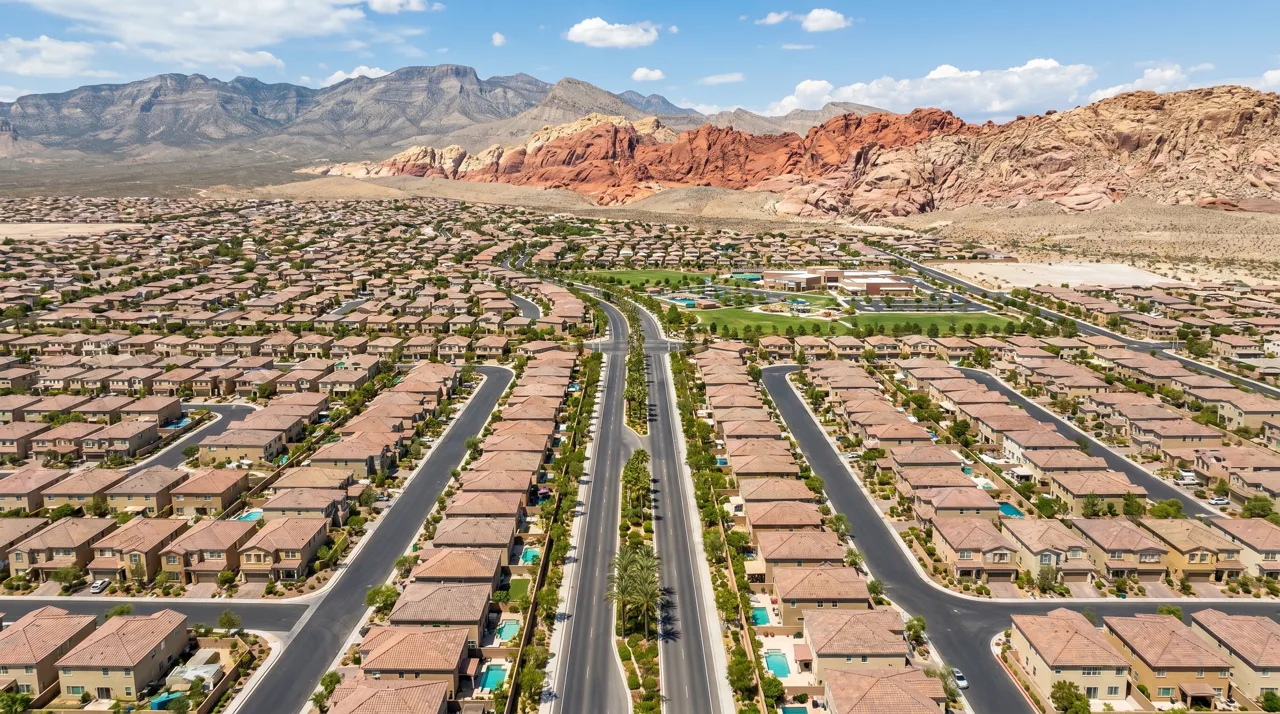
This part is more art than math, but a pattern shows up consistently with the San Diego buyers I work with. Most of them are looking for the closest analog to the coastal-California feel they're used to: walkable, master-planned, good schools, design-forward homes, easy access to outdoor recreation. A few directions tend to fit well:
Summerlin (West Side)
The closest thing the valley has to a coastal-California master-planned vibe. Higher elevation means slightly cooler summer temperatures, Red Rock Canyon is the back yard, and Downtown Summerlin gives you a walkable mixed-use core. Median sits around $649,900 with 1BR-to-4BR averages spanning $205K to $1.37M. HOA dues typically $80-$250/month. Browse Summerlin homes here.
Henderson (Green Valley, Inspirada, Cadence)
Consistently ranked among the safest larger cities in the country. Median around $535,000, with HOA dues $50-$300/month. Great schools, mature neighborhoods, and an 18.4% YoY increase in active listings (Henderson is currently more of a buyer's market than the valley average). Henderson neighborhood guide.
Lake Las Vegas
A resort-style Mediterranean community in Henderson, complete with actual waterfront, two championship golf courses, and luxury hotels. Pricing runs from $500K up to $10M+. If the San Diego appeal was about water-adjacent lifestyle, this is the best analog Las Vegas has. See Lake Las Vegas listings.
MacDonald Highlands & The Ridges
For high-earners coming over with significant equity, these are the ultra-luxury picks. MacDonald Highlands tops out around $15M+ with Strip-to-mountain views. The Ridges in Summerlin is the guard-gated luxury sister property with the Jack Nicklaus Bear's Best course nearby.
If price-per-foot is the priority, look at North Las Vegas (median around $425K), Mountains Edge, or Centennial Hills. These give San Diego buyers genuinely shocking value, even if they don't have the master-planned polish of Summerlin or Henderson.
What People Actually Give Up



Honest version: you give up the ocean. You give up 70-degree Aprils. You give up the kind of effortless year-round outdoor lifestyle that San Diego does as well as any city in America. Las Vegas summers are no joke, with July and August routinely above 105°F, and there are weeks where the only outdoor activity that makes sense is the pool.
You also give up immediate proximity to the coast for surfing, sailing, beach culture, and the food scene that comes with it. Las Vegas counters with Lake Mead, Mount Charleston (which gets snow in winter), Red Rock Canyon, and a 4-hour drive back to Southern California beaches when you want them. It's a different lifestyle, not a worse one, but if you live for the marine layer and Tuesday-evening beach picnics, that math is personal.
What you gain, beyond the money: a much shorter commute almost anywhere in the valley (most trips are 15-25 minutes), no state income tax, big homes with pools as a baseline rather than a luxury, and an actual sense of room to breathe.
Running the Numbers for Your Specific Move
Aggregate comparisons are useful for orientation but the only number that matters is yours. Here's a quick checklist for translating headline cost-of-living data into your actual budget:
- Pull your San Diego rent or mortgage and compare to the equivalent Las Vegas home in the neighborhood you'd actually pick (use our mortgage calculator to model the new payment with HOA and taxes baked in)
- Run your last 12 months of California state income tax through the comparison; for high earners, this single line often pays for the move within a year
- Pull your last summer's electric bills in San Diego and overlay an estimated Las Vegas peak-summer range ($250-$470 for June-September) to set realistic expectations
- Look at your auto insurance quote for a Nevada zip code; this one often goes the wrong way and surprises people
- Get a real Las Vegas property tax estimate based on actual purchase price, not the California Prop 13 anchored amount you may be used to
- If you're selling a San Diego home, model the equity gain you're walking away with and how it changes your Las Vegas down-payment options
As a CRS and Top 1% Las Vegas agent, I run this kind of side-by-side budget walk-through for relocating buyers more weeks than not. The pattern that holds across almost every household: housing and tax savings dominate. Everything else is rounding error by comparison.
The Bottom Line
The numbers don't lie. A $916,000 median home in San Diego versus a $425,000 average home in Las Vegas. Zero state income tax versus up to 13.3%. A $1,265 monthly gap on a typical 2-bedroom rental. $0.90 more per gallon of gas. $35 base water bill versus $14. A brand-new trash fee versus no fee at all.
If your job lets you move, if your family situation makes it feasible, and if you're willing to trade 70-degree summers for triple-digit ones, the cost of living gap between Las Vegas and San Diego is roughly the size of a second income. That's not marketing copy. That's just the math on a household budget.
If you want help running your own numbers against specific Las Vegas neighborhoods, or just want to talk through what your equity could buy you here, I'm happy to walk through it with you.
Categories
Recent Posts