How to Buy a Home in Las Vegas Sight Unseen


Plenty of people are moving to Las Vegas sight unseen right now, and most of them end up happy. The trick isn't avoiding the remote purchase, it's knowing which Las Vegas-specific things to verify before you wire a single dollar. Done right, this is one of the easier U.S. metros to buy from a distance. Done lazily, it's one of the easier ones to buy wrong.
I've watched buyers in California open a Zillow tab on a Tuesday, fly out for a quick trip the following week, and close on a home in Henderson three weeks later without stepping inside it again. I've also watched out-of-state buyers get burned by a SID assessment they didn't know existed, an HOA rental cap that killed their backup plan, or a school zoning surprise that showed up the week before move-in. The difference between those outcomes is almost never luck. It's a checklist.
This guide walks through what actually matters: how the market favors you right now, the team to assemble, the documents and maps to pull yourself, the desert-specific inspection items, and how to close from your couch using Nevada's remote online notarization rules.
Why Las Vegas Is Unusually Friendly to Remote Buyers
Three things make this market work well for sight-unseen purchases in 2026. First, Nevada law allows audio-video remote online notarization, so you can close from Seattle, San Diego, or overseas without flying in. Second, inventory has loosened. Greater Las Vegas data puts active single-family inventory north of 6,100 listings, average days on market in the 55-to-83 day range, and roughly 4 months of supply. About 63% of homes are closing under list price. That's a buyer-leaning market with time to think.
Third, the geography helps. Harry Reid International Airport sits about two miles from the Strip and roughly fifteen miles from downtown, which means a single 24-hour due-diligence trip after contract acceptance is a real option, not a fantasy.


The "Las Vegas Address" Trap You Need to Solve First
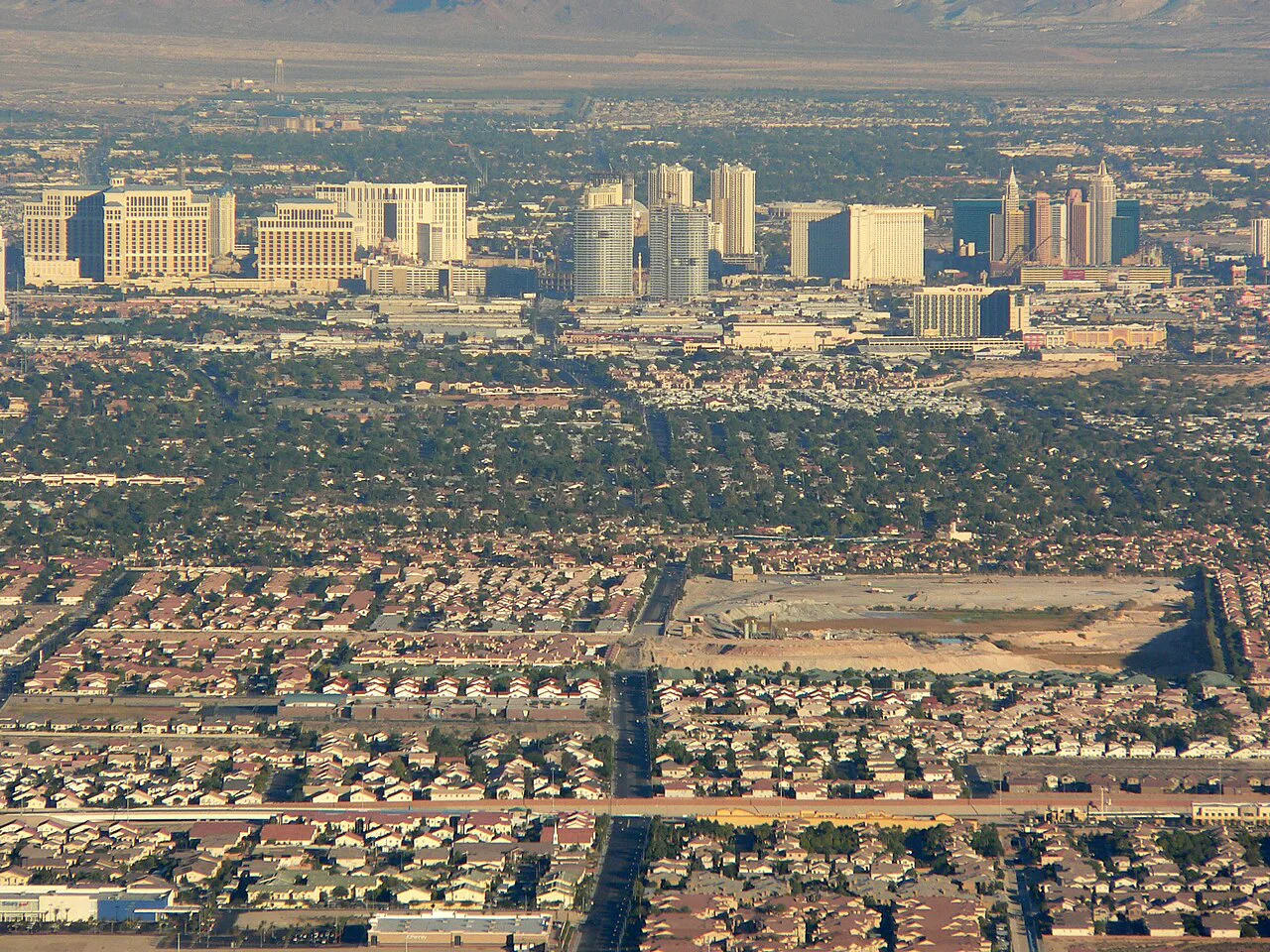
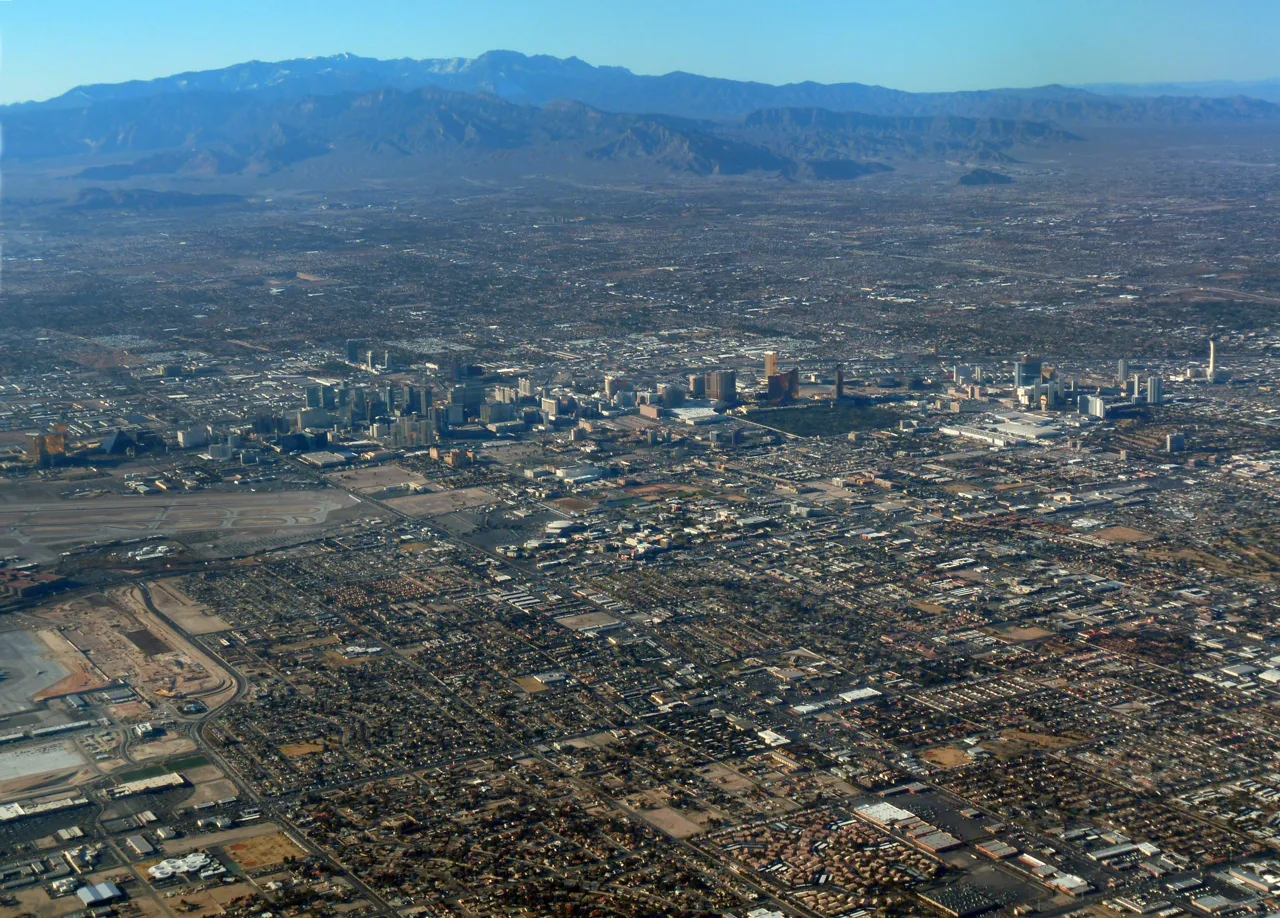
Out-of-state buyers almost always assume "Las Vegas" is one city. It isn't. A home with a Las Vegas mailing address might actually sit in the City of Las Vegas, in unincorporated Clark County, in Henderson, in North Las Vegas, or in one of the unincorporated zones like Enterprise, Spring Valley, Paradise, or Summerlin South. That distinction drives:
- Which police department patrols the home (LVMPD vs. Henderson PD vs. North Las Vegas PD).
- Which school zoning rules apply within Clark County School District.
- What short-term rental rules exist, and whether STRs are even allowed at that address.
- Which utility providers serve the property and how trash and recycling work.
- Which permit office you'll deal with if you ever remodel.
Before you start writing offers, get clear on which jurisdiction the property sits in and verify each of those items at the exact address. The City of Las Vegas, Clark County, and Henderson all run separate websites for code, permits, and licensing. Don't guess from the mailing address.
The Remote Buying Team You Actually Need
Buying a home you've never walked through is a team sport. You can stretch your team thin and still close, but you're trading risk for that convenience. Four roles matter most:
A Las Vegas Buyer's Agent Who Does Remote Tours Well
This is the most important hire. You want someone who will record honest, unedited walk-through video on their phone, narrate what they see, point the camera at the things sellers hide (water heater, electrical panel, roof from the backyard, wall cracks, the alley behind the home), and tell you what they think. Since the 2024 NAR settlement, you'll sign a written Buyer Broker Representation Agreement before you tour anything. Read it. The compensation you agree to is a cap, and your agent can't earn more than that from any source on the deal.
A Local Lender, Not Your Hometown Bank
Local lenders price Clark County loans every day and know which condo buildings are warrantable. The 2026 conforming loan limit in Clark County is $832,750 for a one-unit property and the FHA limit is $541,287. Above $832,750 you're in jumbo territory with stiffer reserve requirements. If you're financing a high-rise condo, ask your lender about warrantability before you write the offer, because a non-warrantable building generally requires 20-25% down and portfolio financing.
A Desert-Specialist Home Inspector
A standard inspection here runs roughly $350 to $525 and covers the basics. For a sight-unseen purchase, push past the basics. Ask for an HVAC delta-T test (cooling efficiency in 110-degree summers is non-negotiable), a sewer scope on any home twenty years or older ($200-$350), a wood-destroying organism inspection for subterranean termites, and a pool/spa inspection if applicable. Request photo and video documentation of every reported issue, plus drone or pole-cam roof images. You're paying for someone else's eyes.
A Title and Escrow Company Set Up for RON
Nevada permits remote online notarization with simultaneous, recorded audio-video. Most local title companies in Henderson and Las Vegas have a digital closing platform, but not every one will RON every document on every loan, and lenders sometimes require wet-ink signatures on specific items. Confirm before you open escrow. The owner's title policy is customarily paid by the seller, the lender's policy by the buyer, and escrow fees are typically split 50/50.
What to Verify Yourself, From Your Couch
A good agent will pull most of this for you, but the data is public and you can do it independently. Doing it yourself is the single biggest risk reducer when you're buying remotely.
- Pull the parcel record and tax history from the Clark County Assessor's real property search. Verify legal description, lot size, year built, and assessed value match the listing.
- Open the Clark County OpenWeb parcel map. Look for a flood-control wash behind the lot, oversized utility easements, irregular parcel shape, and what's directly across the street.
- Check permit and inspection history through Clark County Building (or the relevant city if applicable). Patios, garage conversions, pool work, electrical upgrades, and HVAC swaps should have permits. Compare what you see to what the seller disclosed.
- Verify school zoning at the address using CCSD's official zoning search. Don't trust the listing's school names. Zoning changes, magnet rules, and grade-level transitions only show on the official tool.
- Check the FEMA flood map at FEMA's Map Service Center by exact address. Desert doesn't mean dry. Flash runoff and stormwater channels create real flood exposure in parts of the valley.
- Run the address through LVMPD's crime statistics tool, or Henderson PD's crime search if the home is inside Henderson city limits. You want recent block-level data, not "good area / bad area" Reddit opinions.
- Confirm utility service at the exact address: NV Energy for electric, Las Vegas Valley Water District (or Henderson, North Las Vegas, or other district by address) for water, and Republic Services or the relevant municipal hauler for trash.


HOA Documents Are Where Remote Buyers Get Burned
Almost every modern Las Vegas community sits inside an HOA, and many sit inside both a master HOA and a sub-association. Out-of-state buyers from non-HOA markets routinely underestimate how much daily life is shaped by CC&Rs, parking rules, rental restrictions, design controls, and special assessments.
Nevada law gives you specific protections here. Under NRS 116.4109, the HOA resale package must include the CC&Rs, bylaws, current budget, the most recent reserve study, and a litigation statement. The seller is customarily responsible for ordering it. Once you receive it, you have a five-day right to cancel for any reason, and your earnest money is refunded. That five-day window is the most powerful tool a sight-unseen buyer has, and most buyers waste it. Read the package the day it arrives.


What to actually look for in the resale package:
- Master HOA dues plus any sub-association dues (these stack and aren't always shown together on the listing).
- Pending or recently passed special assessments. A roof assessment in a condo building can be five figures.
- Rental restrictions: minimum lease terms, leasing caps, rental waiting lists, short-term rental bans.
- Parking rules, including overnight street parking and RV/boat storage limits.
- Pet rules, including breed and weight restrictions.
- Exterior modification rules (paint colors, landscaping, solar panels, satellite dishes).
- Reserve study health. A community with severely underfunded reserves is a special-assessment time bomb.
- Active litigation, especially against the developer or for construction defects.
The Hidden Tax Bill: SIDs, LIDs, and Supplemental Property Taxes
This one trips up out-of-state buyers more than any other Las Vegas-specific item. The mortgage estimate on Zillow doesn't include it. The listing description doesn't mention it. And it's not always small.
Special Improvement Districts (SIDs) and Local Improvement Districts (LIDs) are bonded assessments that finance roads, sewer lines, parks, and other infrastructure in newer master-planned communities. They show up on the property tax bill as "Special Assessments." Communities like Summerlin, Skye Canyon, Cadence, and parts of Mountain's Edge commonly carry them. SIDs can be paid off in full at closing or carried as installments tied to the property; the prepayment penalty is often around 3%, and the obligation is part of your debt-to-income calculation when you finance.
Then there's the supplemental tax bill. Nevada reassesses property at the change of ownership, and the difference between the prior assessed value and your purchase price triggers a one-time supplemental bill. It comes directly to you, the new owner, not to your lender's escrow account. New owners who weren't warned about it sometimes get a four-figure surprise in the mail four months after closing.
The good news is that Nevada caps how fast your annual tax bill can rise. The owner-occupied abatement caps annual increases at 3%, and other property is capped at up to 8%. After your first year, payment shock is rare.
Inspection Items That Are Specific to the Vegas Climate
The desert is brutal on building materials. Years of UV radiation, 110-degree summers, and thermal expansion stress everything. A standard inspection in Cleveland and a standard inspection in Las Vegas should not look the same, and an out-of-state buyer who relies on a generic checklist is gambling.
| Inspection Item | Why It Matters Here | Typical Cost |
|---|---|---|
| HVAC Delta-T Test | Cooling efficiency is everything in summer. HVAC systems in Vegas average 10-15 years of life, shorter than the national average. A weak system shows up in this test. | Often included with standard inspection |
| Roof / Flat Roof Review | UV degrades roofing fast. Flat roofs ponding water is a recurring local issue. Ask for drone or pole photos. | Drone add-on $100-$250 |
| Sewer Scope | Caliche soil and shifting can crack sewer laterals on older homes. Recommended for any home 20+ years old. | $200-$350 |
| Termite (WDO) | Subterranean termites are common in Southern Nevada despite the dry climate. Required for VA and most FHA loans. | $75-$125 |
| Stucco and Foundation Crack Review | Hairline cracks are usually cosmetic. Stair-step cracks can signal foundation movement on caliche soil with negative grading. | Included with standard inspection |
| Pool / Spa Inspection | Pool equipment is replaced often here. Heater, pump, and plaster condition all need eyes on them. | $150-$250 |
Ask the inspector to email you the report with embedded photos and to do a 20-minute phone walkthrough afterward. That call is worth its weight in gold when you're 1,500 miles away.
The Remote Closing Process, Step by Step
Once you're under contract, the timeline is fairly predictable. The typical Las Vegas residential transaction runs 30 to 45 days from accepted offer to keys, with a few statutory milestones built in.


- Day 0: Mutual acceptance. Earnest money (typically 1-3% of purchase price) is wired to escrow.
- Days 1-10: Inspection period (10-14 days standard). All inspections happen, repair requests get negotiated, and you can cancel for any inspection-based reason and get the earnest money back.
- Within 5 days of receiving the HOA resale package: Cancel for any reason and recover earnest money, or move forward.
- Days 10-25: Appraisal period (21-25 days). Lender orders the appraisal. If it comes in low, options are price reduction, buyer gap coverage, or cancellation.
- 10 days before close: Seller's Real Property Disclosure (SRPD) must be in your hands per NRS 113.130, including any newly discovered defects.
- Days 25-45: Final loan approval, closing disclosure review, signing.
- Closing day: Funding, recording at the Clark County Recorder, and key delivery (your agent or a coordinator handles this).
For the actual signing, your title company schedules a video conference with a Nevada-registered electronic notary. You'll appear on camera, present ID, sign each document electronically, and the entire session is recorded and retained for seven years per Nevada notary rules. Buyer closing costs in Clark County typically land between 2% and 5% of the purchase price, with the bulk being lender fees, prepaids (a year of insurance, a few months of tax reserves), and the lender's title policy.
Should You Fly In At All?
Honestly, yes, if you can. Once you're under contract, a single 24-to-48 hour trip to Las Vegas pays for itself. Not because you'll change your mind on the home, but because you'll get one important thing in person: the feel of the neighborhood at different times of day. Walk the block at 7 a.m. and again at 7 p.m. Drive the commute to wherever you'll work or send kids. Stop at the closest grocery store. Check the parking situation on the street. Look at the wash behind the wall.
Vegas makes this easy in a way most metros don't. Harry Reid offers non-stops to most U.S. cities. Hotels on the Strip are negotiable on weekdays. Rental cars get you to Summerlin, Henderson, Southwest, or Northwest in under thirty minutes off-peak.

Where Out-of-State Buyers Tend to Land
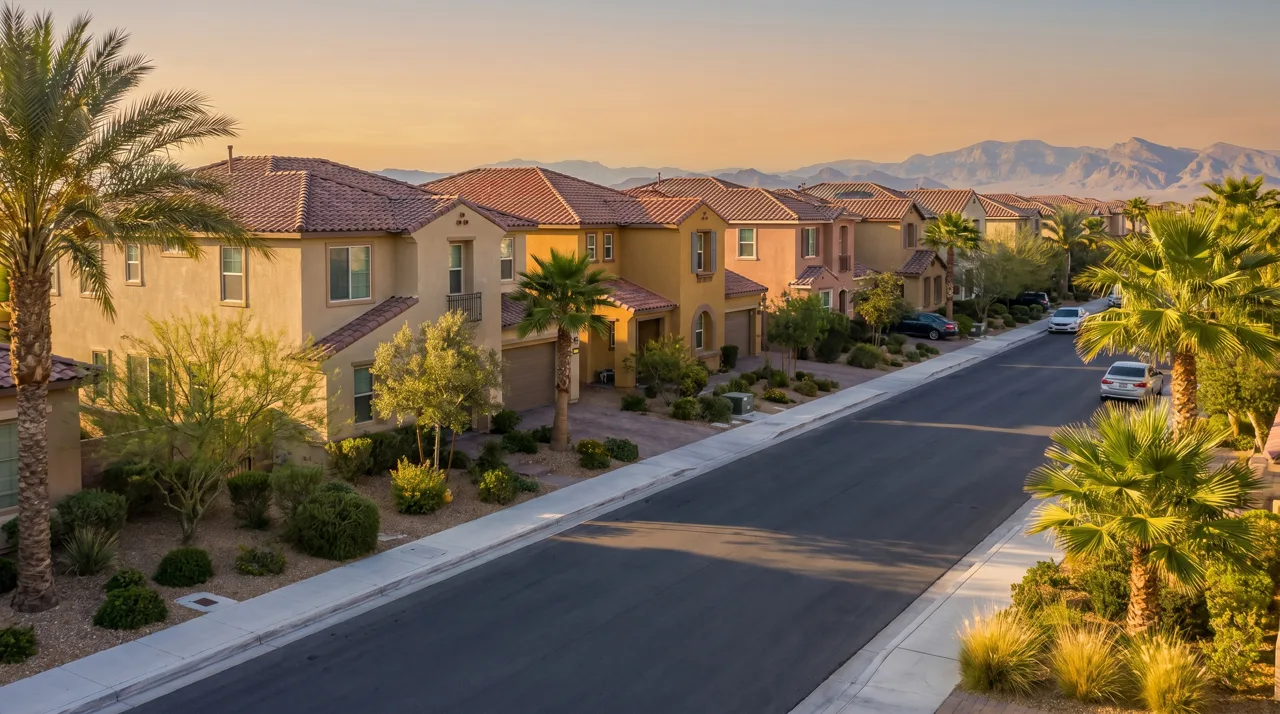
Sight-unseen buyers cluster in a handful of areas, mostly because those neighborhoods have predictable inventory, established HOAs, strong school zones, and consistent quality of construction. None of these are recommendations to buy in any specific community. They're just where the patterns show up.
Summerlin Master-Planned
The 22,500-acre master-planned community in the western valley draws a heavy share of California buyers. Inventory is consistent, resale data is rich, and most villages are built to a similar quality bar so a sight-unseen purchase here is unusually predictable. Sub-areas range from condos in the high $300s to ultra-luxury in The Ridges at $2M+. Many newer Summerlin sub-communities carry SID assessments. Browse Summerlin homes for sale for current listings.
Henderson Strong Schools
Henderson is its own city, with separate police, separate utility billing in some areas, and consistently strong school ratings. Communities like Green Valley, Anthem, Inspirada, and Cadence are popular with relocating families. Verify which jurisdiction your specific address sits in and which school zones apply. The Henderson area guide covers price ranges and submarkets in detail.
Skye Canyon and Centennial Hills (Northwest)
Newer master plans in the Northwest tend to attract military families (Creech and Nellis access) and remote workers who want newer construction at lower price points than Summerlin. Skye Canyon's median is around $612K with a strong amenity package; Centennial Hills typically runs $400K-$800K with more existing inventory.
Southwest Las Vegas / Mountain's Edge
The Southwest corridor and Enterprise are the fastest-growing parts of Clark County, with proximity to the I-15/215 interchange and the UnCommons mixed-use hub. Mountain's Edge in particular has cooled (DOM has stretched into the 80s and YoY medians have softened), which can be an opening for a disciplined remote buyer.
North Las Vegas
The most affordable jurisdiction of the four, with strong appreciation in zip codes like 89032 thanks to logistics and tech job growth at Apex Industrial Park. Good value if you can absorb older housing stock or aim for newer DR Horton and Lennar product. The North Las Vegas guide covers the full price range.
Whatever community you focus on, do not write the offer until you've confirmed the school zoning at the exact address, the HOA structure (master and sub), and whether the parcel carries a SID or LID balance. Those three checks alone prevent the majority of remote-buyer regrets.
The Mistakes That Actually Cost Sight-Unseen Buyers Money
If I had to rank the most expensive remote-buyer mistakes I've watched happen in this valley, the list looks like this:
- Skipping the HOA package's five-day cancellation window. Buyers receive the package, don't read it carefully, and discover later there's a no-rentals rule, an upcoming roof assessment, or pet weight limits that don't fit their family.
- Not checking SID/LID balance on a newer master-plan home. The Zillow estimate said $2,400 a month. The actual all-in payment with HOA, master HOA, SID, and supplemental tax is closer to $2,750.
- Trusting the listing's school names. Zoning changes, and the schools shown on Zillow may be the prior assignment. Verify with CCSD's official tool at the exact address.
- Buying a non-warrantable condo without the right financing. Most high-rise buildings on or near the Strip are non-warrantable. If your lender doesn't say the word "warrantable" in the first conversation, get a different lender.
- Counting on Airbnb income as a fallback plan. Short-term rentals (defined locally as stays of 31 consecutive days or fewer) are tightly regulated and outright banned in many HOAs. Don't underwrite the purchase on STR income unless you've verified the address is eligible.
The Bottom Line on Buying Sight Unseen Here
Las Vegas is a genuinely good market for remote buyers in 2026. Inventory is up, the law supports remote closing, the airport is unusually convenient when you do want to fly in, and there's no state income tax to soften the blow of a six-figure relocation. The state's seller disclosure rules, HOA resale package law, and five-day cancellation right give a careful buyer real tools to back out if something looks wrong.
What separates successful sight-unseen purchases from cautionary tales is almost always the depth of the due diligence: the right team, the right inspector, the parcel-level homework on jurisdiction and HOA and tax structure, and a willingness to use the cancellation rights the law gives you. Take the time. Read the package. Verify the school zone. Pull the flood map. Then sign from your couch. As a CRS designee who has closed transactions for clients buying from California, Texas, Washington, and overseas, I'll say it plainly: the buyers who treat the move like a research project end up in a home they love.
Categories
Recent Posts