Cost of Living: Las Vegas vs. Nashville


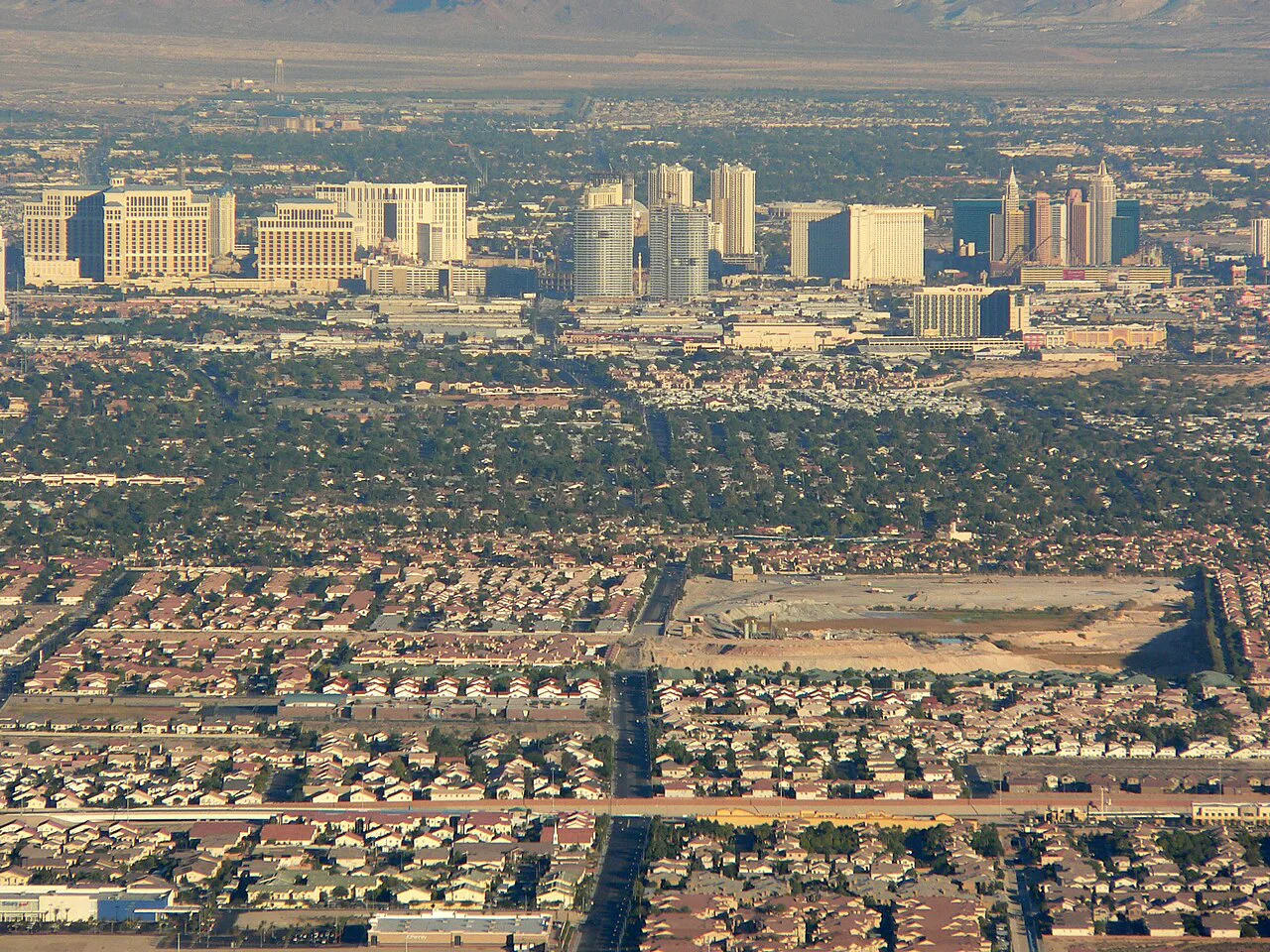
Photo by BrendelSignature at English Wikipedia · CC BY-SA 3.0 · Wikimedia Commons
If you're weighing a move and the question is cost of living, Las Vegas vs. Nashville is closer than most people assume on paper, and further apart than most people realize once you actually live in either one. Both are no-income-tax cities with strong job growth and warm-weather appeal. The real differences show up in housing, utilities, sales tax, and how much you keep at the end of the month.
Nashville gets a lot of relocation press, and deservedly so. But the conventional wisdom that Tennessee is automatically cheaper than Nevada doesn't hold up once you stack the numbers next to each other. In some categories Nashville wins. In others, including a few that surprise people, Las Vegas wins by a meaningful margin. This guide walks through every category that actually moves the monthly budget, with sourced numbers and the local context behind them.
The Big Picture: Which City Is Actually Cheaper in 2026?
Depending on which national index you trust, Las Vegas comes in roughly 1% to 11% cheaper than Nashville overall, with the gap widening once rent and home prices get factored in. One commonly cited estimate puts the lifestyle equivalent at about $6,400 a month in Las Vegas versus $7,171 in Nashville. That's a 12% spread for the same standard of living, mostly driven by housing.
But headline indexes hide as much as they reveal. Nashville buyers shopping under $500k often find tighter inventory than Vegas buyers shopping the same range. Las Vegas renters in a 3-bedroom pay more than Nashville renters do. Drive a lot of miles, and you'll feel Vegas gas prices. Run two AC units in July, and you'll feel a Vegas electric bill. The aggregate picture is one thing. The category-by-category picture is what changes your decision.
| Category | Las Vegas | Nashville | Edge |
|---|---|---|---|
| State income tax | None | None (on wages) | Tie |
| Median home price | $481,995 | $537,000 | Las Vegas |
| Sales tax (combined) | 8.38% | 9.25% | Las Vegas |
| Effective property tax | 0.50% | 0.52% | Las Vegas (barely) |
| HUD Fair Market Rent, 2BR | $1,750 | $1,827 | Las Vegas |
| HUD Fair Market Rent, 3BR | $2,452 | $2,308 | Nashville |
| Median household income | $60,465-$70,400 | $77,371 | Nashville |
| Summer electric bill | $250-$470+ | Lower (humid not desert) | Nashville |
| Water and sewer (6 ccf) | Tiered, penalizes irrigation | $58.99 (vs. $90.65 peer avg) | Nashville |
Housing: Where the Real Money Lives

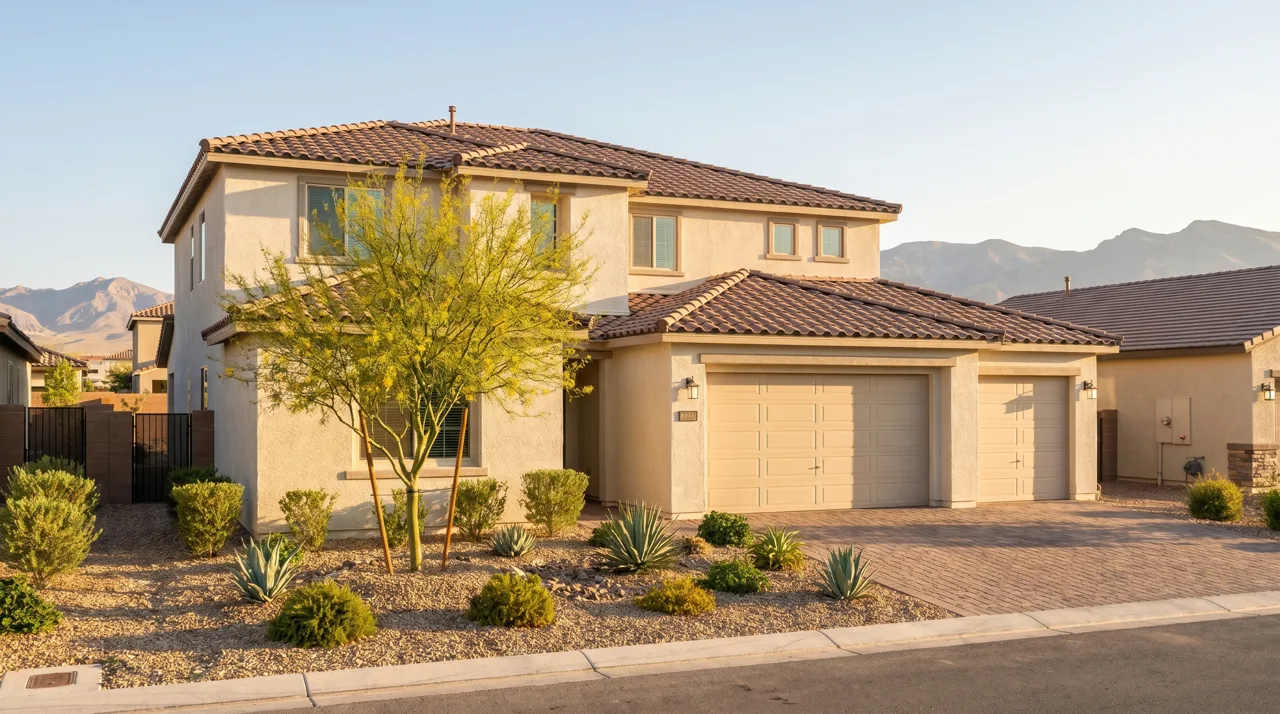
Housing is the category that swings the whole comparison. Both metros saw heavy appreciation from 2020 to 2023 and have settled into something more balanced in 2026. But the entry points look different.
The median single-family home in Las Vegas sits at about $481,995 as of early 2026, with citywide medians of $548,000 for a three-bedroom and $832,000 for a four-bedroom. Inventory has built up to roughly 3.35 to 4.6 months of supply, and around 63% of homes sell below the original list price. That's the most buyer leverage Vegas has seen since 2019. Nashville's median sale price runs higher, around $537,000, with urban core and premium suburbs like Franklin and Brentwood projected to appreciate another 3% to 5% in 2026 while outer suburbs flatten out.
If you're shopping under $500k, Vegas gives you more to choose from. North Las Vegas medians sit at $424,999. Mountains Edge and Spring Valley run in the high $400s to low $500s. Henderson, the valley's most-requested suburb, has a median around $535,000, and active listings there jumped 18.4% year-over-year, which means actual room to negotiate. Nashville's equivalent suburbs (Mt. Juliet, Hendersonville, Spring Hill) are competitive at similar price points but with fewer move-in-ready new-construction options.
Renting in Both Cities
The rental math is where it gets interesting. HUD's Fair Market Rent for a 2-bedroom in 2025 came in at $1,750 for the Las Vegas metro and $1,827 for Nashville. That's a small Vegas edge. But flip to a 3-bedroom and the picture reverses: Vegas FMR is $2,452, Nashville is $2,308. The reason is supply mix. Nashville's apartment stock is heavier on 1- and 2-bedroom units in walkable areas, while Vegas's rental supply skews toward single-family homes in the suburbs.
Buying in Both Cities
For buyers, the Vegas market in 2026 is unusually favorable on two fronts. Builder incentives are aggressive, with permanent rate buydowns into the 5% range available in Summerlin and parts of Henderson. And Nevada's property tax abatement law caps annual increases on a primary residence at 3% per year, which means even if values run up again, your tax bill can't follow at the same pace. Nashville-Davidson has no equivalent cap, so a hot reassessment year can mean a real jump in carrying cost.
Vegas neighborhoods vary widely. Entry-level new construction in North Las Vegas or older resale stock in Spring Valley starts around $400k. Move-up buyers cluster in Henderson and the southwest. Luxury runs through Summerlin, with The Ridges and MacDonald Highlands carrying the ultra-luxury banner. Nashville's tier structure is similar in shape but starts and ends higher in most submarkets.
As a CRS holding the Top 1% designation in Las Vegas MLS for four straight years, I've helped enough relocation buyers from comparable markets to say this with confidence: Vegas in 2026 is one of the better buyer markets in the country, and Nashville is not. If pure dollar-per-square-foot matters, Vegas is the winner. If you specifically want a four-season climate or a Tennessee music-and-food culture, Nashville is the only answer.
Taxes: Both Cities Skip Income Tax, but the Story Doesn't End There
Nevada and Tennessee are both no-income-tax states, which is one of the biggest reasons each city pulls so many relocators from California, Illinois, and New York. The Tax Foundation calls Nevada and Tennessee two of the more competitive tax climates in the country. But sales tax, property tax, and investment-income tax rules diverge in ways that matter.
Sales Tax
Vegas 8.38% vs. Nashville 9.25%
Davidson County voters approved an extra 0.5% surcharge in November 2024. Big spenders feel this.
Property Tax
Vegas 0.50% vs. Nashville 0.52%
Close on paper. Nevada's 3% annual increase cap on primary residences is the long-term differentiator.
Investment Income
Vegas 0% vs. Nashville phasing out
Tennessee's Hall income tax on dividends and interest is winding down, but Nevada has zero on everything already.


On a $400,000 home, annual property tax in Las Vegas runs roughly $2,000 versus about $2,080 in Nashville. The bigger lever is what happens over time. Nevada's AB 489 caps annual property tax increases at 3% on primary residences (up to 8% on rentals and investment property), so a homeowner who bought a $500k Summerlin house in 2020 hasn't seen their tax bill double along with the market. According to the Nevada Department of Taxation, the cap applies to the total tax bill itself, which is why long-term Vegas owners often have meaningfully lower carrying costs than recent buyers in the same neighborhood.
Sales tax is where Nashville quietly lost ground. Tennessee's 7% state rate plus the new Davidson County 0.5% surcharge plus existing local rates brings the combined burden to 9.25%, one of the highest in the country. The state's average combined sales tax is 9.61%. Vegas's 8.38% Clark County rate is almost a full point lower. For a household spending $50,000 a year on taxable goods and services, that's a real $400+ difference annually, and it grows from there.
Utilities: A Tale of Two Climates
This is where the two cities trade punches. Las Vegas has a desert problem in summer. Nashville has a humidity problem most of the year. The bills tell the story.
Electric
NV Energy's average residential bill runs $154 to $171 a month annualized, but the seasonal swing is brutal. Summer bills from June through September commonly land between $250 and $470, sometimes higher in larger homes. Winter bills drop back to $100 to $180. The trick is that those summer months hit consecutively, so households need to budget for 3 to 4 months of high spend in a row.
Nashville's electric bills don't have the same desert AC spike, but humid summers and cold snaps make for higher average winter heating costs. Net result: Nashville tends to be a bit more expensive on utilities overall in surveys, even though Vegas owns the bragging rights for the single worst bill of the year.
Water and Sewer
Nashville's water and sewer department is genuinely one of the cheaper utilities of its kind in the country. A 6 ccf residential bill in Nashville is about $58.99, compared with a peer-city average of $90.65. There's also a built-in summer sewer credit that caps charges based on winter-quarter average usage plus 30%, so you don't get crushed for watering your yard in July.
Las Vegas water works differently. Rates are intentionally tiered to discourage outdoor irrigation, with rates rising sharply once you cross 10,000 gallons in a month. Most households on standard landscaping pay $32 to $60 a month. Homes with large grass yards or pools can hit $110 or more. The Southern Nevada Water Authority recycles 99% of indoor water, which is part of how the desert keeps functioning at this scale.
Natural Gas
Southwest Gas averages about $42 a month in Las Vegas, with most homes coming in under $80 even in the coldest winter months. Nashville's gas spend is comparable, though heating demand runs higher because of longer cold seasons. Neither city has a runaway gas problem.
Transportation, Gas, and Commutes

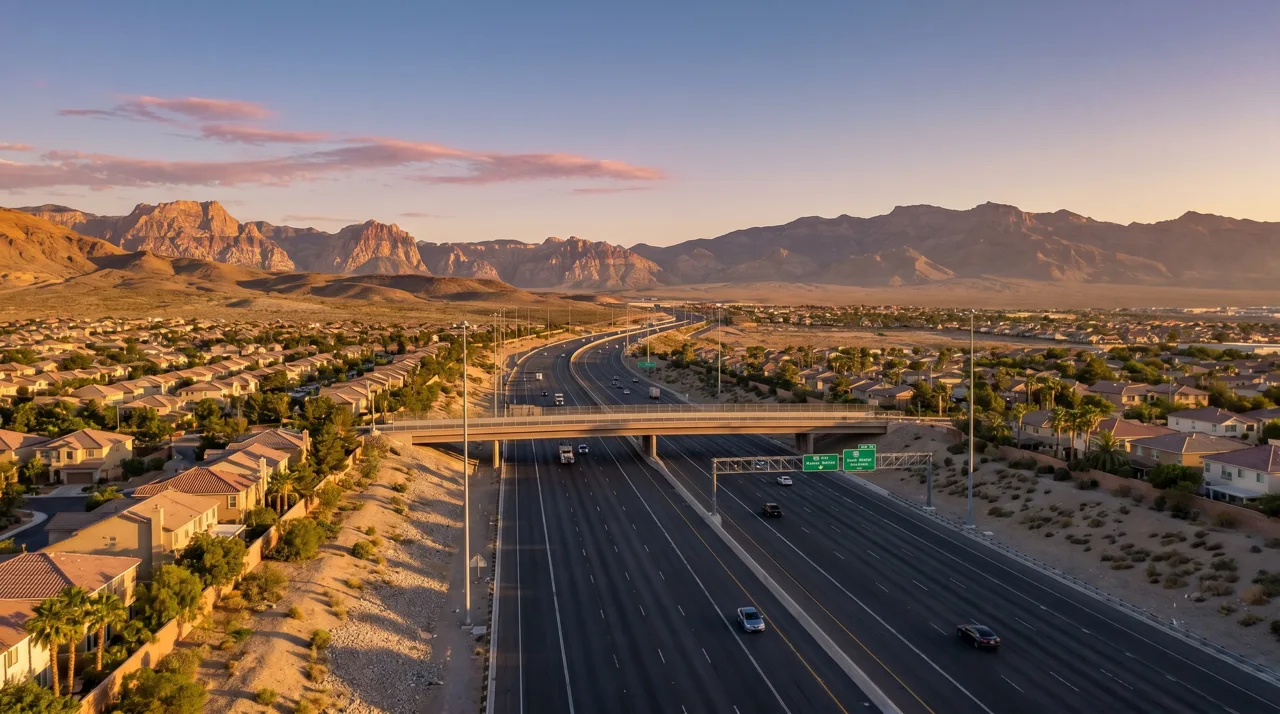
Driving costs come out clearly in Nashville's favor on fuel and slightly in Vegas's favor on commute friction. Tennessee gas averaged about $4.14 a gallon in mid-May 2026, with Nashville metro at $4.18. Nevada averages run higher, typically $4.40 to $4.80 in the Vegas valley.
But fuel price isn't the whole transportation picture. Las Vegas was built around the car, with a clean grid of arterials and a beltway (the 215) that gets most workers to most job centers in 15 to 25 minutes. Nashville's growth has outpaced its road infrastructure. Congestion on I-24, I-40, and I-65 during commute hours is genuinely heavier than what most Vegas residents deal with, and there's no equivalent ring road yet.
Car insurance is another Vegas pain point. Nevada is currently the most expensive state in the country for full-coverage auto insurance, averaging $2,824 to $3,568 a year. Minimum coverage runs $961 to $1,084. Tennessee insurance rates are lower across the board, though they've also been climbing. If you drive a paid-off car and carry minimum coverage, the gap shrinks. If you drive a financed luxury vehicle, the gap is significant.
| Transportation Item | Las Vegas | Nashville |
|---|---|---|
| Regular gas (May 2026) | $4.40-$4.80/gal | ~$4.18/gal |
| Full-coverage auto insurance | $235-$297/mo | Lower (varies) |
| Typical commute (suburb to job) | 15-25 minutes | 25-45 minutes |
| Major road network | 215 Beltway, I-15, US-95 | I-24, I-40, I-65 (no beltway) |
Groceries, Dining, and Everyday Spend
Day-to-day shopping is one of Nashville's quiet wins. Multiple national indexes show Nashville groceries running about 3% cheaper than Las Vegas, and the gap on goods and services overall is closer to 14%. Vegas grocery prices have stayed reasonable thanks to proximity to California agricultural regions, but Nashville benefits from Tennessee's lower overall cost structure on consumer goods.
Dining out tells the same story. A meal at an inexpensive restaurant runs about $25 in Las Vegas versus $18.25 in Nashville. A mid-range dinner for two is $95 in Vegas, $70 in Nashville. The catch with Vegas dining is the locals-versus-tourist split. The Strip carries a 30% to 40% price premium over the same kind of meal a mile away. Spring Mountain Road, the city's Chinatown corridor, has more than 150 restaurants offering authentic Asian food at prices that compete with anywhere in the country. Nashville's value spots cluster in East Nashville, 12 South, and Germantown.
Las Vegas Dining Reality
Locals almost never eat on the Strip unless someone else is paying. The real culinary scene is in Chinatown on Spring Mountain Road, in Henderson's town squares, and in the local-favorite spots tucked into strip centers all over the valley. Eat where the locals eat and your Vegas food budget is competitive with anywhere.
Nashville Dining Reality
Lower Broadway is the equivalent of the Strip: priced for tourists. Real Nashville food happens in neighborhood spots in East Nashville, Germantown, the Nations, and 12 South. Mid-range dinners genuinely cost less than the Vegas equivalent on average, even outside the tourist zones.
Healthcare, Childcare, and Hidden Monthly Costs
Healthcare runs about 3.8% cheaper in Las Vegas than Nashville on aggregate indexes, though both cities have strong hospital systems. Nashville is the regional headquarters for HCA and a major center for healthcare administration nationwide. Vegas has been steadily expanding its medical infrastructure, with Roseman, Touro, and UNLV School of Medicine all training new physicians.
Childcare is one of the more underdiscussed budget items in either city. Infant care at a Vegas daycare center runs $1,055 to $1,650 a month, with toddler and preschool rates only slightly lower. Nashville rates run similar, with Davidson County center-based care averaging $1,100 to $1,500. According to the U.S. Bureau of Labor Statistics, both metros have seen childcare costs grow faster than wages over the past three years.
Wages, Jobs, and What You Take Home
Affordability is a function of both costs and income, and this is where Nashville pulls ahead on paper. Median household income in Nashville-Davidson is about $77,371. Las Vegas runs roughly $60,465 to $70,400 depending on the source, so the wage gap is real, in the neighborhood of $7,000 to $15,000 a year.
Nashville's higher median is driven by its industry mix. Healthcare is the city's largest employer base, with executive and clinical roles paying well. Music, entertainment, and a fast-growing professional services sector add upward pressure to wages. Las Vegas's hospitality-heavy base means more service-sector roles, though union contracts in 2023 and 2024 lifted the wage floor for restaurant, hotel, and cleaning staff meaningfully.
Vegas's labor market is diversifying in ways that change this story over time. Tech and logistics jobs have grown sharply in the southwest valley around the UnCommons development. Sports brought the Raiders, Golden Knights, Aces, and soon the A's, with all the support employment that follows. Major infrastructure projects like Brightline West (the high-speed rail to Southern California) and the Vegas Loop expansion are expected to keep pushing wages up over the next five years.
The current Vegas metro unemployment rate sits at 5.7%, higher than the national average. Nashville's metro has been running closer to 3.5%. If you're moving with a job in hand, that doesn't matter. If you're job-hunting after the move, Nashville currently has a tighter market and faster hiring in white-collar roles, while Vegas has more openings in hospitality, healthcare support, and construction trades.
Best for Singles, Families, and Retirees
The right answer depends on your life stage and what you're optimizing for. A 28-year-old software engineer and a 64-year-old retiree are running very different math problems.
Best for Singles and Young Couples
Vegas wins on 1- and 2-bedroom rent, lower sales tax on most consumption, and a deep entertainment scene that locals access at locals-only prices. Off-Strip casinos run by Station Casinos (Red Rock, Green Valley Ranch, Durango) are essentially community centers with movies, bowling, restaurants, and concerts at prices designed for residents, not tourists. Nashville wins on cheaper everyday dining, a more walkable urban core, and the kind of live music scene that exists nowhere else.
Best for Families
This one's closer. Vegas has lower median home prices in family-sized properties, lower sales tax on the inevitable household spending, and the long-term certainty of Nevada's property tax cap. Nashville has slightly lower 3-bedroom rent for renting families, cheaper groceries, and better walkability in select neighborhoods. The deciding factors are usually school zoning and commute. Las Vegas's 215 Beltway makes most suburbs commutable to most job centers. Nashville's traffic is genuinely worse.
Best for Retirees
Vegas has a structural advantage for retirees with investment income or appreciable assets. Zero state income tax on dividends and interest (Tennessee is phasing out its Hall tax but it still affects some retirees in transition), zero state estate or inheritance tax, and the Nevada homestead exemption protecting up to $605,000 of equity from civil judgments add up to a real wealth-preservation environment. Active-adult communities like Sun City Summerlin, Sun City Anthem, and Solera have prices that don't exist in the Nashville equivalents. Nashville offers better four-season weather for retirees who don't want desert heat.
The "Wow, I Didn't Know That" Facts
- Las Vegas city's median owner-occupied home value ($427,900) is actually higher than Nashville-Davidson's metro government balance ($413,600) per Census QuickFacts, despite Nashville's reputation as the pricier city.
- Nashville pays roughly $58.99 for a 6 ccf water and sewer bill, while peer cities average $90.65. It's one of the cheapest urban water utilities in the country.
- Nevada's property tax abatement caps annual increases on a primary residence at 3%, which is one of the most homeowner-friendly laws in the country.
- Davidson County voters approved a 0.5% local sales tax surcharge in November 2024, pushing Nashville's combined sales tax to 9.25% and above many peer cities.
- Nevada recycles 99% of its indoor water through the Southern Nevada Water Authority, which is why Las Vegas keeps functioning as the country's most water-scarce big city.
- The Las Vegas tourism industry directly or indirectly supports about 358,900 jobs and generates roughly $79.3 billion in annual economic activity, which is a big part of why state revenue doesn't lean on residents.
Bottom Line: Which City Wins for Your Budget?



If you want the shortest possible answer, here it is. Las Vegas is cheaper on housing for buyers, cheaper on sales tax, cheaper on 1- and 2-bedroom rent, structurally protected on property tax growth, and significantly cheaper for retirees with investment income. Nashville is cheaper on water, gas, groceries, restaurants, and 3-bedroom family rent, with higher median wages to boot.
Most relocation buyers I work with land in Vegas for one of three reasons: they want to own a home rather than rent forever, they're protecting investment or retirement income, or they want the lifestyle surplus of trading a small condo elsewhere for a real house with a yard. Nashville pulls people who want four seasons, who work in healthcare or music, or who want a more pedestrian-friendly urban core.
Neither city is a mistake. They're just optimized for different lives. The thing to do is sit down with your actual numbers (your income, your housing budget, your driving habits, your kid count, your retirement timeline) and run the comparison one line at a time. A relocation calculator can get you in the right ballpark. A conversation with a local agent in either city can fine-tune it. Vegas has been pulling in tens of thousands of new residents a year from higher-cost coastal cities for a reason, and the people who do the math tend to make peace with the summer heat pretty quickly.
If you have questions about a specific Vegas neighborhood, want a real apples-to-apples cost comparison against your current city, or just want to talk through what your housing dollar actually buys here, I'm happy to help. The data on this page is current as of mid-2026, but the right move is always the one that makes sense for your specific situation.
Categories
Recent Posts