Cost of Living: Las Vegas vs. New York


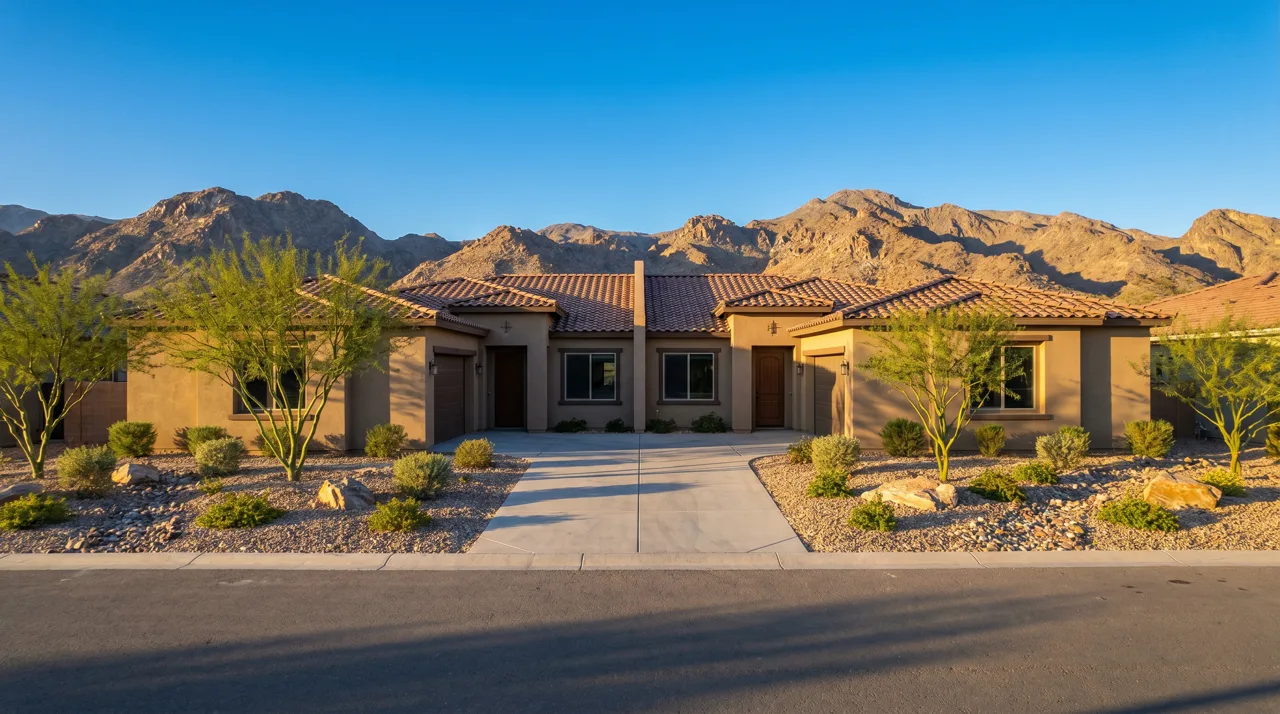
If you've spent any time pricing apartments in Manhattan or Brooklyn lately, the numbers in Las Vegas can read like a typo. A two-bedroom in Park Slope costs more than a three-bedroom on a quiet Summerlin street with a pool, mountain views, and a two-car garage. The cost-of-living gap between Las Vegas and New York isn't subtle, and once you start running the actual math, it gets hard to unsee.
I work with a lot of buyers making this exact move. They're not just chasing cheaper rent. They're tired of paying $14,000 a year in state income tax, splitting a 600-square-foot one-bedroom with a partner, and watching their grocery bill creep up while their take-home pay stays flat. So this is the honest, numbers-on-the-table comparison I wish more of them had before they pulled the trigger. Where Las Vegas truly wins, where New York still has the edge, and the costs nobody warns you about until you're already moved.
The Big Picture, Side by Side
Before we get into individual categories, here's the macro view. Median household income in the two cities is shockingly close. The cost of living is not.
| Category | Las Vegas | New York City |
|---|---|---|
| Overall cost of living | ~35% cheaper than NYC | Baseline |
| Median single-family home | $481,995 | $1,192,500 (NY County) |
| Median rent (overall) | $1,716/month | $3,616/month asking |
| State income tax | 0% | 4.0% - 10.9% |
| Effective property tax rate | 0.47% - 0.59% | 1.90% |
| Average monthly utilities | $225 - $350 | ~$450 |
| MIT living wage, single adult | $24.20/hour | $31.50/hour |
| Median household income | $60,465 - $70,400 | $80,483 |
That last row is the one I always point to. New Yorkers earn maybe 15% more on paper, but they're paying more than double for housing and giving back another 5% to 10% in state income tax. The disposable income math gets ugly fast for them and very pleasant for the person crossing it the other direction.
Housing Is Where the Gap Becomes a Canyon
Every other category matters, but housing is the engine. It's also where most of the surprise lives for movers.
Renting
The Las Vegas rental market sits at around $1,716 per month for the average unit, slightly under the national average. New York City's median asking rent hit $3,616 in Q1 2026, according to Realtor.com research. That's not a typo and it isn't Manhattan-only. That's the citywide median.
A three-bedroom apartment in Las Vegas averages around $1,889 per month. The equivalent in New York averages $4,764. You can rent two Vegas three-bedrooms for less than one in NYC and still have lunch money left over.
Studio
LV: ~$960
NYC: ~$2,800+
You'll find studios under $1,000 in older Vegas complexes. In NYC, even Bushwick studios start north of $2,500.
1-Bedroom
LV: ~$1,290
NYC: ~$3,500
A typical Summerlin or Henderson 1BR runs about a third of Greenwich Village pricing.
3-Bedroom
LV: ~$1,889
NYC: ~$4,764
The gap widens at family sizes. A 3BR rental in NYC is genuinely rare and brutally priced.
And here's a hidden NYC cost most movers from outside the city don't see coming. Broker's fees on a New York apartment can run as high as 12% to 15% of the annual rent, due upfront. On a $3,600/month place, that's a $5,400 check just to sign the lease. Vegas landlords charge a normal security deposit and a small application fee. You move in for under $4,000 all-in on most properties, not $15,000.
Buying
The for-sale market is where Las Vegas really pulls away. The median single-family home in Las Vegas sits at $481,995 as of early 2026, with Summerlin at $649,900 for the higher-end neighborhoods. New York County's median sold price is $1,192,500. Per square foot, NYC averages $1,456. Most Las Vegas neighborhoods are in the $230 to $320 per square foot range.
Translated: in Las Vegas, that same $1.2 million buys you a 3,500-square-foot custom home in Henderson with a pool and a casita, not a 700-square-foot apartment with a galley kitchen and a view of an air shaft.
If you're shopping by neighborhood, the spread is wide enough that almost any New York budget can find a comfortable Vegas equivalent.
If you were renting in Brooklyn or Queens ($3,000-$4,000/month)
You're looking at owning a 3-bedroom home in Centennial Hills, North Las Vegas, or Mountains Edge in the $420K to $550K range. Mortgage, taxes, insurance, and HOA together typically land between $2,600 and $3,200 a month — less than your old Brooklyn rent, except now you're building equity.
If you were paying Manhattan one-bedroom prices ($4,500-$6,000/month)
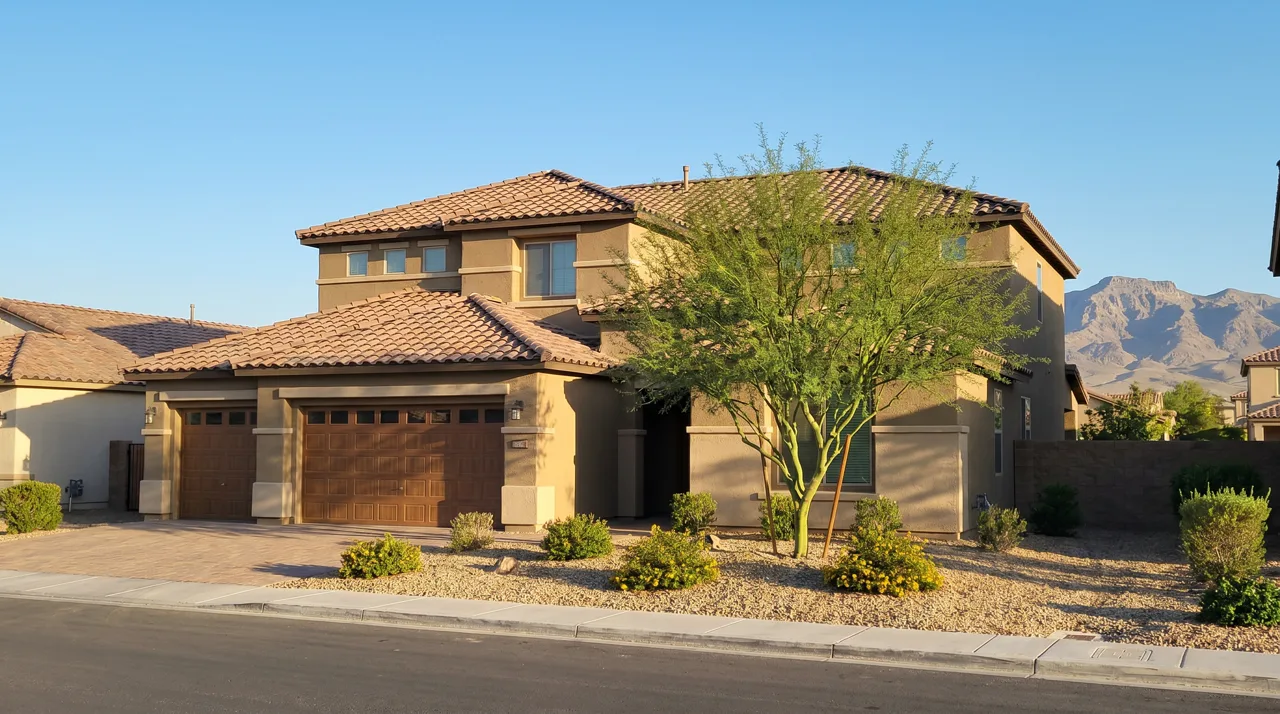
You're in established Summerlin territory or buying into Henderson communities like Anthem or Seven Hills. Think $600K to $850K homes — three-car garages, fenced yards, A-rated schools. The payment is roughly equal, but you're getting four to five times the space.
If you were buying or considering Manhattan/Brownstone Brooklyn ($1.5M+)
This is luxury Las Vegas territory. The Ridges, MacDonald Highlands, Queensridge, Lake Las Vegas. Custom estates, guard-gated communities, Jack Nicklaus golf courses, Strip and Spring Mountain views. A $2 million home here is a different lifestyle entirely than a $2 million Manhattan apartment.
As a CRS-designated agent in the top 1% of Southern Nevada Realtors, I'll tell you the conversation I have most often with New York buyers isn't about price. It's about scale. They walk into a 3,200-square-foot home and don't know what to do with the second living room. That recalibration is real, and it takes a few weeks.

Taxes: The Quiet Raise You Don't See on Your Pay Stub
Nevada has no state income tax. None. New York's top marginal rate is 10.9%, and the city of New York layers on its own additional income tax of up to 3.876% on top of that. A household earning $200,000 in NYC pays roughly $12,500 a year to New York State alone, plus another several thousand to NYC itself.
Move to Las Vegas and that money goes straight back into your paycheck. The Tax Foundation ranks Nevada favorably for individual tax burden in part because of this. Here's what state income tax savings look like across common income brackets:
| Household Income | NY State Tax Owed | Annual Savings in NV |
|---|---|---|
| $75,000 | ~$4,125 | $4,125 |
| $100,000 | ~$5,500 | $5,500 |
| $150,000 | ~$8,250 | $8,250 |
| $200,000 | ~$12,500 | $12,500 |
| $300,000 | ~$19,500 | $19,500 |
Property taxes follow the same pattern. Nevada's effective property tax rate runs 0.47% to 0.59% in Clark County. New York's effective rate sits at roughly 1.90%. On a $400,000 home, that's $2,000 a year in Las Vegas versus $7,600 in New York. Even better, Nevada caps annual property tax increases at 3% for primary residences under AB 489, so if Las Vegas appreciates 12% in a year (it has), your tax bill can't follow it up the elevator.
One thing to know on the other side: Clark County sales tax is 8.38%, which is higher than upstate New York and roughly matches NYC's 8.875%. So you're not winning at the register. You're winning on everything that hits your paycheck, your mortgage statement, and your annual tax return.
Utilities: Where Las Vegas Doesn't Win Every Round
This is the section most relocation guides skip, and it's the one that catches the most movers off guard.
Las Vegas annual utility costs average $225 to $350 per month. New York City averages closer to $450. Sounds like a clear win, and on paper it is. The asterisk is summer.
From June through September, the Mojave Desert does what the Mojave Desert does. Average July highs hit 105°F and stay there. Your A/C runs sixteen hours a day. NV Energy bills in summer can hit $250 to $470 for a typical single-family home, and homes with pools or west-facing exposure can clear $500. Winter is cheap (sub-$180), but the summer spike absolutely real.
Compare to NYC, where the bills are higher year-round but more even. Con Edison rates are structurally complicated and tax-and-fee heavy (taxes and fees account for about 32% of the average bill, per Con Ed's published rate sheet), but you don't get punched in the face by a single $450 August statement.
Electricity
LV avg: $154-$171/month (with $250-$470 summer spikes)
NYC avg: $130-$160/month with steadier seasonality.
Water
LV avg: $32-$60/month standard, $110+ with big landscaping
NYC avg: ~$102/month (single-family combined water + sewer at FY26 rates).
Natural Gas
LV avg: $42/month annual (winter heating only)
NYC avg: $80-$120/month for gas heating in older buildings.
The hidden Vegas trap: water pricing. The Las Vegas Valley Water District uses a four-tier system designed to penalize heavy outdoor use. According to LVVWD, tier 4 rates hit $6.33 per thousand gallons compared to $1.61 in tier 1. If you buy a house with grass, a pool, and irrigation set on a New York schedule, your summer water bill will horrify you. Switch to xeriscaping and smart controllers, and you'll stay in tier 1 or 2 most of the year.
Transportation: The One Category New York Genuinely Wins
If you're car-free in NYC and intend to stay that way, transportation in New York is a relative bargain. A monthly OMNY cap gets you unlimited subway and bus rides for $132. The base fare is $2.90. You don't pay for parking, insurance, gas, or registration. For a single adult, that's $1,500 a year, all-in, on getting around.
Las Vegas is built around cars. The RTC bus system covers the valley reasonably well and a $20 weekly pass or $4 day pass works fine for getting up and down the Strip, but most households will end up owning at least one vehicle. And the running costs in Nevada are not trivial:
- Auto insurance: Nevada has the most expensive auto insurance in the country in 2026, averaging $2,824 to $3,568 per year for full coverage. Yes, more than New York.
- Gas: $4.40 to $4.80 per gallon, roughly mid-pack nationally but more than the East Coast average.
- Registration and DMV fees: Nevada uses a "Governmental Services Tax" tied to vehicle value that runs $200 to $700+ annually for newer cars.
- Parking: Generally free everywhere except the Strip. That's a real plus over NYC, where a Manhattan parking space rents for $400 to $700 a month.
The net: if you can be a one-car household in Las Vegas with a daily commute under 20 minutes (which is realistic from Summerlin to most office hubs, or Henderson to the Strip), you'll spend roughly $5,000 to $7,000 a year on transportation total. In NYC, a comparable household with one car spends well north of $12,000 a year on insurance, garage, and gas combined. Without a car, NYC drops to $1,500 to $2,500.
So the honest answer is: car-free NYC is the cheapest transportation scenario in either city. Car-needed Vegas is cheaper than car-needed NYC by a wide margin. And almost every Vegas household needs a car.

Groceries, Dining, and the Daily Spend
Groceries in Las Vegas run about 13% to 15% cheaper than New York City. Proximity to California's agricultural valleys helps — produce gets here fast and cheap. The USDA's moderate-cost food plan for 2026 puts a single Las Vegas adult at $328 to $388 a month, a family of four at $1,000 to $1,500. New York City numbers run consistently 13% higher across the same plan.
Dining out tells a similar story. A casual sit-down meal in Las Vegas averages $15 to $20. The same meal in NYC averages $20 to $30. Where Las Vegas really pulls ahead is mid-range. A nice dinner for two with drinks at a non-Strip restaurant runs $80 to $120. The equivalent in NYC is rarely under $150 and easily hits $250 in Manhattan.
The Vegas asterisk: anything on the Strip is priced for tourists. Locals know to eat in Chinatown along Spring Mountain Road, in Henderson's restaurant rows, or in downtown Summerlin. The "local price" for the exact same food category is 30% to 40% below Strip pricing.
Healthcare: A Real Win for Las Vegas
Healthcare costs in Las Vegas run roughly 55% lower than in New York City on average. That covers premiums, copays, dental, vision, urgent care, and specialty visits. A routine dental cleaning in Las Vegas runs $75 to $100. The same cleaning in Manhattan averages $200 to $300.
The trade-off: Nevada's medical workforce is thinner than New York's, especially in specialties. If you have a complex condition that requires a specialist you've built a relationship with, that's a real adjustment. UMC, Sunrise, Summerlin Hospital, and Henderson Hospital cover the basics well, and you can fly to Los Angeles or San Diego in under an hour if you need a particular specialist. But you won't have a Mount Sinai or NewYork-Presbyterian in your back pocket. Plan accordingly.
What It Actually Takes to Live Comfortably in Each City
The MIT Living Wage Calculator is the cleanest single comparison I've seen for what it really costs to get by. It pulls in housing, food, transportation, healthcare, taxes, and childcare for a given metro and tells you the hourly wage required to cover basics with zero discretionary spending.
| Household | Las Vegas Metro | NYC Metro | Difference |
|---|---|---|---|
| 1 adult, no kids | $24.20/hour | $31.50/hour | +$7.30/hour NYC |
| 1 adult, 1 child | $41.70/hour | $54.31/hour | +$12.61/hour NYC |
| 2 working adults, 2 kids | $29.30/hour each | $37.18/hour each | +$7.88/hour each NYC |
For a family of four with both parents working, that's $32,700 less per year in baseline expenses in Las Vegas. Even adjusting for slightly lower Vegas wages in some sectors, the math heavily favors the move. A New York couple earning $180,000 combined typically replicates their lifestyle in Las Vegas at $130,000 to $140,000 and saves more money along the way.
The Costs Most Guides Skip
Beyond the headline categories, both cities have niche expenses that catch movers off guard.
HOA fees in Las Vegas
Roughly 75% of Las Vegas homes sit in an HOA. Dues range from $30/month in older North Las Vegas areas to $400+ in guard-gated luxury communities. Add another $50 to $200/month for sub-HOAs in master-planned neighborhoods like Summerlin. Always ask your agent for the full assessment picture before writing an offer. NYC has co-op and condo maintenance fees that run $1,200 to $3,000+ a month in nicer buildings, so the Vegas HOA is still a screaming bargain by comparison.
SID and LID bonds
Some Las Vegas master-planned communities carry Special Improvement District (SID) bonds that fund streets, sewers, and parks. They appear on your property tax bill and can add $50 to $300/month for 15 to 30 years. They're not hidden, but they're easy to overlook in a rushed escrow. New York doesn't have an equivalent at the household level.
NYC's congestion pricing and surcharge stack
Yellow taxi and Uber rides into the Manhattan core now carry a $0.75 congestion pricing toll on top of base fare, a $2.50 weekday rush-hour surcharge, a $1 overnight surcharge, and a New York State congestion surcharge of $2.50. A $15 fare can easily become a $24 fare. These don't exist in Las Vegas.
The "move-in penalty" working in both directions
NYC penalizes movers with broker fees and reset rents. Las Vegas gently punishes you with the desert. New arrivals from cool, humid climates often spend their first summer running A/C inefficiently, watering grass that doesn't belong, and replacing wardrobes built for four seasons. Budget $2,000 to $4,000 in first-year adjustments and you'll thank me later.
So Which One Wins?
For pure cost of living, Las Vegas wins almost everywhere it matters. Housing, taxes, healthcare, dining, groceries, and recreation all swing meaningfully cheaper. The categories where New York wins (car-free transit, healthcare specialist depth, cultural density) don't outweigh the dollar gap for most movers.
The clearest case for moving is a remote worker keeping a New York salary. That household goes from rent-burdened to genuinely wealthy overnight, with $30,000 to $60,000 a year of new disposable income to invest, save, or spend. The hardest case is a household tied to NYC-specific industries (finance, fashion, theater, publishing) where the salary doesn't follow you. Las Vegas pays well in hospitality, healthcare, tech, and trades, but it doesn't pay Wall Street numbers.
The honest middle ground: most New Yorkers who make this move report feeling materially wealthier within their first three to six months. The space, the storage, the quiet, the lack of a $4,200 rent draft hitting on the first of the month. It changes how you breathe.
If you're sketching out the move and want a sanity check on neighborhoods, mortgage math, or just a realistic head-to-head on monthly costs at specific Las Vegas price points, I'm always happy to talk it through. The mortgage calculator on the site handles HOA, taxes, and insurance, and the neighborhoods overview walks through each area so you can see where your budget actually goes the furthest. Either way, the numbers in Las Vegas hold up to scrutiny, and they get better the more carefully you run them.
Categories
Recent Posts