What to Know Before Buying a Pool Home in Las Vegas

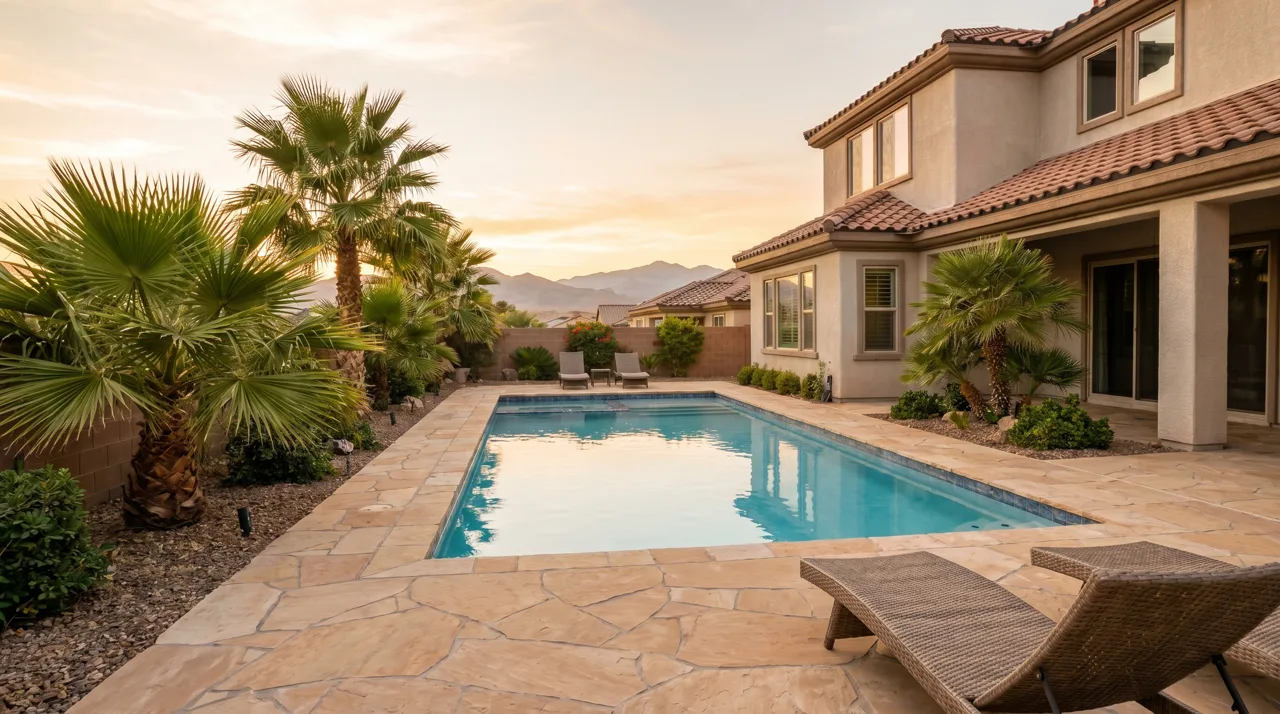
A pool in Las Vegas isn't a luxury the way it is in most cities. With 300+ days of sunshine and triple-digit summers, it's a daily-use amenity, a backyard centerpiece, and (if you're not careful) a meaningful operating expense you didn't budget for. This Las Vegas pool home guide walks through everything I think buyers should know before they fall for that sparkling backyard photo on the listing.
Here's the headline number most people don't realize: only about 19% of Las Vegas homes have a private pool, according to Southern Nevada Water Authority data referenced in local research. So pool homes are not the default. They're a sub-segment of inventory, and since 2022 the rules around new pools have tightened, which has quietly made existing pool homes a more interesting category than they were five years ago.
Why Pool Ownership Hits Different in the Mojave Desert
I've worked with buyers who moved here from California, Washington, and the Midwest, and the desert factor catches almost everyone off guard. Pools elsewhere lose some water to evaporation. Pools here lose a lot. The Southern Nevada Water Authority says a typical 470-square-foot residential pool can lose around 22,842 gallons a year to evaporation, at a rate of about 48.6 gallons per square foot annually. Wind makes it worse. Triple-digit afternoons in July make it much worse.
That's not a doom stat, it's a planning stat. Once you understand evaporation as the dominant cost driver, a few decisions get easier. A pool cover is the single highest-ROI accessory you can buy because SNWA estimates covers cut evaporation by about 90%. Wind-buffer landscaping (well-placed trees, hedges, walls) actually pays for itself over time. And siting matters: a pool tucked behind a windbreak loses meaningfully less water than one on an exposed lot near open desert.

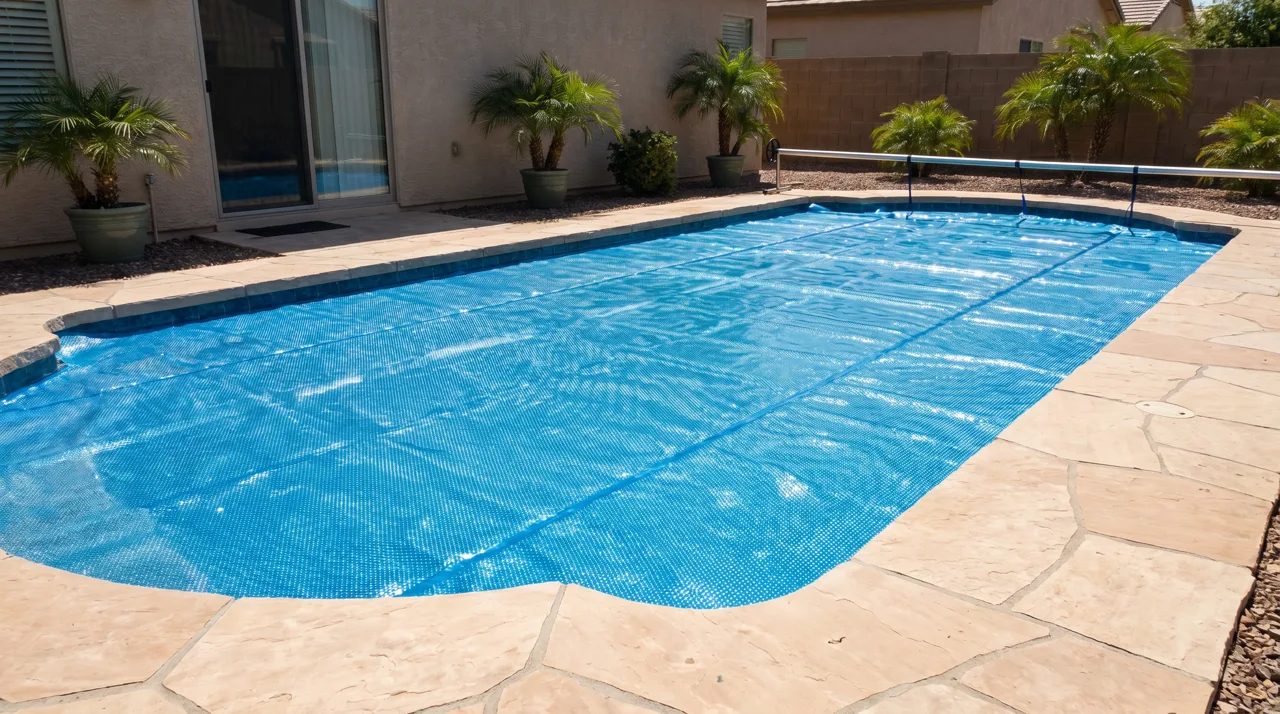
The other desert reality is hard water. Las Vegas Valley Water District is upfront that our water is mineral-heavy, with calcium and magnesium being the main culprits. In a pool, that translates to scale buildup on tile lines, inside heaters, and on automation equipment. Calcium hardness in pool water is generally managed in the 200 to 400 ppm range, but our source water already runs hard, so chemistry takes more attention than it would in, say, Portland.
The 600-Square-Foot Rule and What It Means for Buyers
This is the rule that's quietly changed the Las Vegas pool market and it's the one I bring up first with buyers. In July 2022, the Southern Nevada Water Authority approved a resolution capping the surface area of new residential pools at 600 square feet. Local jurisdictions adopted it, and effective September 1, 2022, Clark County requires LVVWD approval before issuing a permit for any new single-family pool, spa, or water feature. SNWA estimates the cap targets the largest 25% of new pools and saves more than 32 million gallons over a decade.
For a buyer, this changes the math on resale homes in two ways. First, if you're considering buying a non-pool home and building one, you're now working inside a hard surface-area ceiling and a multi-agency review. That oversized resort-style pool you saw on Pinterest may no longer be permittable on a standard suburban lot. Second, if a home you're touring already has a larger-than-average pool from the pre-cap era, that's a feature that can't be replicated next door. It doesn't automatically mean a higher resale price, but it does mean scarcity, and scarcity matters in this category.
What a Pool Really Costs to Own Each Month
Sticker price is the easy part. The ongoing cost is where buyers underestimate. Here's a realistic breakdown based on the local research and what I see in my own client conversations.
| Cost Category | Typical Range | Notes |
|---|---|---|
| Weekly pool service | $120-$200/mo | Local services often advertise starting around the high $160s for small to medium pools. Spas, heaters, and storm cleanup push it up. |
| DIY chemicals | $30-$50/mo | Doable, but plan on real time. Heat and dust accelerate algae and chemistry shifts. |
| Variable-speed pump electricity | $30-$100/mo | Older single-speed pumps cost more. A modern variable pump pays for itself within a few summers. |
| Water (evaporation refill) | Variable, biggest in summer | LVVWD pricing is tiered and gets expensive past 20,000 gallons/month. Pool homes with large yards are most exposed. |
| Filter cleanings | 2-3 times per year | More often if you're near open desert or have heavy landscaping. |
| Annual all-in | ~$2,000-$2,500/yr | Comprehensive maintenance including chemicals, cleaning, and routine repairs. |

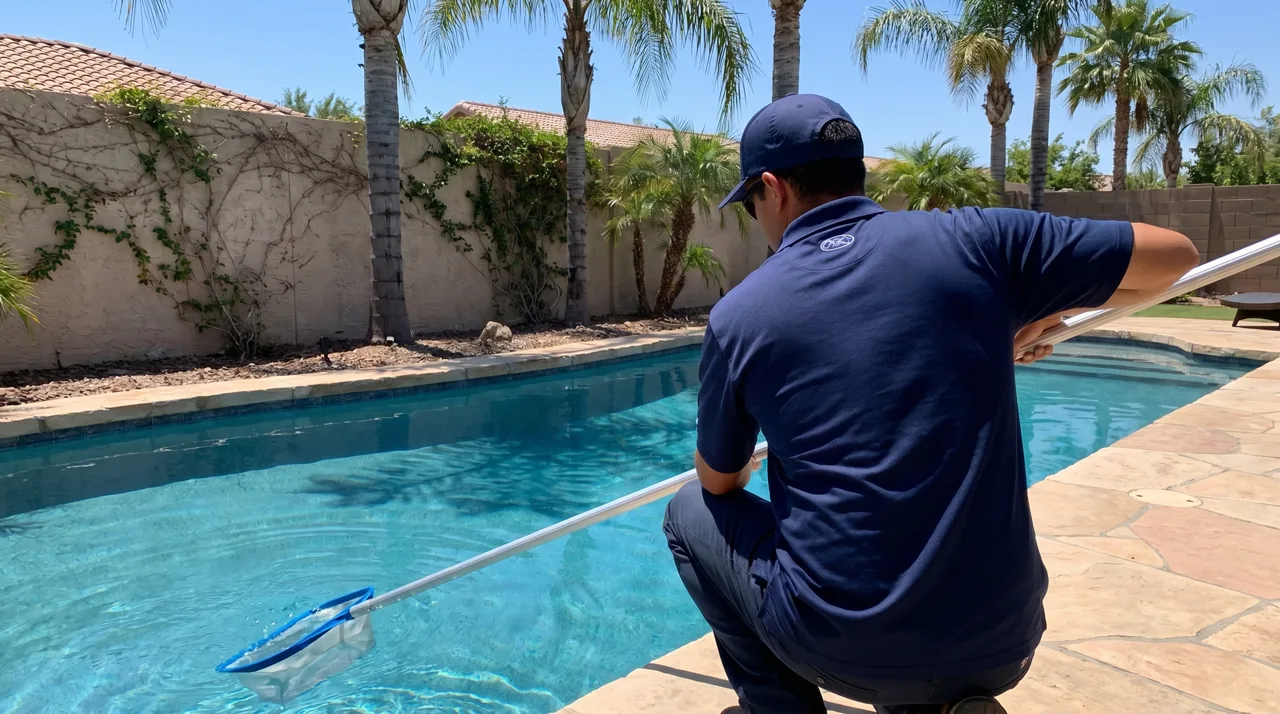
Now layer in equipment lifecycle. Pumps run $700 to $1,300 to replace. Filters run $1,500 to $2,000. Heater repairs land between $160 and $730 depending on the issue. Saltwater systems sound great for daily comfort, but the salt cell typically needs replacement every three to seven years, and replacement runs in the high hundreds. Fiberglass pools tend to be the cheapest annually, somewhere around $375 in running costs. Concrete pools are the most expensive, often near $2,750 a year, and need resurfacing roughly every decade.
Construction costs, for comparison: a basic in-ground pool in Las Vegas runs $30,000 to $80,000, and pools with upgraded features can clear $100,000. Local installer pricing has stretched to $40,000 to $120,000 for new builds depending on size, materials, and decking. That gap between buying-with versus building-after is one reason pool homes hold their pricing power in resale.
Drowning Risk Is the Most Important Topic Almost No One Brings Up
I'd rather lose a sale than skip this section. The Southern Nevada Health District tracks pediatric submersion incidents in Clark County, and the 2024 numbers are sobering: 38 total submersion incidents, 74% involving children ages 0 to 4, and of pool-only submersions, 72% happened in residential pools. Clark County reiterated those figures in a 2024 drowning-prevention release. The CDC notes drowning is the leading cause of death for children ages 1 to 4 nationally.
If you're touring a pool home with kids, grandkids, or visiting family in your future, here's what to actually look at. Don't just glance at the backyard and move on.
Pool Barrier Code Compliance Checklist
- Perimeter fence: non-climbable, four-sided, minimum 60 inches (5 feet) tall, per Clark County guidance
- Isolation fence between the residence and the pool: minimum 48 inches, with 60 inches recommended
- Fence openings (vertical pickets, gaps, decorative cutouts): no wider than 4 inches
- Gate hardware: self-closing and self-latching, swinging away from the pool
- Doors and windows leading to the pool area: alarmed, with a secondary alarm or barrier on the door
- Spa: covered with a locking, code-compliant cover
- Verify the home's barriers are still compliant after any backyard remodel, since additions can break code without anyone realizing
A pretty backyard is not the same thing as a code-conscious backyard. I've seen million-dollar homes with non-compliant gates and entry-level homes with everything dialed in. It's worth bringing in a pool-specific inspector if anything looks off, and worth understanding that an out-of-compliance barrier is a liability issue you inherit on closing day.


Pool Inspection: Beyond a Standard Home Inspection
Standard home inspectors in Las Vegas typically check that the pool turns on and the equipment runs. That's not enough for a meaningful purchase decision. A specialized pool inspection looks at shell integrity, underground plumbing, equipment efficiency, automation logic, and whether anything has been jury-rigged.
When I'm representing a buyer on a pool home, here's the documentation I push for from the seller.
- Original construction permit and final inspection records
- Permits for any heater, automation, electrical, lighting, spa, deck, or structural changes
- Surface age (plaster, pebble, or quartz) and any resurfacing records
- Equipment ages: pump, filter, heater, automation panel, salt cell if any
- Last 12 to 24 months of pool service invoices
- Leak detection or repair history
- Any history of green pool, code complaints, or neighbor complaints
- Last 12 months of water and electric bills, including peak summer months
That last one is underrated. A pool home in Las Vegas often comes with a bigger lot, more landscaping, and more outdoor water use generally. The home's actual operating cost during a 110-degree July is the number that matters, not the average.
The Drain-and-Refill Cycle Nobody Tells You About
Eventually, every Las Vegas pool needs a full drain and refill. The Las Vegas Valley Water District says many local pool pros recommend doing this every three to five years, mostly because dissolved solids and stabilizer build up to a point where chemistry becomes a losing battle.
You don't have to notify LVVWD when you do it, but a refill on a typical pool can easily cross the threshold for excessive use charges, and our tiered pricing punishes high-volume months. LVVWD's own guidance suggests draining and refilling in May or June, when seasonal thresholds are higher, and splitting the refill across two billing periods if you can. That's a piece of insider knowledge that saves real money.
Where Pool Homes Are Actually Common in Las Vegas
Pool homes are not evenly distributed across the valley. Some communities are full of them. Others, particularly newer developments with smaller lots, have very few. Redfin's snapshot at the time of writing showed roughly 8,022 homes with pools across the Las Vegas market, with about 1,197 in Summerlin alone (median list price around $738,000 in that filtered slice).
Summerlin
The deepest concentration of pool inventory in the valley. Older Summerlin villages tend to have the bigger backyards and the larger pre-cap pools, while newer Summerlin West phases have smaller lots and tighter pool footprints. Worth knowing that Summerlin also has community aquatic amenities (multiple community pools, parks, and trails), which factors into the "do I need my own pool?" question for some buyers.
Henderson: Green Valley, Anthem, Seven Hills, Inspirada
Established Green Valley and Anthem neighborhoods have a strong base of pool homes on family-sized lots. Luxury enclaves like Seven Hills and Anthem Country Club have plenty of resort-style backyards. Newer Inspirada has fewer pools simply because lots are smaller and many homes were built post-cap.
The Ridges, Queensridge, MacDonald Highlands
In ultra-luxury territory, a private pool is close to a market expectation. Guard-Gated communities like The Ridges, Queensridge, and MacDonald Highlands have a high share of homes with significant pool/spa builds, including pre-cap designs that can't be replicated under current rules.
Southern Highlands and Spanish Trails
Both Southern Highlands and Spanish Trails have a healthy mix of pool homes, particularly in the move-up and luxury segments. Spanish Trails in particular has a lot of mature backyard plantings from its older construction era.
Lake Las Vegas and Tuscany Village
Lake Las Vegas has many homes with private pools layered into a community that already has waterfront amenities. Tuscany Village mixes private pools with strong resort-style community amenities, which gives buyers options on either path.

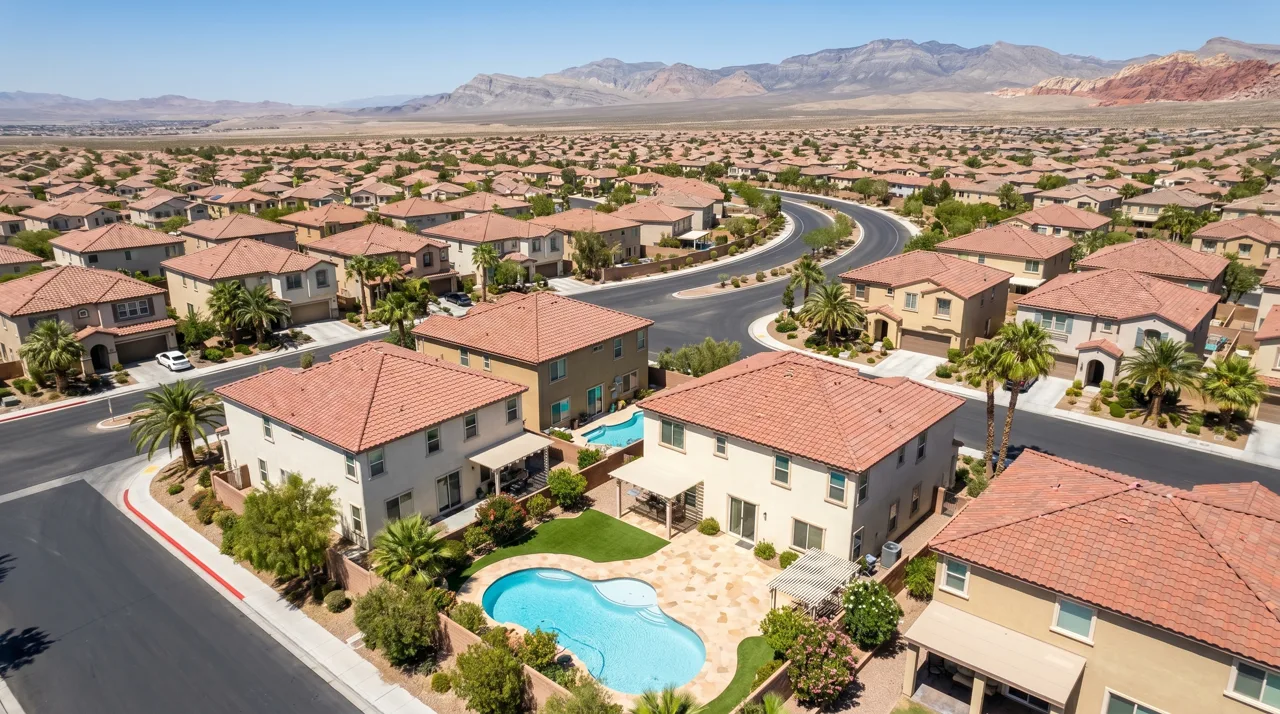
Should You Buy a Home With a Pool, or a Community With One?

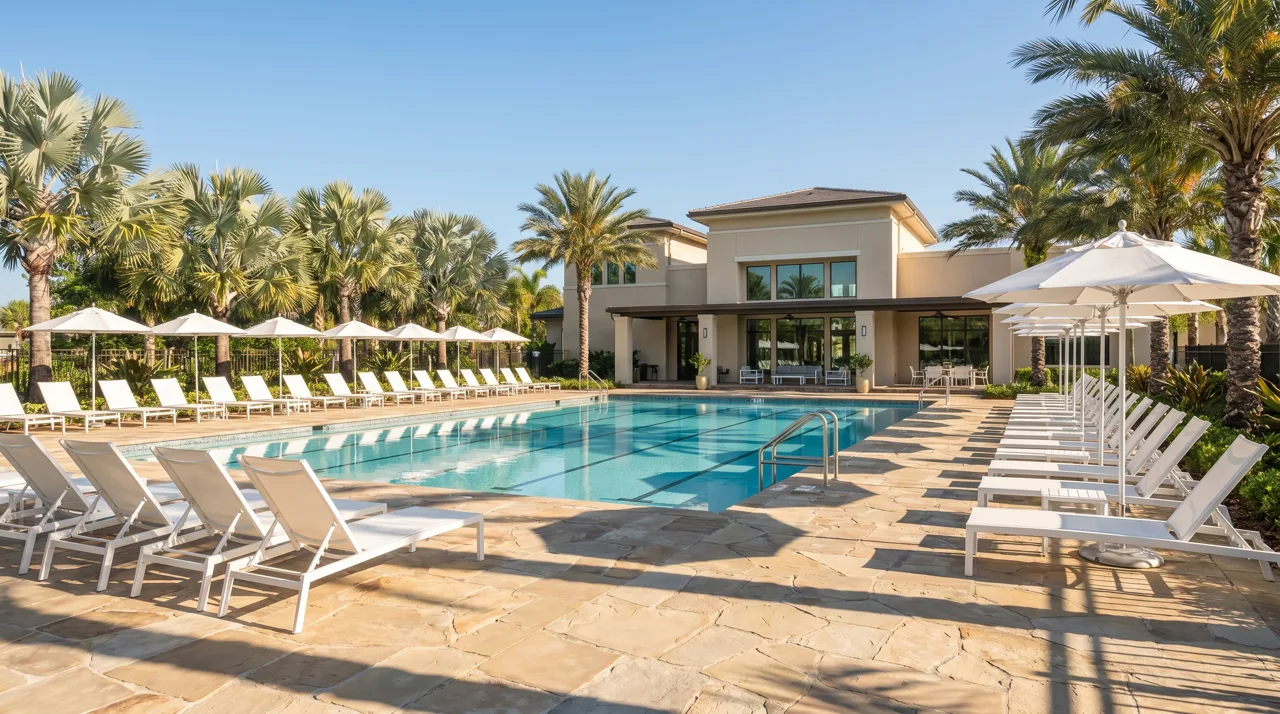
This question doesn't get asked enough. Master-planned communities like Summerlin maintain hundreds of parks, miles of trails, and multiple community pools and recreation centers as part of HOA dues you're already paying. Anthem, Sun City Summerlin, and several Henderson communities have similar amenity bases.
If you're a family that swims a few times a week in summer and entertains often, a private pool is hard to beat. If you're a couple that swims occasionally, a non-pool home in an amenity-rich master plan might give you 80% of the benefit at none of the maintenance cost. The honest answer depends on your usage profile, not on what looks good in a photo.
In some Las Vegas master-planned communities, the question isn't "do I want a pool?" but "do I need a private pool when the community already has strong aquatic amenities five minutes away?"
The Hidden Risks: Green Pools, Mosquitoes, and Code Enforcement
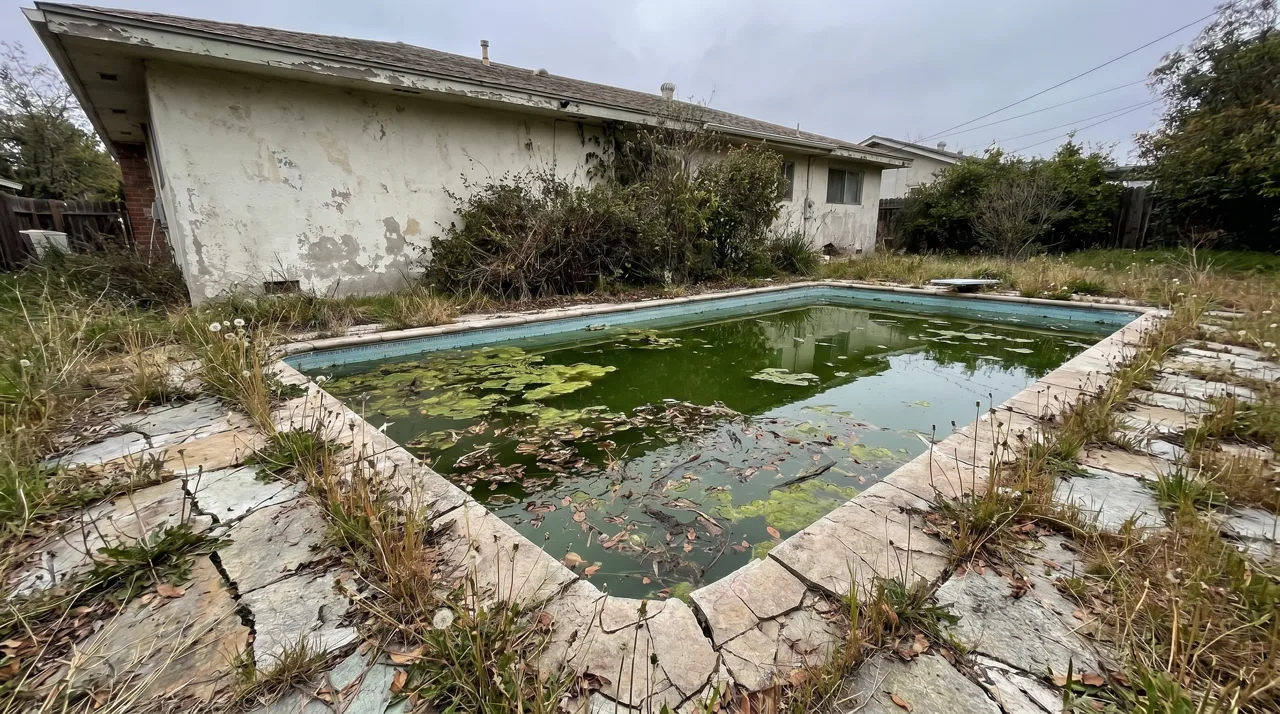
An empty or neglected pool is more expensive than it looks. The Southern Nevada Health District has flagged stagnant pools as a serious mosquito breeding source, and Clark County has tested mosquitoes positive for West Nile virus nearly every year since 2004. In a recent public-health release, the district said Clark County had received 436 green-pool complaints in the prior year. Those complaints now route to local code enforcement.
Why this matters to a buyer: if you're touring a vacant or distressed property with a green or empty pool, that pool may already have an open code issue, and restoration costs often run higher than expected. Plaster damage, equipment seizure, and tile staining are common after even a few months of neglect. Always factor restoration into your offer, and don't assume you can just "fill it back up and start over."

Insurance, Liability, and Your Umbrella Policy
I won't quote a Las Vegas-specific average premium increase because I don't have a verified local dataset for it. What I will say, based on my own transactions, is that pools are an underwriting consideration for most insurers, and many buyers benefit from a personal umbrella policy in the $1 million to $2 million range once a pool is involved. Some carriers ask about diving boards and slides specifically, and those features can drive premiums up or change appetite for the risk.
Get an actual insurance quote on the property before your inspection contingency expires. Don't wait until the week of closing to find out the pool features change your premium math.
Questions to Ask Before You Write the Offer
Here's the short version of what I work through with my own buyer clients on a pool home. If you're touring without an agent, take this with you.
- Is the pool fully permitted, and were all changes finalized?
- What's the surface area? (Pre-cap larger pools are harder to replicate)
- Is there a pool cover, and is it actually used?
- How old are the pump, filter, heater, and automation? Any documentation?
- Any visible calcium scale on tile or equipment? Any leak history?
- When was the last drain and refill, and where did the water go?
- Are barriers, gates, and door alarms all in place and functioning?
- Can the seller share 12 months of water and electric bills?
- Has the pool ever been green, leaked, or triggered code complaints?
- Is there a sewer cleanout for future drains, and where is it?
As a CRS-designated Top 1% Las Vegas agent who has closed more than 600 transactions, I will say this: a pool home is one of the most rewarding purchases a Las Vegas buyer can make and one of the easiest to misjudge. The right pool home in the right neighborhood is a daily joy. The wrong one is a $25,000 surprise eighteen months in.
The Bottom Line
Pool homes are a real category of Las Vegas inventory, not a curiosity. They make sense in our climate, they often pencil out as a better deal than building, and the 600-square-foot cap on new pools has quietly made the existing inventory more valuable. The trick is buying with eyes open: understand the operating cost, verify code compliance, request the documentation, and price in the realities of desert ownership.
If you do that, the math usually works. And in late July, when it's 109 degrees and you're floating in your own backyard with a cold drink in hand, you'll wonder how you ever lived without one.
Categories
Recent Posts